


Fiddlehead Fern (Lingri) Sabzi
Found in the Himalayan states like Himachal Pradesh and Uttarakhand, the fiddlehead fern is the coiled frond of a young fern. Locally known as 'lingri' or 'kasrod', this vegetable has a crisp texture and a flavour reminiscent of asparagus and green beans.
It's foraged from the wild during the monsoon season and is packed with antioxidants and omega-3 fatty acids. Typically, it is lightly sautéed with mustard oil, garlic, and simple spices to create a delicious and earthy 'sabzi' that allows the fern's natural flavour to shine through. Its seasonality and wild origins make it a true delicacy.
Banana Flower (Vazhaipoo) Poriyal
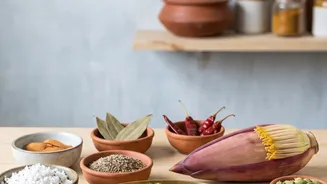
While bananas are a staple, their large, purplish blossom is often overlooked. In South India, particularly Tamil Nadu and Kerala, the 'vazhaipoo' is a prized ingredient. Preparing it is a labour of love, involving the careful cleaning of its florets. The reward is a wonderfully textured vegetable that's great at soaking up flavour. It's often prepared as a 'poriyal'—a dry stir-fry with grated coconut, mustard seeds, and lentils. The flower has a subtle, starchy taste and is lauded for its health benefits, especially in traditional medicine. It can also be turned into crisp vadas or cutlets.
Hemp Seed (Bhangjeera) Chutney
Don't let the name alarm you. The hemp seeds used in the hills of Uttarakhand are a non-narcotic variety, celebrated for their nutty flavour and nutritional punch. Known as 'bhangjeera', these tiny seeds are roasted until they pop, releasing a wonderfully aromatic fragrance. They are then ground with mint, coriander, chillies, and lime juice to create a thick, savoury chutney that is the perfect accompaniment to almost any Kumaoni meal. This chutney provides a creamy texture and a warm, nutty profile that is completely unique, offering a wholesome taste of the mountains.
Colocasia Leaf (Patra) Rolls
Colocasia, or 'arbi', is known for its root, but its large, heart-shaped leaves are culinary stars in their own right. Across states like Gujarat, Maharashtra, and Karnataka, these leaves are used to make 'patra' or 'patrode'. The process involves smearing the leaves with a spiced gram flour paste, stacking them, rolling them into tight logs, and then steaming them. The steamed rolls are sliced into pinwheels and can be eaten as is or tempered with mustard seeds and sesame for extra crunch. The final dish has a complex sweet, spicy, and tangy flavour profile that is truly addictive.
Moringa Flower (Sahjan Phool) Sabzi
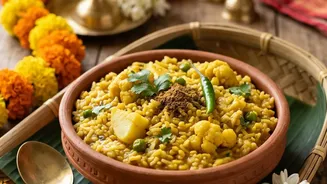
The drumstick is a common vegetable in India, but its delicate, creamy-white flowers are less frequently used, despite being highly nutritious. In many parts of the country, including West Bengal and Uttar Pradesh, 'sahjan ke phool' are harvested in spring and cooked into a simple, flavourful sabzi. The flowers have a slightly bitter taste, which is beautifully balanced when stir-fried with potatoes, green peas, and a handful of spices. The dish is a seasonal treat that highlights a different dimension of the versatile moringa tree, transforming the flowers into a comforting and healthy meal.
Water Chestnut (Singhara) Curry
Fresh water chestnuts, or 'singhara', appear in markets during the autumn and winter months. While the flour made from dried singhara is popular for fasting foods, the fresh, green-skinned version is a wonderfully crunchy and sweet vegetable. In North India, it's often used to make 'Singhare ki Sabzi'. The peeled chestnuts are cooked in a simple tomato and onion gravy, absorbing the spices while retaining their distinctive bite. This curry is a surprising delight, offering a juicy crunch that is quite different from other vegetables, making it a seasonal must-try.
Jackfruit Seed (Kathal Bichi) Curry
After enjoying ripe jackfruit or cooking with its raw form, many people discard the seeds. However, in states like West Bengal and Kerala, these seeds are a delicacy. Once boiled and peeled, jackfruit seeds ('kathal bichi') have a texture similar to a firm potato and a mild, nutty taste. They are incredibly versatile and can be added to curries, mashed into a spicy 'bhorta' with mustard oil and chillies, or simply roasted for a quick snack. Using the seeds is a fantastic example of nose-to-tail, or in this case, fruit-to-seed, cooking, ensuring nothing goes to waste.
Amaranth Greens (Chaulai) Dal
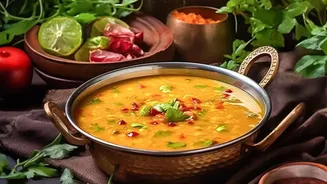
Amaranth leaves, known as 'chaulai' in the north and 'thotakura' in the south, are a powerhouse of nutrition that often grow with minimal fuss. These vibrant green or red leaves are incredibly versatile and cook down quickly. While they can be made into a simple stir-fry, they truly shine when cooked with lentils to make 'Thotakura Pappu' or a similar dal. The slight bitterness of the greens perfectly complements the earthy creaminess of toor or moong dal, creating a dish that is both comforting and profoundly nourishing. It’s a simple, rustic dish that elevates an everyday ingredient.