


The Sun’s Unpredictable Temper
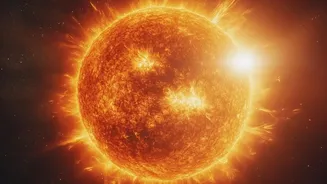
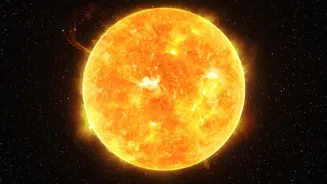
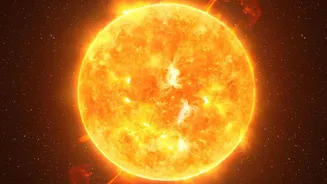
When we think of weather, we picture rain, wind, and clouds. But there's another kind that originates from the sun. Space weather refers to the changing conditions in space, driven by the sun's activity. The sun isn't always a calm, steady star; it has
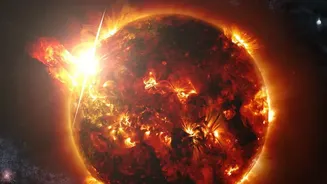
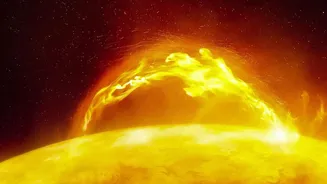
an active and sometimes violent temperament. It regularly releases enormous bursts of energy and particles in two main forms: solar flares and coronal mass ejections (CMEs). A CME is a massive eruption of plasma and magnetic field from the sun's outer atmosphere, the corona. When one of these clouds of charged particles is aimed at Earth, it travels through space and can significantly disrupt our planet's magnetic field, triggering a geomagnetic storm.
From Solar Storm to Grid Threat
While Earth's magnetic field shields us from most of the harmful effects, a powerful geomagnetic storm can still have a major impact on ground-based infrastructure, especially long electrical conductors like power grids. The rapid changes in the magnetic field induce powerful, low-frequency electrical currents in the ground. These are known as geomagnetically induced currents, or GICs. These currents can find their way into high-voltage transmission lines through grounding points, flowing into the massive transformers that are the backbone of any power grid. These transformers are designed for alternating current (AC), but GICs behave more like direct current (DC). This influx of quasi-DC current can push the transformer's magnetic core into saturation, causing it to overheat, absorb excessive reactive power, and generate harmful harmonics. This can lead to equipment damage, voltage instability, and in worst-case scenarios, widespread blackouts.
Our Sentinels in Space
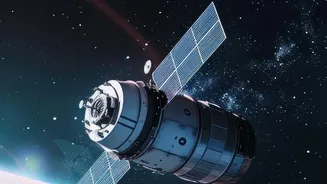
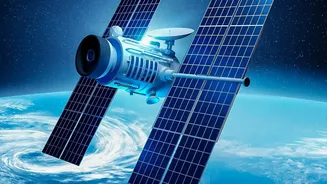
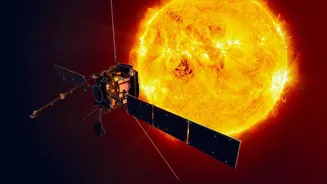
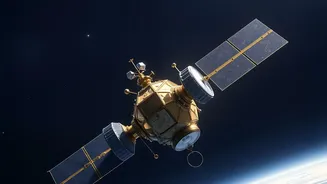
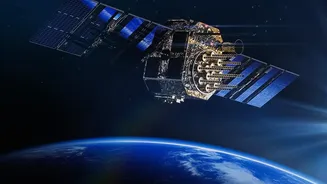
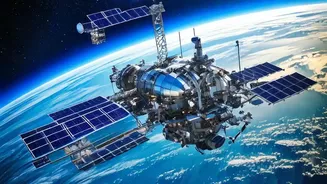
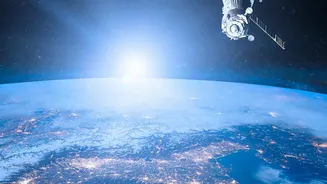
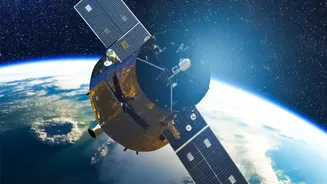
To avoid being caught by surprise, we rely on a network of sophisticated satellites that act as an early warning system. Spacecraft like NOAA's Deep Space Climate Observatory (DSCOVR) are positioned at a specific point between the Earth and the sun called Lagrange Point 1 (L1), about 1.5 million kilometres away. From this vantage point, DSCOVR can directly measure the solar wind—the stream of charged particles constantly flowing from the sun. When a CME passes the satellite, its instruments detect the changes in the magnetic field, speed, density, and temperature of the particles. This data is beamed back to Earth, giving forecasters at agencies like NOAA's Space Weather Prediction Center (SWPC) a crucial heads-up of 30 to 60 minutes before the storm hits our planet.
Turning Forecasts into Action
That 30-to-60-minute warning is invaluable for power grid operators. The SWPC, which functions as the official source for space weather alerts, disseminates this information to energy companies and other critical sectors. Based on the intensity and characteristics of the incoming geomagnetic storm, the SWPC issues watches, warnings, and alerts. Energy companies take these alerts seriously. They have developed detailed operational procedures to mitigate the potential impacts of GICs. With a forecast in hand, grid operators can move from a reactive to a proactive stance, preparing the system for the incoming disturbance before it arrives. This collaboration between government-run scientific agencies and private industry is essential for maintaining grid stability.
Bracing for Impact
Once an alert is received, energy companies initiate a series of protective measures. They might decide to postpone scheduled maintenance on critical equipment to ensure the entire system is as robust as possible. They can adjust the grid's configuration to reduce stress on the most vulnerable transformers or bring extra power generation online to increase reactive power reserves. In some cases, operators may deliberately reduce the load on certain transmission lines or, in extreme events, temporarily take parts of the system offline to prevent catastrophic equipment failure. Having maintenance crews on standby allows for rapid response if any part of the system does fail. These actions, all triggered by a forecast from a satellite far out in space, can prevent long-term damage to transformers—which can be incredibly expensive and time-consuming to replace—and help avert a large-scale blackout.