




Understanding the Star Ingredients
At the heart of this iconic chutney are two powerful and distinct flavours. Tamarind is the source of the delightful sweet-and-sour taste. Its fruity tartness, driven by tartaric acid, cuts through richness and brings a bright, zesty quality to any dish.
Cumin, or 'jeera', provides the essential counterbalance. Its flavour is warm, earthy, and nutty. While tamarind provides the high notes, cumin offers a grounding, savoury depth that prevents the chutney from tasting one-dimensionally sour. Together, they create a harmony that is fundamental to many Indian snacks and chaats.
The Secret to Deeper Flavour: Roasting Cumin
To elevate your chutney from good to great, you must toast your cumin seeds. Using pre-ground cumin powder is convenient, but it lacks the aromatic intensity of freshly toasted and ground seeds. The process is simple: heat whole cumin seeds in a dry pan over medium heat for just a few minutes. You'll know they're ready when they turn a shade darker and release a wonderfully nutty and smoky aroma. Be careful not to let them burn, as they will turn bitter. Once toasted, let them cool completely before grinding them into a powder. This single step unlocks the natural oils in the seeds, adding a robust, complex flavour that is impossible to achieve otherwise.
Choosing and Using Tamarind
Tamarind is available in several forms, and it's important to know which one you have. The most authentic flavour often comes from a block of tamarind pulp, which needs to be soaked in hot water and then strained to remove fibers and seeds. This creates a fresh-tasting tamarind extract. Jarred tamarind paste or concentrate is a convenient alternative, but be aware that the concentration can vary dramatically between brands. A thick, dark Indian concentrate is much stronger than a thinner Thai-style paste. As a general rule, you might need three times the amount of paste to equal the sourness of a concentrate. When starting a recipe, it's always best to read the package and begin with a smaller amount, tasting and adjusting as you go.
A Foundational Cumin-Tamarind Chutney
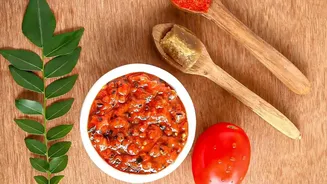
This basic recipe provides a canvas for you to perfect your own version. Start by soaking about 100g of seedless tamarind block in 2 cups of hot water for 20-30 minutes. Once softened, mash the pulp and strain it through a sieve, pressing to extract as much liquid as possible; discard the solids. Pour this tamarind extract into a saucepan. Add about 100g of jaggery (or brown sugar), half a teaspoon of roasted cumin powder, a quarter teaspoon of ginger powder, and a pinch of red chilli powder for gentle heat. Bring the mixture to a boil, then reduce the heat and let it simmer gently. The chutney will thicken as it cooks and cools. Simmer for 15-20 minutes, or until it coats the back of a spoon.
The Art of Balancing Flavours
Once your chutney has simmered, the real art begins. Taste it. Is it too sour? The answer is often more sweetness. Add a little more jaggery or sugar to soften the sharp tang. Is it too sweet? A bit more tamarind paste or a tiny squeeze of lemon juice can bring the acidity back up. The goal is a perfect equilibrium where sweet, sour, and earthy notes are all present and harmonious. Don't be afraid to make small adjustments. A pinch of black salt (kala namak) can also add another layer of savoury complexity. Let the chutney cool completely, as the flavours will continue to meld and can change as the temperature drops.
Serving and Storing Your Creation
This versatile sweet and tangy chutney is an essential condiment for a huge range of Indian dishes. It's the perfect dipping sauce for crispy samosas, pakoras, and aloo tikki. It is also a key component in chaat dishes like bhel puri and sev puri, where it is drizzled over the top along with other sauces. You can also use it as a glaze for grilled vegetables or paneer. To store, transfer the cooled chutney to a clean, airtight glass jar. It will keep in the refrigerator for several weeks, and the flavours will often improve after a day or two. If it becomes too thick in the fridge, you can thin it with a little hot water before serving.