
The Tyranny of the Lunar Night
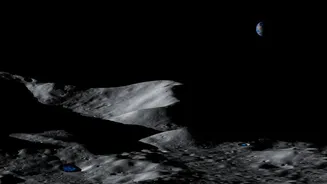
The Moon presents a brutal environment for any technology. The biggest energy challenge is the lunar night, which lasts for about 14 Earth days. During this extended period of total darkness, temperatures can plummet to as low as minus 173 degrees Celsius.
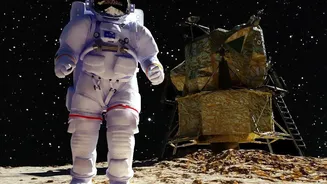
For solar-powered systems, this means no energy generation for two weeks straight, requiring massive and heavy battery systems to store enough energy to survive. Complicating matters further is the abrasive lunar dust, or regolith, which can coat solar panels and reduce their efficiency. While a base at one of the lunar poles could receive near-constant sunlight, even these locations experience periods of darkness that require a robust power solution.
More Than Just Keeping the Lights On
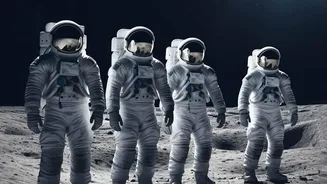
A lunar base's power needs go far beyond simple lighting. The most critical function is life support, which includes systems that produce oxygen and recycle water for astronauts. A minimum of about 3 kilowatts (kW) of electrical power is required just to support each crew member. An initial four-person base is estimated to need around 100 kW to run everything from housekeeping systems to scientific instruments like seismometers and spectrometers. This constant power draw is essential for communications with Earth, operating and recharging lunar rovers, and keeping sensitive electronics from freezing during the extreme cold of the lunar night. Without a continuous and reliable power source, a long-duration human presence is simply not possible.
Harnessing the Sun and the Atom
To meet this challenge, NASA and its partners are pursuing a two-pronged approach: advanced solar arrays and nuclear fission. While solar panels have a long history in space, lunar systems will need to be highly efficient, resistant to radiation damage, and paired with advanced energy storage like regenerative fuel cells or next-generation batteries. For a truly continuous power source, however, all eyes are on fission. NASA and the Department of Energy are collaborating to develop a Fission Surface Power system. A small, lightweight nuclear reactor, capable of producing around 40 kW, could provide abundant and steady power for a decade without refuelling, regardless of sunlight. This technology is seen as the key to unlocking long-term lunar operations.
Powering a New Lunar Economy
Reliable power is not just about survival; it's the foundational infrastructure for creating a sustainable lunar economy. A key future activity is In-Situ Resource Utilization (ISRU), which is the practice of using local materials. For example, a robust power grid would enable the mining of water ice confirmed to exist in permanently shadowed craters at the lunar poles. This water can be used for life support or split into hydrogen and oxygen to create rocket propellant. Manufacturing propellant on the Moon would dramatically reduce the cost of missions further into the solar system, like to Mars. Power-intensive ISRU activities, which could require up to a megawatt of power, also include extracting oxygen from lunar rock and using microwaves to sinter regolith into landing pads and other structures.