




The Problem: Visual Clutter and Harsh Light
For many living in compact city apartments, the end of the day brings a familiar challenge. The space that felt just about manageable in the daylight suddenly feels cramped and chaotic under the glare of a single, harsh overhead light. Bulky floor lamps
take up precious floor space, tangled wires snake along walls, and deep shadows cast by a central fixture can make corners recede, effectively shrinking the room. This is 'visual clutter'—a collection of distracting elements that make a space feel smaller and more stressful than it is. A single, poorly chosen light source can flatten a room's character, creating an environment that feels more like a waiting room than a sanctuary.
The Solution: What is Modern Minimalist Lighting?
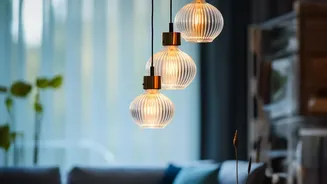
Modern minimalist lighting isn't about having less light; it's about making light work smarter. The philosophy is simple: integrate lighting into the home's architecture and design in a way that is functional, discreet, and beautiful. It favours clean lines, simple geometric forms, and fixtures that blend in rather than stand out. Think less about a large, decorative chandelier and more about recessed fixtures, slim magnetic track systems, and wall sconces that wash walls with light without occupying visual space. The goal is to remove the physical and visual weight of traditional lighting, allowing the light itself—not the fixture—to be the main feature.
Cutting Clutter and Creating Space
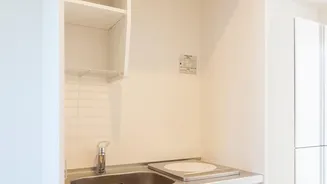
Minimalist fixtures are inherently space-saving. Recessed lights disappear into the ceiling, providing broad illumination without any footprint. Slim linear lights or magnetic track lighting can be integrated seamlessly, drawing the eye along a clean line and making a room feel longer or wider. Wall sconces and under-cabinet LED strips free up floor and surface space, perfect for entryways, kitchens, and beside the bed. By pushing light into the corners and washing walls with a soft glow, these techniques eliminate the harsh shadows that make a room feel confined. The strategic use of mirrors to reflect this light further amplifies the effect, creating an illusion of depth and airiness.
Setting the Mood: The Psychology of Light
Beyond aesthetics, lighting has a profound impact on our mood and well-being. Our brains are wired to respond to the colour and intensity of light. Minimalist lighting strategies allow you to harness this power. Modern LED technology offers a wide range of colour temperatures, measured in Kelvins (K). Cool-toned light (4000K-5000K) promotes alertness and focus, making it suitable for a home office area or kitchen. In contrast, warm-toned light (2700K-3000K) mimics the glow of a sunset, triggering our brains to relax and unwind. Using fixtures with dimmers is crucial, as it gives you the flexibility to transition the brightness from functional to intimate, altering the room's mood with a simple adjustment.
The Designer's Secret: Layering Your Light
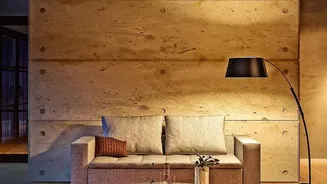
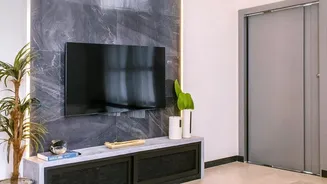
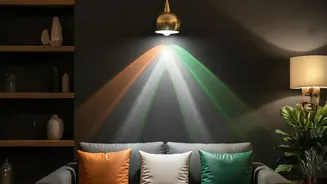
The single most effective technique for transforming a space is 'layered lighting'. Instead of relying on one source, this approach combines three distinct types of light to create a balanced and versatile environment. Ambient Light: This is the general, foundational layer that provides overall illumination. It's the soft, uniform glow from recessed downlights or sleek ceiling fixtures that lets you navigate the room safely. Task Light: This is focused, brighter light for specific activities like reading, cooking, or working. Examples include slim floor lamps aimed over a reading chair, under-cabinet strips in the kitchen, or a focused pendant over a dining table. * Accent Light: This is the 'drama' layer. It's used to highlight architectural details, artwork, or textured walls, adding depth and visual interest. A wall-washer or a small, directional spotlight can turn a flat wall into a feature. By combining these three layers, you eliminate flat, uniform lighting and create a dynamic, inviting space that feels larger and more sophisticated.