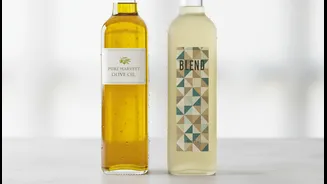







Why Is Buying Oil So Confusing?
The confusion in the edible oil aisle is often by design. Many consumers are shifting towards healthier options, but marketing terms can be vague and misleading. Without clear, legally binding definitions, what one brand calls 'cold-pressed' another might
not. This ambiguity allows for marketing to blur the lines between different extraction methods and quality levels. The problem extends to packaging itself. You might pick up two bottles that look the same size, only to find one contains 900ml and the other a full litre, making a true price comparison difficult without a calculator. This strategy, combined with a lack of regulation for emerging specialty oils, has created a marketplace where it’s hard for shoppers to know exactly what they are buying.
The Regulator Steps In: Defining Quality
To bring clarity, the Food Safety and Standards Authority of India (FSSAI) has proposed new draft regulations as of May 2026. These rules aim to create clear, enforceable standards for edible oils, particularly for a growing category of 'minor seed oils' like those from tomato, chilli, and muskmelon seeds. The most significant change is the proposal to establish distinct quality parameters for 'cold-pressed/virgin' oils versus 'refined' oils. For example, under the draft rules, additives would be prohibited in cold-pressed and virgin oils, but permissible in their refined counterparts. Furthermore, oils extracted using chemical solvents like hexane must be refined before being sold to consumers and must adhere to strict limits on solvent residue. This ensures that when you buy a product labelled 'cold-pressed,' you are getting an oil free from chemical solvents.
Decoding the Labels: Cold-Pressed, Wood-Pressed, and Refined
The new standards will help give meaning to popular terms. 'Refined' oil is processed with heat and sometimes chemicals to remove impurities, which also strips away some nutrients, flavour, and aroma. In contrast, 'cold-pressed' oil is extracted mechanically at low temperatures without chemicals, preserving more of its natural goodness. 'Wood-pressed' (or 'chekku'/'ghani') is a traditional form of cold-pressing that uses a wooden pestle. Because wood is a poor conductor of heat, this method often keeps temperatures even lower than modern metal cold-press machines, which enthusiasts believe results in superior nutrient retention. So, a simple way to think about it is that all wood-pressed oil is cold-pressed, but not all cold-pressed oil is wood-pressed. The FSSAI's move will help ensure these terms are used accurately on labels.
Standard Sizes for Fairer Prices
Beyond quality, another government body is tackling pricing confusion. The Department of Consumer Affairs announced new rules in June 2026 to standardise edible oil pack sizes. Brands will be required to sell major cooking oils in specific quantities, such as 500ml, 1 litre, 2 litres, and 5 litres. This move is designed to stop the practice of selling oils in odd-sized packages (like 870g) that prevent shoppers from easily comparing the cost-effectiveness of different brands. By mandating standard sizes, the government is making it easier for consumers to make a true apples-to-apples comparison on price, ensuring they get better value for their money.
What This Means for Your Next Grocery Trip
While these regulations are still in the draft stage and open for public comment, their implementation promises a sea change for shoppers. Once enacted, you will be able to trust that a 'cold-pressed' label signifies an oil made without chemical solvents. You will have a clearer understanding of the difference between a basic refined oil and a premium virgin one. The introduction of standard packaging sizes will empower you to compare prices with confidence, knowing you are not being misled by confusing volumes. Ultimately, these twin efforts in standardising quality and quantity are about shifting power back to the consumer. They pave the way for a more transparent market where your choices are based on clear facts and fair pricing, not just clever marketing.