




Choosing an outdoor workout you love is key to long-term fitness. Hiking and stand-up paddleboarding (SUP) are two fantastic options, but they support your heart health in surprisingly different ways. So, which one is the better fit for you?
Intensity and Heart Rate
The foundation
of cardiovascular fitness is elevating your heart rate. Both hiking and paddleboarding are excellent at this, but the control you have over the intensity varies. With hiking, you can directly influence your heart rate by choosing your terrain. A flat, gentle path offers a light aerobic workout, while a steep, hilly trail can quickly push you into a vigorous intensity zone. Carrying a weighted pack further increases the demand. Paddleboarding intensity is more subject to environmental factors. A calm, glassy lake allows for a steady, moderate workout. However, paddling against wind or on choppy water requires significantly more effort, providing a high-intensity challenge that can elevate your heart rate substantially. While both can be effective, hiking offers more predictable control over your cardio session.
Muscle Engagement: Full Body vs. Lower Body Focus
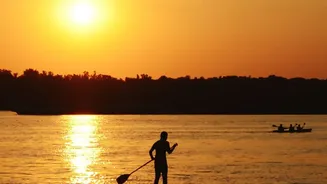
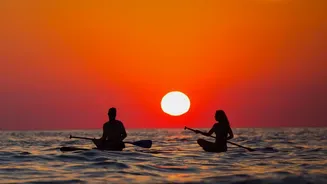
How your muscles are engaged plays a huge role in the overall cardiovascular demand of a workout. Paddleboarding is a true full-body exercise. The most obvious work is done by the upper body—your shoulders, back, and arms—with every paddle stroke. However, the real secret to SUP is the constant core engagement. Your abdominal and lower back muscles fire continuously to maintain balance on an unstable surface. Your legs and glutes are also constantly making micro-adjustments for stability. Hiking, by contrast, is primarily a lower-body workout. It heavily recruits your glutes, quadriceps, hamstrings, and calves, especially during uphill and downhill sections. Your core is engaged to maintain posture, particularly on uneven ground or when carrying a backpack, but not to the same degree as with paddleboarding. Using trekking poles can add an upper-body element to hiking. This difference means paddleboarding distributes the workload across more of the body, potentially leading to a more comprehensive conditioning effect.
Caloric Burn and Weight Management
Sustaining a healthy weight is crucial for long-term heart health, and both activities are effective calorie burners. The exact number depends on intensity, duration, and body weight, but we can make some general comparisons. Hiking typically burns between 400 and 600 calories per hour, with the number increasing on challenging terrain or with a heavy pack. A leisurely paddle might burn around 300 to 430 calories in an hour. However, more vigorous forms of paddleboarding, like touring or racing, can burn anywhere from 600 to over 1,000 calories per hour, placing it on par with running. For a moderate, sustained effort, hiking often has a slight edge in caloric burn. But for those willing to push the pace on the water, paddleboarding offers a higher ceiling for energy expenditure.
Impact, Accessibility and Consistency
The best exercise for your heart is the one you do consistently, which makes accessibility and joint impact important factors. Hiking is a weight-bearing activity, which is excellent for building bone density. While generally low-impact compared to running, trekking down steep hills can still put stress on the knees. Paddleboarding, on the other hand, is exceptionally low-impact, making it a great choice for individuals with joint concerns. In terms of accessibility, hiking often wins out. Trails are widely available in local parks and nature reserves. Paddleboarding requires a suitable body of water and more specialized, expensive equipment. For many, the ease of lacing up a pair of boots and hitting a nearby trail makes hiking a more sustainable longterm choice.