


What is Microgravity and Why Study It?
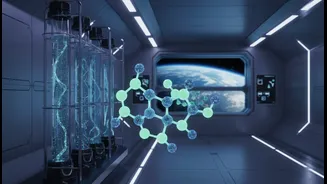
Microgravity is the condition of near-weightlessness experienced in space. On Earth, gravity influences everything, from how fluids mix to how our bodies function. By removing gravity from the equation, scientists can study materials and biological processes
in their fundamental state. This unique environment allows for breakthroughs that are impossible to achieve on the ground. For example, protein crystals, which are key to developing new medicines, can grow larger and more perfectly in microgravity, revealing their structure more clearly to researchers. Similarly, studying how human cells, plants, and even fire behave without gravity can lead to innovations in medicine, agriculture, and safety technology. This research is crucial for long-duration human spaceflight and has immense potential for applications back on Earth.
ISRO’s New Strategic Vision
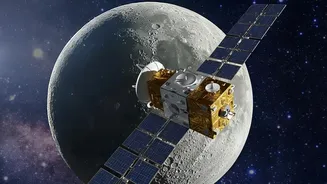
ISRO is actively creating a robust ecosystem for this field. A recent national workshop organised by ISRO's Human Space Flight Centre (HSFC) on July 15, 2026, brought together over 270 experts from academia, industry, and startups to build a sustainable microgravity research plan for India. This push is directly linked to India’s ambitious goals, including the Gaganyaan human spaceflight program and the planned Bharatiya Antariksh Station. These missions are envisioned not just as technological achievements but as orbiting laboratories. Through initiatives like the Indian Microgravity Experiments (IMEx-2026), ISRO is formally inviting proposals from the national research community for experiments in areas like space biology, materials science, and pharmacology.
From Classroom Theory to Zero-G Practice
The exciting part for students is that these opportunities are not just for seasoned scientists. ISRO, along with the Indian National Space Promotion and Authorisation Centre (IN-SPACe), is actively encouraging student participation. This includes programs where students can design and build their own small satellites or payloads. So far, IN-SPACe has already authorised 17 student satellites and payloads, with 11 successfully launched. The research avenues are vast. A student could propose an experiment to study how seeds germinate in space, how certain microbes behave without gravity, or develop a new material. Even experiments on how humans interact with touchscreens are being tested to improve spacecraft design.
How Can Students Get Involved?
For students eager to participate, there are several pathways. ISRO offers structured internship and project trainee schemes at its various centres. These programs are open to undergraduate, postgraduate, and doctoral students in science and technology fields, though they are competitive, often requiring a minimum aggregate of 60% or a CGPA of 6.32. IN-SPACe also facilitates internships with private space companies, bridging the gap between academia and the growing space industry. Beyond direct internships, students can engage through national competitions in satellite design and model rocketry. Programs like the Young Scientist Programme (YUVIKA) and the online STEM portal provide foundational knowledge and inspiration for younger students. Keeping a strong academic record and focusing project work on space-relevant topics can significantly boost a student's chances of being selected.
Building India's Future in Space
This focus on microgravity and student participation is a long-term investment. By giving students hands-on experience, ISRO is cultivating the next generation of space scientists, engineers, and entrepreneurs. These initiatives aim to create a self-sustaining ecosystem that not only supports future missions like a crewed lunar landing by 2040 but also drives innovation that benefits society at large. Experiments on muscle degeneration in space could lead to treatments for diseases on Earth, while research into life-support systems could offer solutions for resource management. As ISRO opens up the final frontier, it is ensuring that India’s brightest young minds are an integral part of the journey, turning their curiosity into tangible scientific contributions.