




Navratri: Nine Nights of Dance and Devotion (Oct 11–19)
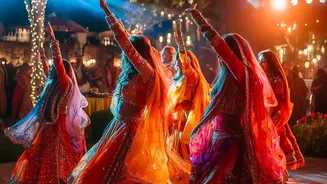
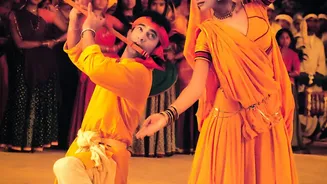
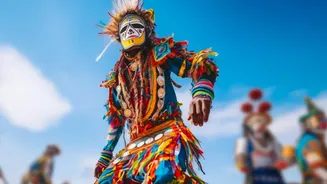
The month’s festivities kick off with Sharad Navratri, a vibrant nine-night festival dedicated to the goddess Durga. Celebrations vary wildly across regions, offering travellers a diverse menu of cultural experiences. In Gujarat and Mumbai, the nights
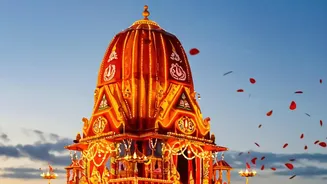
come alive with Garba and Dandiya Raas, where communities gather in traditional attire for energetic folk dances. It’s a spectacular, participatory event that welcomes everyone. In West Bengal, Navratri is celebrated as Durga Puja, one of the grandest festivals in the country. The city of Kolkata transforms into a massive art gallery with elaborate temporary temples (pandals), each housing a unique idol of the goddess. For travellers, this means booking flights and hotels months in advance, especially for destinations known for large-scale Garba or Durga Puja celebrations.
Dussehra: The Grand Culmination (Oct 20)
The tenth day, known as Dussehra or Vijayadashami, marks the climax of the preceding nine days, celebrating the victory of good over evil. In North India, it commemorates Lord Rama's victory over the demon king Ravana. This is dramatically re-enacted in 'Ramlila' performances, which culminate in the burning of colossal effigies of Ravana, his brother Kumbhakarna, and his son Meghnada. For a truly epic effigy-burning, the celebrations in Delhi and Kota are legendary. Meanwhile, in South and East India, the day honours Goddess Durga's triumph over the demon Mahishasura. The most famous celebration is the Mysuru Dasara in Karnataka, a state festival featuring a grand procession with decorated elephants and a palace illuminated by nearly 100,000 lights. If you plan to witness the Mysuru pageantry, be prepared for significant crowds and book your travel and stay well ahead of time.
Sharad Purnima: The Harvest Moon (Oct 25)
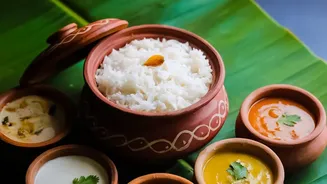
Following the intensity of Dussehra, Sharad Purnima offers a more tranquil and spiritual experience. This harvest festival is celebrated on the first full moon after the monsoon. It is believed that on this night, the moon's rays are imbued with healing properties, or nectar. A popular tradition involves preparing rice pudding (kheer) and leaving it under the moonlight overnight to be eaten the next day as blessed prasad. While observed across the country, the festival, also known as Kojagiri Purnima, holds special significance in the Braj region of Uttar Pradesh, which is associated with the legends of Radha and Krishna. For travellers, this festival offers a quieter, more intimate glimpse into household traditions and local beliefs. It's a perfect time to visit spiritual towns and witness serene evening rituals.
Karwa Chauth: A Celebration of Love (Oct 29)
Towards the end of the month, parts of North and West India celebrate Karwa Chauth, a festival that honours the bond of marriage. On this day, married women observe a strict fast from sunrise until moonrise, praying for their husband's health and longevity. The day is filled with rituals, with women dressing in fine clothes, applying henna, and gathering to perform prayers together. The fast is broken only after sighting the moon. While traditionally a festival for women, it has evolved in modern times, with many men fasting alongside their partners as a gesture of support. For a visitor, the most visible aspects are the bustling markets in the days leading up to the festival, filled with women shopping for jewellery, traditional attire, and puja items. It provides a fascinating look into cultural traditions deeply woven into family and community life in regions like Punjab and Rajasthan.