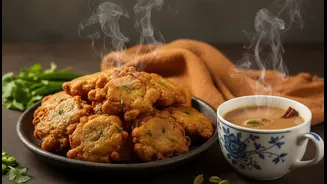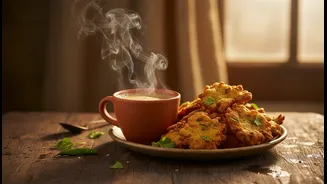




The Unofficial Cuisine of the Monsoon
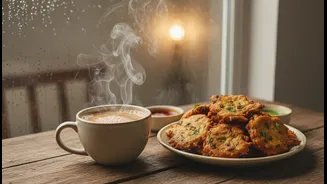
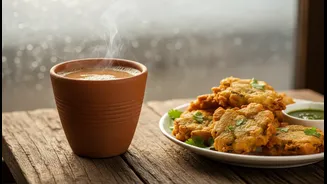
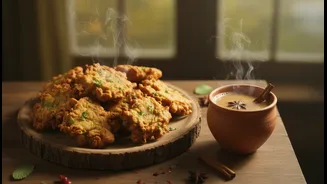
The connection between rain, chai, and pakoras is a powerful, almost Pavlovian response for millions. While the tradition may not be ancient, it has cemented itself into the fabric of modern Indian life over the past century. The combination became the unofficial
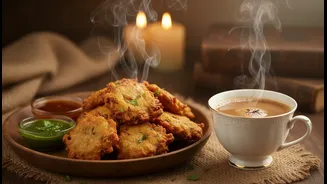
cuisine of the monsoons, a comforting counterpoint to the damp chill of a rainy day. Street food vendors, or chaiwalas, play a central role in this culture, with their stalls becoming community hubs where people gather to share a moment of warmth and conversation. This shared experience turns a simple snack into a social event, a pause in the day to connect with others over a universally loved pairing.
A Symphony of Sensation
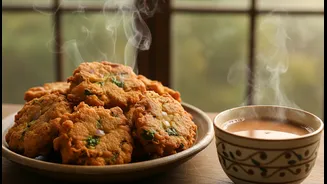
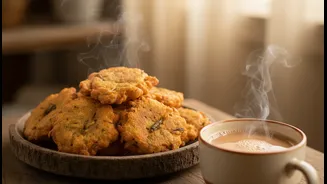
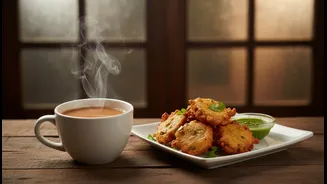
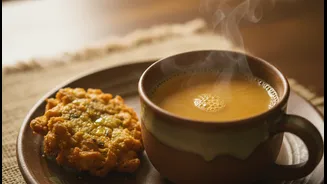
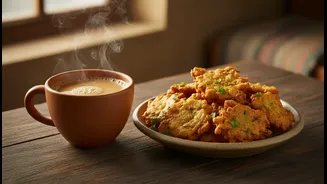
The appeal of this combination goes far beyond its taste. It’s a full-body sensory experience. The warmth of the cup in your hands, the spicy aroma of the tea, the audible crunch of the pakora, and the contrasting textures all play a crucial role. Food texture provides critical sensory signals; the crispness of a pakora is an indicator of freshness that provides a deep sense of pleasure and satisfaction. This multisensory engagement is powerful. The hot, spicy flavours provide a welcome contrast to the cool, damp weather, while the combination of fried carbohydrates and the sugar in tea can trigger the release of dopamine and serotonin, boosting our mood.
The Comforting Power of Ritual
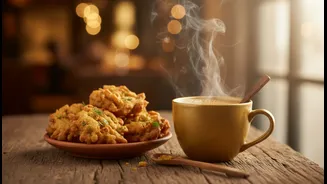
Preparing and consuming chai and pakoras is often a ritual in itself. Whether it's the methodical process of brewing tea or the communal act of frying and sharing snacks, these repeated actions provide a sense of stability and comfort. Creating a ritual around food and drink is a way of acknowledging that our actions have meaning; it transforms a mundane routine into a sacred pause. In a fast-paced world, the tea-time ritual offers a moment to slow down, be present, and de-stress. For many, it’s an unbreakable part of the daily rhythm, a moment of comfort after a long day that fosters conversation and connection within the family.
Eating Your Memories
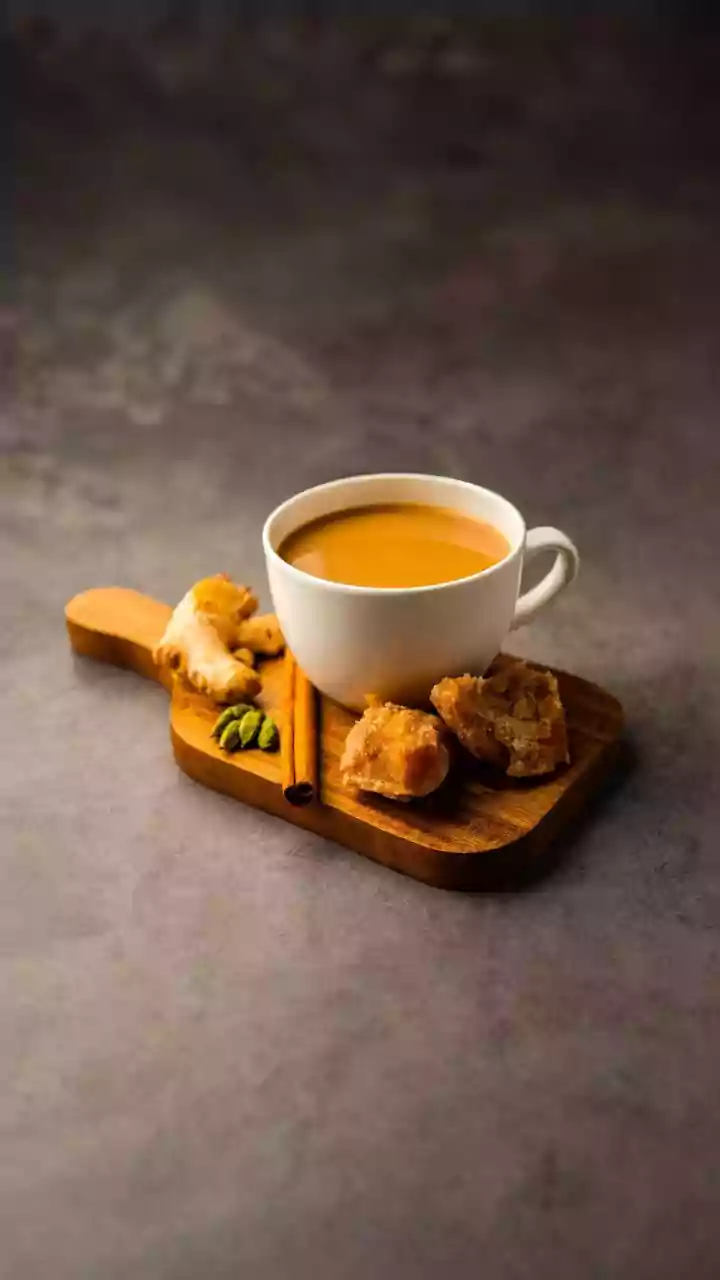
Perhaps the most profound element of this craving is its connection to sensory memory. Our brains are wired to link flavours, smells, and textures with specific moments and emotions. Food memories are often more potent than other memories because they engage all five senses. The hippocampus, a key area of the brain for memory, works closely with regions responsible for emotion and smell. This is why the aroma of ginger and cardamom can instantly transport you back to your childhood kitchen, and the taste of a pakora can evoke feelings of family gatherings and shared joy. These aren't just cravings for food; they are cravings for the feelings and memories associated with them.