


The Sun’s Unseen Temper
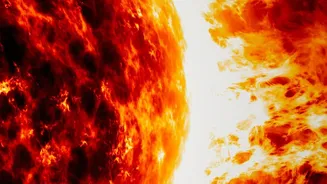
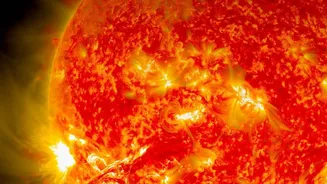
The sun, our life-giving star, has a volatile side. It periodically releases enormous bursts of energy and charged particles in events known as solar flares and coronal mass ejections (CMEs). Solar flares are intense flashes of radiation that travel at the
speed of light, reaching Earth in about eight minutes. CMEs are larger, slower clouds of magnetized plasma and particles that can take one to four days to travel the 150 million kilometres to our planet. When these events are directed at Earth, they can interact with our magnetic field, triggering geomagnetic storms that pose a significant threat to our technological infrastructure.
Our Fragile Digital Lifeline
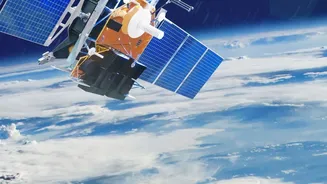
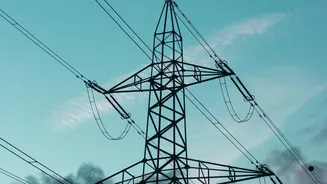
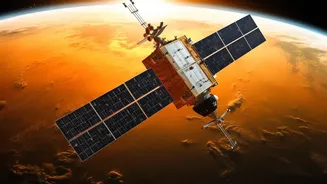
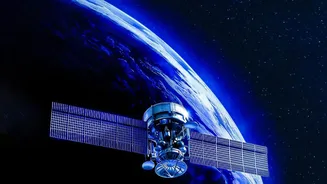
Our dependence on technology makes us uniquely vulnerable. Satellites, which are crucial for everything from GPS navigation and communication to financial transactions and weather forecasting, are on the front line. A blast of high-energy particles can damage their electronics, degrade solar panels, and even cause them to lose altitude due to atmospheric drag, potentially shortening their operational lifespan by years. Down on Earth, the risk is just as serious. Geomagnetic storms can induce powerful, uncontrolled currents in power grids. These currents can overload and damage critical transformers, leading to widespread and long-lasting blackouts, as seen in Quebec, Canada, in 1989 when a storm left six million people without power.
An Eye on the Sun
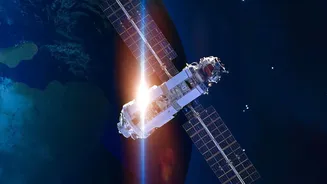
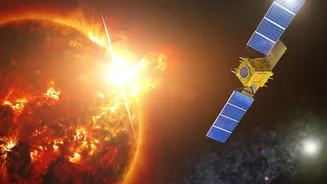
This is where solar storm tracking systems come in. They act as a sophisticated early-warning network, giving us time to prepare for the storm's arrival. International space agencies operate a fleet of satellites specifically designed to monitor the sun. Observatories like the Solar and Heliospheric Observatory (SOHO) and the Deep Space Climate Observatory (DSCOVR) are positioned at a unique point in space called Lagrange Point 1 (L1), about 1.5 million km from Earth. This vantage point allows them to have a continuous, uninterrupted view of the sun, watching for the tell-tale signs of a developing solar flare or a CME lifting off the solar surface.
India’s Crucial Contribution
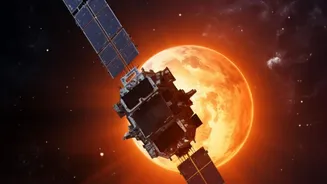
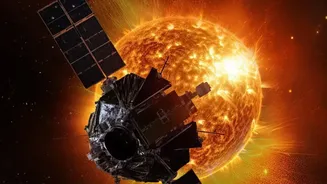
India has become a key player in this global effort with its Aditya-L1 mission. Launched by ISRO, Aditya-L1 is also stationed at the L1 point, making it India's first space-based observatory dedicated to studying the sun. Its suite of seven sophisticated instruments observes the sun's various layers, from the photosphere to the outermost corona, and studies the solar wind. A primary objective of the mission is to provide crucial data for understanding and predicting space weather, helping to forecast events like CMEs and their potential impact on Earth.
From Forecast to Action
The term 'shield' is a bit of a metaphor. These systems don't physically block the radiation. Instead, they provide forecasts that enable proactive defence. An early warning from centres like NOAA's Space Weather Prediction Center (SWPC) can give satellite operators hours or days of notice. This allows them to power down sensitive electronics, reorient spacecraft to protect vital components, or make minor orbital adjustments to mitigate risks. Similarly, power grid operators can use the warnings to adjust grid loads, take vulnerable transformers offline, and postpone maintenance to ensure the system is as resilient as possible when the storm hits. These actions significantly reduce the risk of catastrophic damage.