



1. Engage Their Brain with Puzzle Toys
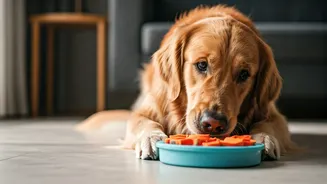
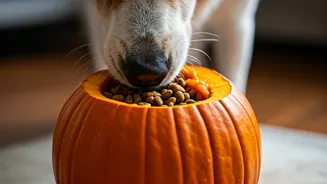
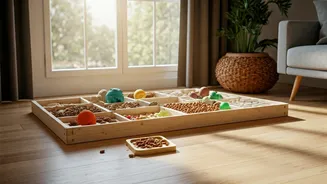
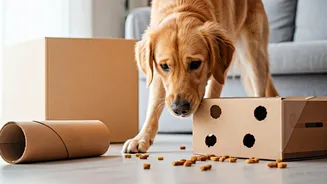
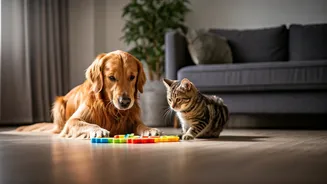
A tired dog is a happy dog, and mental exercise can be just as exhausting as physical exercise. This is where puzzle toys and treat-dispensing balls become your best friend. Instead of feeding your pet in a regular bowl, use a food puzzle. This forces
them to sniff, nudge, and problem-solve to get their meal, mimicking the natural foraging instincts they rarely get to use. You can start with simple puzzles and gradually increase the difficulty as your pet gets smarter. This simple switch turns mealtime into a stimulating 20-minute activity, helping to burn off excess energy and prevent boredom-related behaviours like chewing or excessive barking.
2. Play a Game of 'Find It'
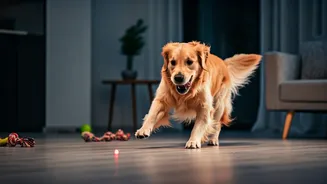
A dog's most powerful tool is its nose. Scent work is a fantastic way to engage their brain and let them do what they do best. The 'Find It' game is simple to set up. Start by having your pet sit and stay. Show them a favourite toy or a high-value treat, then hide it in an obvious spot in the same room. Release them with a command like "Find it!" and praise them enthusiastically when they succeed. As they get better, you can start hiding the object in more difficult places—under a cushion, behind a door, or even in another room. This game not only provides great mental stimulation but also strengthens your bond and improves their obedience skills.
3. Create a DIY Indoor Obstacle Course
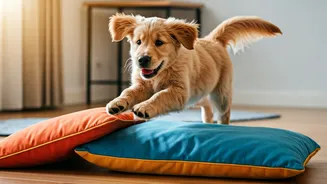
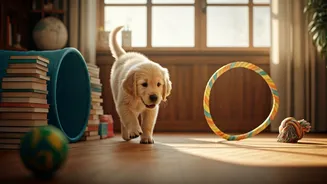
You don't need professional agility equipment to give your pet a fun physical challenge. Get creative with household items to build a safe, simple obstacle course. Use cushions or pillows for them to climb over, a row of chairs to create a tunnel to crawl through (drape a blanket over them), or a broomstick propped up on two stacks of books for a low jump. Guide your pet through the course with treats and praise. Keep it low-impact and safe, ensuring there are no sharp edges or unstable objects. This activity helps with their coordination and confidence while providing a structured way to burn off physical energy indoors.
4. Gear Up for Quick Rainy Dashes
Sometimes, a trip outside is unavoidable for potty breaks. Investing in the right rain gear can make these essential trips less miserable for everyone. A good-quality waterproof raincoat will keep your pet's torso dry, preventing that 'wet dog' smell and saving you from a massive clean-up job. For pets with sensitive paws or who dislike walking on wet surfaces, consider waterproof paw boots. They protect paws from puddles, mud, and potential hazards hidden in murky water. Getting your pet accustomed to wearing them might take some patience and positive reinforcement, but it can make rainy-day walks much more manageable.
5. Schedule a Training Session
A rainy day is a perfect opportunity to brush up on old commands or teach your pet a new trick. A focused 15-minute training session can be incredibly stimulating. Work on basics like 'stay', 'come', and 'leave it', or get ambitious and teach fun tricks like 'roll over', 'shake hands', or 'play dead'. Keep sessions short, positive, and full of rewards. This reinforces your role as the pack leader, strengthens your communication, and provides a structured mental workout that leaves your pet feeling accomplished and tired.
6. Don't Forget Quiet Time
While it's important to prevent boredom, it's also crucial to teach your pet to be calm and settled indoors. Constant high-energy play can inadvertently create an expectation of non-stop entertainment. Balance active games with quiet time. Encourage your pet to relax on their bed with a long-lasting chew, like a dental stick or a stuffed Kong. You can also simply spend some quality time cuddling on the sofa. This reinforces that home is a place for both fun and rest, helping them regulate their own energy levels on days when you can't be their sole source of entertainment.