






The Promise of a Personal Tutor
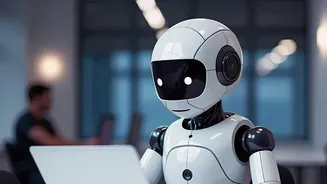
The dream of an AI tutor is compelling: a personalised, patient, and endlessly available learning companion for every student. In a country like India, with its diverse student population and burgeoning ed-tech market, the appeal is obvious. The idea
is to supplement classroom teaching, offering step-by-step help and instant feedback that a single teacher managing a large class might struggle to provide. Proponents believe this technology can level the playing field, giving struggling students the support they need while allowing high-achievers to soar. Several studies have indeed shown small to moderate gains in learning, particularly when the AI is well-designed and integrated thoughtfully by teachers.
What a New University Trial Uncovered
A large, recent study from the University of Maryland has pumped the brakes on инфекцииthe hype. In a randomised controlled trial involving over 2,300 undergraduate students, researchers gave one group access to a course-integrated AI assistant. The results were startling. Students with access to the AI tutor actually had lower final grades—by as much as 0.37 standard deviations in some cases, which is a significant drop. Even more dramatically, their engagement with the university's online learning platform plummeted. They participated less in discussion forums, viewed fewer course pages, and had fewer active days online compared to students without the AI tool.
Why Less Engagement Can Lower Grades
The link between lower engagement and poorer grades seems logical, but the 'why' is crucial. Researchers noted that the availability of the AI tutor may have displaced other, more effective learning behaviours. Instead of wrestling with a difficult concept, asking a professor a question during office hours, or collaborating with peers, students had a shortcut. The study found that nearly 74% of requests to the AI were for direct information, explanations, or solutions. Less than 1% of interactions involved students asking for feedback on their own work. This suggests students were using the tool more like an answer machine than a tutor, bypassing the very struggle that is often essential for deep learning.
It’s Not the Tool, It’s the Teaching
It would be a mistake to declare all AI tutors a failure. Other studies have shown modest success, but the key difference often lies in the implementation. For instance, a separate study on middle schoolers using a math practice tool called Goblins showed positive results. In that case, teachers assigned the specific problems and the AI served as a support tool, not an opennded assistant. This suggests the structure and pedagogy surrounding the AI are critical. When an AI is simply 'available' without being carefully woven into the curriculum, it can encourage passive learning. If it provides answers too easily, it undermines the development of critical thinking and problem solving skills.
The Human Element Remains Irreplaceable
The Maryland study also hints at a fundamental truth: technology alone is not enough to foster meaningful engagement. A separate Stanford study found that even when elementary students were given scheduled time to use an AI literacy platform, nearly half of them never used it. Usage only slightly increased with the presence of a human tutor focused on engagement. This points to the irreplaceable role of human connection in education. A human teacher can read a student's frustration, offer encouragement, and build a rapport that motivates them to try harder. Tutors involved in another trial noted that while supervising an AI was efficient, it was far less rewarding than teaching students directly.
Lessons for India’s Ed-Tech Boom
For India's rapidly growing educational technology sector, these findings are a critical cautionary tale. As companies and schools rush to integrate AI, the focus must be on pedagogy, not just technology. Simply providing a powerful AI tool is not a guaranteed solution and, as the evidence suggests, may even be counterproductive if implemented poorly. The most successful models will likely be hybrid ones, where AI assists and empowers human teachers rather than replacing their core functions. The goal should be to create tools that guide students through challenges, not just give them the answers, ensuring that technology serves as a scaffold for learning, not a crutch.