




Why Just Two Minutes Matters
Spending hours in a static, seated position can take a toll on your body. It contributes to tight muscles in the neck, shoulders, and hips, while weakening others, leading to poor posture and discomfort. Experts suggest that taking short movement breaks
every 30 to 60 minutes can significantly counteract these negative effects. A two-minute routine is the perfect 'movement snack'. It's short enough to fit between tasks without disrupting your workflow but long enough to increase blood flow, reduce stiffness, and reset your posture. Think of it as a small, consistent investment in your daily well-being and long-term health. Over the course of a day, these tiny breaks add up to significant relief.
1. Neck Release (30 Seconds)
Let's start at the top, where tension often accumulates. Sit tall in your chair with your feet flat on the floor and shoulders relaxed. Gently tilt your right ear toward your right shoulder, holding for about 15 seconds. You should feel a gentle stretch along the left side of your neck. Breathe deeply, then slowly return to the center and repeat on the left side for another 15 seconds. Avoid pulling your head down with your hand; let the weight of your head do the work. This simple move helps release the 'tech neck' strain from looking at a screen.
2. Seated Cat-Cow (30 Seconds)
This move is excellent for spinal mobility. Place your hands on your knees and sit at the edge of your chair. On an inhale, arch your back, push your chest forward, and look slightly up toward the ceiling (Cow pose). On an exhale, round your spine, tuck your chin to your chest, and gently pull your navel inwards (Cat pose). Alternate between these two positions for 30 seconds, flowing with your breath. This helps to wake up the spine and relieve lower back stiffness that builds up from sitting.
3. Chest Opener (20 Seconds)
To counteract the shoulder hunch that's common at a desk, this stretch opens up the chest muscles. While seated or standing, clasp your hands behind your back. Straighten your arms and gently squeeze your shoulder blades together. If you can, lift your hands slightly away from your lower back until you feel a good stretch across the front of your chest and shoulders. Hold this position for about 20 seconds, remembering to breathe and keep your neck long. This is a powerful antidote to slouching.
4. Seated Spinal Twist (20 Seconds)
Twists are fantastic for re-energizing the spine and relieving tension. Sit tall and cross your right leg over your left. Place your left hand on your right knee and your right hand on the back or armrest of your chair. Gently twist your torso to the right, looking over your right shoulder. Hold for 10 seconds, using your breath to deepen the stretch without forcing it. Return to the center and repeat on the other side. This movement helps improve flexibility and can ease lower back tightness.
5. Wrist and Finger Extender (20 Seconds)
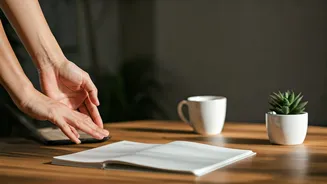
Constant typing and mouse use can lead to sore wrists. Extend your right arm in front of you with your palm facing up. With your left hand, gently pull your right fingers down and back toward your body until you feel a stretch in your forearm. Hold for 10 seconds. Then, flip your hand so your palm faces down and gently press your fingers toward the floor. Hold for another 10 seconds. Switch hands and repeat. This helps prevent repetitive strain injuries.