



The Challenge with Current Batteries
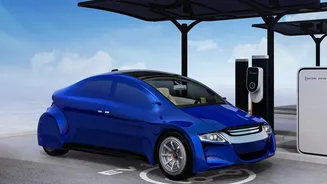
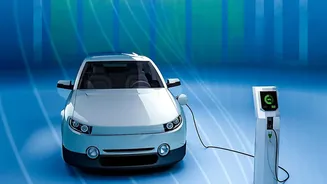
Electric vehicles are at the heart of the green transition, but their power source, the lithium-ion battery, has well-known drawbacks. These batteries typically rely on mined materials like cobalt and lithium, and contain highly flammable liquid electrolytes.
While generally safe, incidents of thermal runaway—a chain reaction that can lead to fires or explosions—are a persistent concern for consumers and manufacturers alike. The organic solvents used in these electrolytes are volatile and can ignite, posing a significant safety risk, especially in the high-energy applications required for EVs. This has sent researchers on a quest for a safer, more sustainable alternative that doesn’t compromise on performance.
Finding Power in the Fields
The answer, it turns out, may lie in one of the world's most abundant resources: agricultural waste. Every year, millions of tonnes of rice husks, straw, and other plant-based by-products are produced. Often, this waste is burned or left to decompose, but scientists now see it as a valuable raw material. In countries like India, with a massive agricultural sector, this represents a monumental opportunity to create a circular economy—turning waste into a high-value product. Researchers are exploring how materials like rice husks, food waste, and even by-products from the wine industry can be chemically processed to create key battery components.
The Chemistry of a Plant-Based Battery
So how do you turn a rice husk into a battery part? The magic is in the chemistry of the plants themselves. Agricultural waste is rich in lignocellulosic biomass, which contains two crucial natural polymers: cellulose and lignin. Researchers have found ways to process these materials to serve critical functions inside a battery. Lignin, the rigid polymer that gives wood its strength, can be engineered into a separator film. This film sits between the battery’s positive and negative electrodes to prevent short circuits. Lignin-based separators have shown remarkable thermal stability, resisting shrinkage at temperatures up to 300°C, a massive improvement over traditional plastic separators that can fail near 100°C. Meanwhile, the fibrous cellulose can be used to create separators with excellent electrolyte absorption, and biochar derived from rice husks can be used to create anodes, the negative electrode in a battery.
Solving the Flammability Problem
The key to creating a non-flammable battery lies in replacing the volatile liquid electrolyte. Here, too, biomass offers a solution. Scientists have been able to produce ionic liquids—essentially salts that are molten at room temperature—from lignocellulosic biomass. These bio-based electrolytes have high thermal stability and are not flammable, offering a direct and much safer substitute for their volatile organic counterparts. Some companies are even using agricultural by-products like straw to create batteries that use a non-flammable saltwater solution, like zinc-bromide, which is also used in firefighting. This approach not only eliminates the risk of fire but also uses materials that are abundant and non-toxic.
The Road from Lab to Highway
While the science is promising, the journey from a laboratory breakthrough to mass production for EVs is a long one. Scalability is a major hurdle; processes that work in a lab must be proven to be efficient and cost-effective on an industrial scale. The energy density of these new batteries—how much power they can store for their size—is still an area of active development. Some plant-based batteries may be better suited for stationary energy storage or low-power devices before they are ready for the demanding performance required by electric cars. However, several startups and research groups are making significant progress. For instance, some research shows that converting rice husks into nano-porous silicon can yield anodes with a theoretical capacity ten times higher than conventional graphite. This suggests that, with continued innovation, performance may one day rival or even exceed that of current technologies.