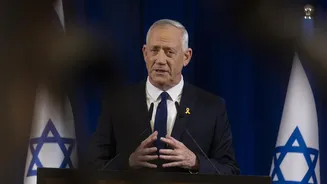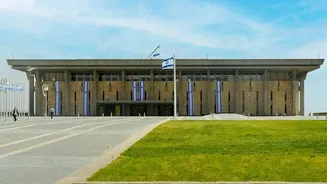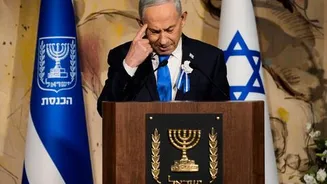








In Israel's turbulent political landscape, transitional periods are common. This puts a spotlight on the powers of a 'caretaker' government, led by figures like Benjamin Netanyahu, and raises a key question: what can a leader without a mandate do?
What is a Caretaker Government?
In Israel,
when a government dissolves, a prime minister resigns, or elections fail to produce a new coalition, the outgoing administration doesn't just disappear. It continues to function as a caretaker or interim government until a new one is successfully formed and sworn in. This principle of 'continuity' is designed to prevent a vacuum in governance, ensuring the state can always operate. According to Israel's Basic Law: The Government, the outgoing government simply continues its duties. The term 'caretaker' itself doesn't even appear in the legislation, but the concept is central to navigating the country's frequent political stalemates.
The Unwritten Rules of Restraint
Interestingly, the specific limitations on a caretaker government are not explicitly detailed in Israel's Basic Laws. Instead, they have been shaped over time by two key sources: Supreme Court rulings and guidelines issued by the Attorney General. This makes the boundaries somewhat flexible and often a subject of intense political and legal debate. The foundational principle established by the court is a 'duty of restraint'. This means that while a caretaker government holds the same legal authority as a regular one, it is expected to exercise its power with caution, recognizing its diminished democratic legitimacy. Decisions are meant to be judged by a stricter standard of reasonableness, avoiding major actions unless there is a 'vital public need'.
What's Off the Table? Appointments and Major Policy
The most significant restrictions on a caretaker government concern long-term decisions that could tie the hands of a future administration. Chief among these is the appointment of senior officials. The Supreme Court has ruled that a caretaker government should avoid filling top posts like a state attorney, police commissioner, or even ministry directors-general, preferring to wait for the new government unless it's absolutely essential. This is meant to prevent an outgoing leader from populating the civil service with loyalists. Similarly, interim governments are expected to refrain from launching major, irreversible policy initiatives or making significant financial commitments that could burden their successors.
Where Power Remains: Security and Foreign Affairs
The area where a caretaker government retains the most freedom is in security and foreign policy. Legal precedent and practical necessity dictate that the government must be able to respond to immediate threats. Israeli law does not prohibit a caretaker government from launching a military operation or even going to war, provided the decision is justified by a pressing need and, for a major conflict, is approved by the security cabinet. The Supreme Court has historically been reluctant to intervene in such matters. This creates a point of tension, as critics often worry that a caretaker prime minister might use security decisions for political purposes, a charge that has been levelled during Netanyahu's transitional periods.
The Netanyahu Factor
Benjamin Netanyahu's long tenure and various transitional periods as prime minister have frequently tested the boundaries of caretaker power. His time in office has been marked by debates over his authority while under indictment and his government's actions during extended election cycles. For example, his ability to remain prime minister while facing criminal charges was confirmed by the Attorney General in 2019, but only in a caretaker capacity. More recently, his rivals have expressed concern about major security decisions being made without a full public mandate, highlighting the inherent conflict between a caretaker's legal authority and their political legitimacy. These situations have repeatedly brought the unwritten rules of Israeli governance into sharp focus, sparking constitutional debates about the balance of power.