

The Challenge of Finding Distant Water
For years, astronomers have been able to detect exoplanets, planets orbiting stars other than our Sun. The challenge wasn't just finding them, but understanding what they are made of. Water, a key ingredient for life as we know it, was a primary target.
Previous observatories like the Hubble Space Telescope could study the atmospheres of some giant exoplanets, but getting a clear signal from smaller, rocky worlds was incredibly difficult. The light signatures were often too faint and the instruments not sensitive enough to parse the subtle clues hidden in the vastness of space, leaving us with more questions than answers about the potential habitability of these distant worlds.
A New Generation of Vision
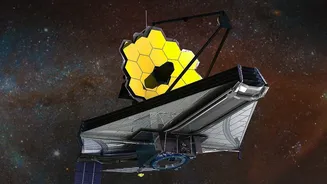
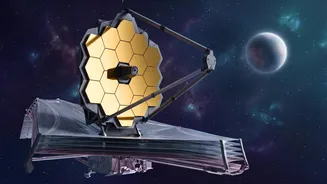
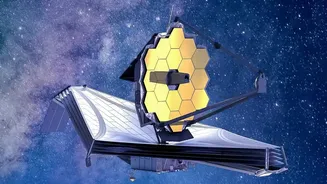
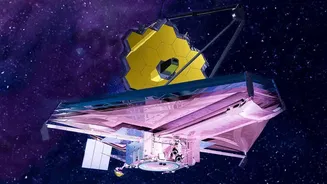
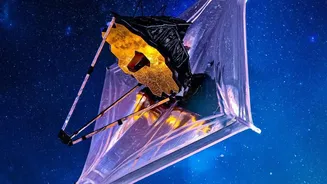
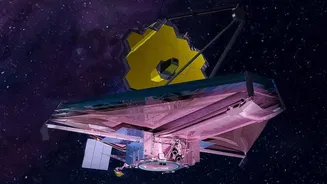
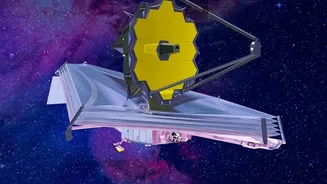
Enter the James Webb Space Telescope. What makes JWST a revolutionary tool is its unprecedented sensitivity to infrared light. Its massive primary mirror and advanced instruments, like the Near-Infrared Spectrograph (NIRSpec) and the Mid-Infrared Instrument (MIRI), were specifically designed to perform this exact job. These sensors allow Webb to operate as a time-traveling chemical detective. By capturing infrared light, which is invisible to the human eye but carries the thermal signatures of distant objects, JWST can analyze the composition of planetary atmospheres with a precision that was previously impossible. This capability has been described by NASA as ushering in a "new era in exoplanet research."
Decoding Atmospheric Fingerprints
The primary technique JWST uses is called transmission spectroscopy. When an exoplanet passes in front of its host star from our perspective (an event called a 'transit'), a tiny fraction of the starlight filters through the planet's atmosphere. Different gases in that atmosphere absorb specific wavelengths, or colors, of light. This creates a unique 'barcode' or chemical fingerprint in the star's light spectrum. JWST's spectrographs are powerful enough to read this barcode, identifying the presence and even hints of the abundance of molecules like water vapor, methane, and carbon dioxide. By subtracting the light of the star alone from the light during a transit, scientists can isolate the atmospheric signature of the planet itself.
From Theory to Landmark Detections
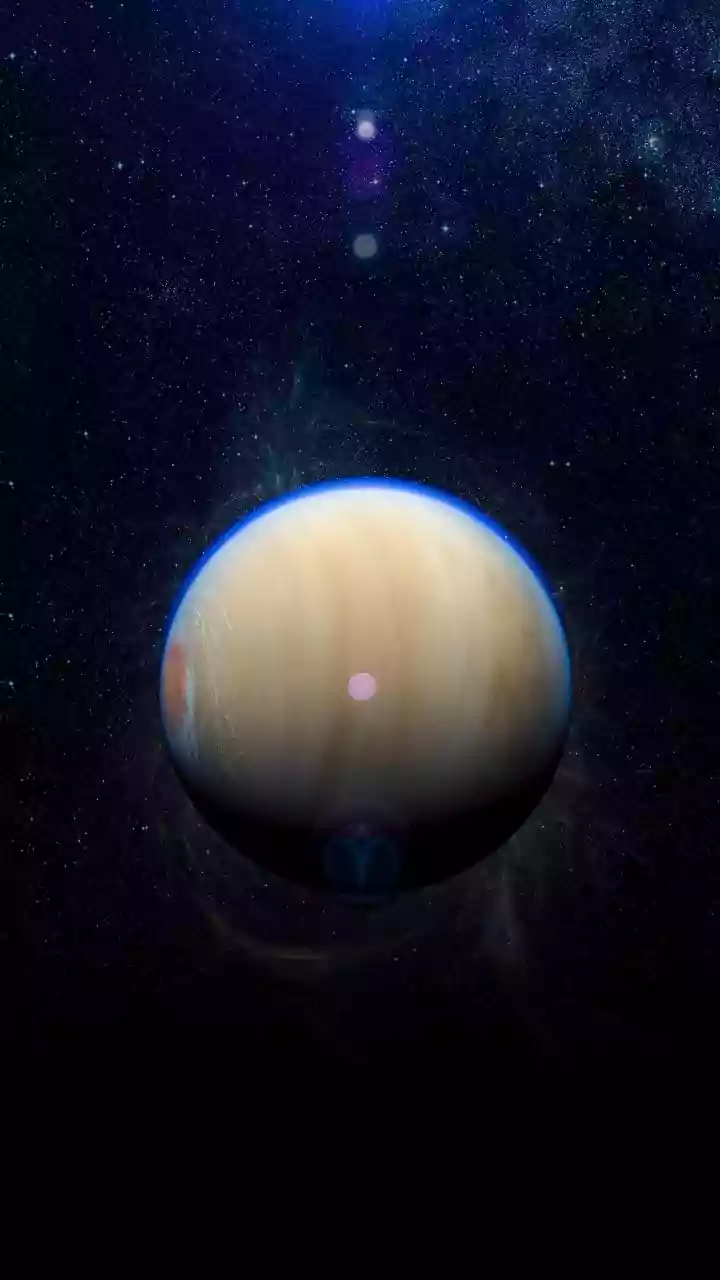
The revolution is not just theoretical; it's already happening. Scientists using JWST have confirmed water vapor in the atmospheres of several exoplanets. For instance, observations of the hot gas giant WASP-96 b showed a clear and unambiguous signature of water. More recently, studies of planets like WASP-18 b and WASP-80 b have also revealed the presence of water vapor, sometimes alongside other molecules like methane. In a stunning display of its precision, JWST even detected 'semi-heavy water' (where one hydrogen atom is replaced by a heavier version called deuterium) in the atmosphere of the exoplanet WASP-39b. This kind of detailed analysis helps scientists piece together not just if a planet has water, but also clues about how and where that planet originally formed.
The Rocky Road to Finding Earth's Twin
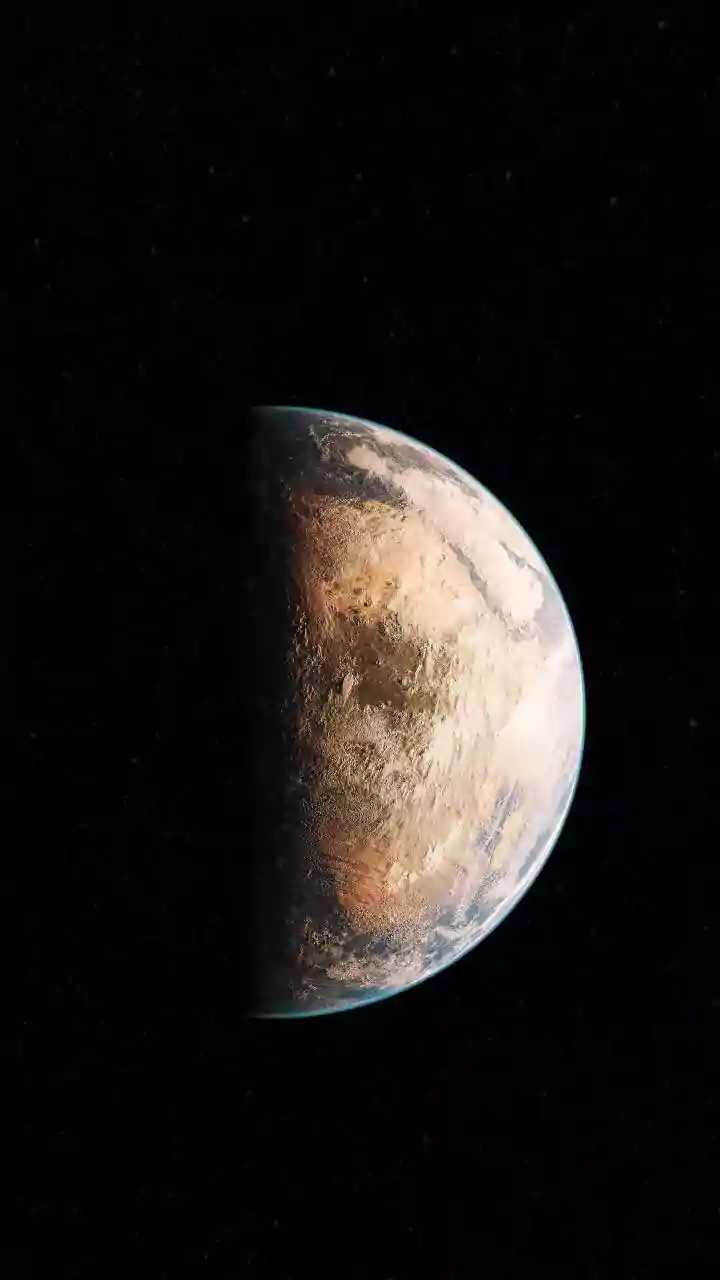
While detecting water on gas giants is a major step, the ultimate goal is to analyze smaller, rocky planets like Earth. This remains a significant challenge. These planets have much thinner atmospheres, making the signals incredibly faint. Furthermore, the host stars themselves can have water vapor in cool spots on their surface, which can mimic a planetary signal and complicate analysis. Despite these hurdles, JWST has begun observing rocky planets in their stars' habitable zones, including those in the famous TRAPPIST-1 system. Recently, JWST detected water vapor in the planet-forming disk of a young star named PDS 70, in the very region where rocky, terrestrial planets are thought to be assembling. This suggests that the building blocks for watery worlds are available right where they are needed.