





The Facts: What is This New Model?
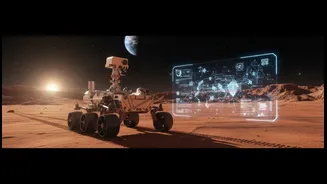
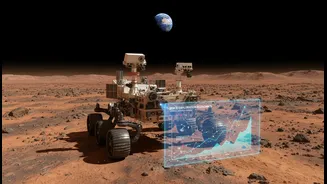
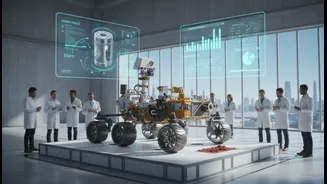
The new approach sees NASA transitioning from being the sole builder and operator of its missions to becoming a customer. Instead of developing every piece of hardware from scratch, the agency is now purchasing services from commercial companies. This
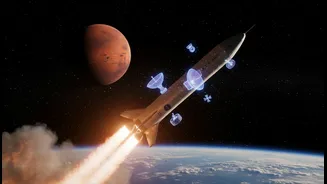
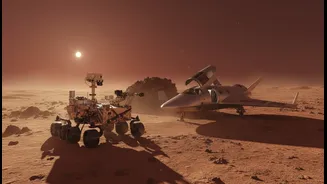
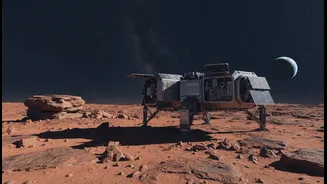
public-private partnership model means NASA often provides the scientific instruments, while a private partner like Relativity Space or SpaceX provides the rocket, the spacecraft, and the mission operations needed to get to Mars. A recent example is the Aeolus mission, planned for 2028, where NASA is supplying the advanced weather-science payload, and Relativity Space is responsible for the delivery service. This strategy is an extension of the successful Commercial Crew and Cargo programs that resupply the International Space Station, which dramatically lowered the cost of accessing low-Earth orbit. By leveraging private investment, NASA can focus its resources on pure science and accelerate the pace of discovery.
The Practical Impact: Cost, Speed, and a New Economy
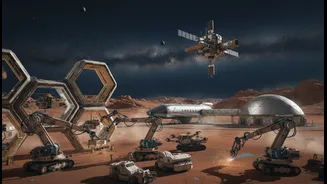
The most significant impact of this model is economic. By fostering competition between private firms, NASA aims to drive down the historically astronomical costs of deep space missions. This approach is designed to increase the frequency of missions, allowing scientists to gather more data, more often. For Mars, this means getting critical information about the environment—like its winds, dust, and radiation—much faster, which is essential for planning safe human landings. Beyond individual missions, this strategy nurtures a sustainable commercial space economy. It encourages companies to develop new technologies and capabilities for interplanetary travel, which could eventually be used for commercial ventures, from deploying satellite networks around Mars to, one day, supporting a permanent human presence. It's less about a single trip and more about building the infrastructure for a multi-planetary future.
The Key Players: Beyond NASA
While NASA remains the anchor client, the stars of this new era are increasingly private companies. SpaceX, with its ambitious Starship rocket, is a frontrunner, designing a fully reusable system with the stated goal of building a city on Mars. The company has already secured contracts to launch missions toward the Red Planet, including the European Space Agency's Rosalind Franklin rover. However, the field is widening. Relativity Space's 2028 Aeolus mission contract marks it as a serious new player in the interplanetary space. Other giants like Blue Origin are also developing concepts for Mars, such as communications satellites that would be vital for any sustained presence there. This growing ecosystem of providers is exactly what NASA hopes to encourage, creating a competitive marketplace for everything from scientific payload deliveries to, eventually, crew transport.
Remaining Questions: The Immense Technical Hurdles
Despite the innovative model, the fundamental challenges of getting humans to Mars remain immense. First is the landing. Mars has a thin atmosphere, making it notoriously difficult to slow down and land heavy payloads—a problem that gets exponentially harder when dealing with the mass of a human habitat. Second, life support systems must be perfected. A round trip to Mars could take over two years, requiring flawless recycling of air and water, as well as sustainable food sources, far beyond what the International Space Station currently manages. Finally, there's radiation. Outside of Earth's protective magnetic field, astronauts will be exposed to dangerous levels of cosmic and solar radiation, increasing health risks. Solving these technical problems requires breakthroughs in engineering and technology that are still in development.
Remaining Questions: Funding, Policy, and Ethics
Even with private investment, a human mission to Mars will require sustained and substantial government funding over many years, making it vulnerable to shifting political priorities and budget cuts. There are also complex policy questions. The Outer Space Treaty of 1967, written long before the rise of commercial spaceflight, prohibits nations from claiming celestial territory, but its application to private companies and resource exploitation is unclear. This creates uncertainty around future activities like mining for water or minerals. Furthermore, ethical questions are emerging about planetary protection—the risk of contaminating Mars with Earth microbes, potentially wiping out any indigenous life before we even find it. As private interests grow, balancing the drive for profit with the goals of pure scientific discovery and responsible exploration will be a major ongoing challenge.