








From Bones to Base Pairs
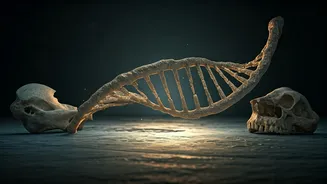
The study of ancient diseases, or paleopathology, traditionally relied on the visible marks left on human remains. Skeletons with tell-tale lesions or mass graves from a specific period offered clues, but they were often ambiguous. Now, the field of paleogenomics
is providing definitive answers by extracting and sequencing ancient DNA (aDNA) from millennia-old bones and teeth. This molecular archaeology allows scientists to identify the specific pathogens that caused devastating illnesses, tracing their genetic code through time. By piecing together fragments of viral and bacterial genomes, researchers are no longer guessing at the cause of historical pandemics; they are reading the genetic blueprint of the killers themselves. This leap in technology, particularly high-throughput sequencing, has opened a direct window into the evolutionary history of humanity's oldest microbial foes.
Rewriting the Black Death
No pandemic looms larger in history than the Black Death, which wiped out as much as half of Europe's population in the 14th century. For years, its exact origins and spread were debated. Ancient DNA has settled the matter, confirming the culprit as the bacterium Yersinia pestis. But the story doesn't end there. By analyzing DNA from plague victims across different centuries, including those from the earlier Plague of Justinian in the 6th century, scientists have created a family tree for the pathogen. They’ve discovered that different strains caused these major outbreaks, identifying specific genetic mutations that may have influenced their virulence. Some of the oldest known traces of plague have been found in 5,500-year-old remains in Siberia, suggesting the bacterium was a threat long before it caused medieval pandemics and evolved in stages to become so deadly.
Solving a Colonial-Era Mystery
The origin of syphilis has been a fierce, centuries-long debate: did Christopher Columbus's crew bring it to Europe from the Americas, or was it already there? Ancient DNA is providing powerful new evidence. Recent analysis of a 5,500-year-old skeleton from Colombia uncovered a very early relative of the bacterium Treponema pallidum, which causes syphilis. This discovery pushes back the known history of treponemal diseases in the Americas by 3,000 years, establishing their presence long before European contact. While this doesn't definitively prove the Columbian exchange theory, it adds significant weight to the idea that the ancestors of the syphilis-causing bacterium originated in the New World. By successfully distinguishing the DNA of syphilis from related diseases like yaws in historical remains, scientists are finally untangling this complex history.
The Evolutionary Arms Race
The story of ancient DNA is not just about pathogens; it's also about us. These massive disease events acted as powerful engines of natural selection. By studying the DNA of Black Death survivors, researchers discovered that people with a specific variant of a gene called ERAP2 were about 40% more likely to survive the plague. This protective gene, which helps the immune system better recognize invaders, became more common in subsequent generations. However, this evolutionary trade-off has a modern-day consequence: the same gene variant that protected against the plague is now associated with an increased risk of autoimmune diseases like Crohn's disease and rheumatoid arthritis. This shows how pandemics can leave a lasting legacy written into our own genomes, shaping our susceptibility to different diseases today.
Why Ancient Diseases Matter Now
This journey into the genetic past is far more than an academic exercise. Understanding how pathogens have evolved, jumped between species, and adapted to human hosts provides a crucial roadmap for public health today. Scientists can track how virulence factors—the genetic tools that make a microbe deadly—emerge and change over time. This knowledge can help predict how current diseases might mutate and inform the development of more robust vaccines and treatments. Tracing the history of zoonotic diseases (those that jump from animals to humans) shows how events like the rise of farming forever altered our relationship with pathogens. By learning the lessons of past pandemics, we can better prepare for the infectious disease challenges of the future.