



A New Dimension of Discovery
In a breakthrough for exoplanet research, astronomers are using the James Webb Space Telescope to create the first-ever three-dimensional maps of atmospheres on worlds beyond our solar system. This isn't just detecting a chemical signature; it's charting
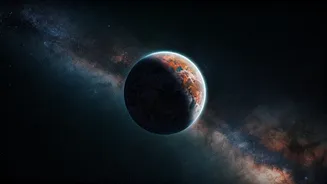
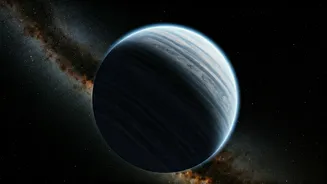
the weather and climate on alien planets. A recent study focused on WASP-18b, an 'ultra-hot Jupiter' located 400 light-years away. Using a new technique called spectroscopic eclipse mapping, scientists have begun to understand these distant planets with a level of detail previously reserved for our own solar system neighbors. This represents a monumental leap from simply detecting the presence of water to understanding its role and distribution in a planet's atmosphere.
The Science of Starlight
So how do you map a planet you can't even see directly? The technique relies on incredible precision. As an exoplanet passes behind its star in what is called a 'secondary eclipse', the JWST measures the tiny dip in combined light. By observing this process across many different wavelengths of infrared light, scientists can piece together a picture of the planet's atmosphere. Each wavelength is absorbed differently by molecules like water, allowing researchers to probe different altitudes. Wavelengths where water is highly absorbent reveal information about the upper atmosphere, while other wavelengths peer deeper, effectively creating slices of the atmosphere that can be stacked into a 3D model.
More Than Just a Chemical Signature
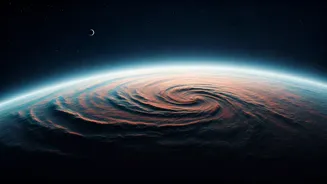
A 'water vapour profile' provides much more than a simple confirmation of H2O. These 3D maps reveal temperature variations across latitude, longitude, and altitude. On WASP-18b, for example, JWST revealed a scorching hotspot on the planet's dayside, which is permanently locked facing its star. Interestingly, this hotspot showed fewer signs of water than cooler regions. This is because the extreme temperatures, approaching 5,000 degrees Fahrenheit, are hot enough to tear water molecules apart. The molecules can then recombine in cooler parts of the atmosphere. This kind of dynamic detail, showing how atmospheric winds fail to distribute heat and where chemical processes occur, turns a planet from a simple data point into a complex, active world.
The Hunt for Habitable Worlds
While an ultra-hot Jupiter like WASP-18b is certainly not habitable, the technique is a game-changer for the ultimate goal: finding life elsewhere. Water is considered essential for life as we know it, so understanding where and how it exists is a critical first step. By creating these atmospheric profiles, scientists can distinguish between planets that are merely in the 'habitable zone' and those that have the actual atmospheric conditions to support liquid water on their surface. For example, some planets may be in a 'moist greenhouse' state, where water vapor is being lost to space, making them ultimately uninhabitable. This new mapping ability allows scientists to prioritize which smaller, rockier worlds—like the intriguing K2-18b or GJ 9827d—are the most promising candidates for hosting life.