



The Big City Slowdown
For years, the food delivery narrative was dominated by rapid expansion across India's metropolitan centres. Platforms like Zomato and Swiggy poured money into acquiring customers and restaurant partners in a high-stakes race for market share. These dense
urban hubs were the perfect incubator, offering a large base of digitally-savvy consumers with disposable income and a craving for convenience. However, that explosive growth phase is now maturing. Metros are becoming saturated markets where competition is fierce and profitability is a constant battle. High operating costs, including steep real estate prices and intense marketing wars, have squeezed margins, forcing companies to look for new avenues of growth. The consensus among industry leaders is that the next wave of expansion will come from adding new users, not just increasing order frequency from existing ones in big cities.
The Untapped Small-Town Opportunity
The focus is now squarely on India's Tier-2, Tier-3, and even smaller towns. Places like Lucknow, Jaipur, Coimbatore, and Nagpur are no longer secondary markets; they are the new epicentres of growth. This strategic pivot is driven by simple demographics and powerful economic shifts. With rising disposable incomes, widespread smartphone and 4G/5G penetration, and the normalisation of digital payments through UPI, consumers in smaller cities are more ready than ever to embrace on-demand services. This isn't just a handful of cities; India has over 400 Tier-2 and Tier-3 cities compared to around 50 Tier-1 cities, representing a massive, untapped pool of potential customers. For food and beverage brands, the appeal is also economic: lower operational costs for things like rent make these markets far more attractive, with some outlets breaking even 20-25% faster than their metro counterparts.
A Different Operational Playbook
Expanding into smaller towns isn't as simple as launching the same app in a new location. The operational playbook that worked in dense urban clusters is often ineffective here. The core challenge lies in unit economics. Average order values in Tier-2 cities can be significantly lower than in metros. Simultaneously, delivery costs can be higher because of lower order density—riders cover larger distances for fewer deliveries per hour, burning more fuel. This combination can quickly lead to losses on each order if the metro model is applied directly. There are also significant infrastructural hurdles. Addresses are often not accurately mapped, making route optimisation difficult. The restaurant landscape is different, too, with fewer large chains and a greater number of independent, local eateries that may require extensive training and onboarding to integrate into a digital platform.
Cracking the Local Code
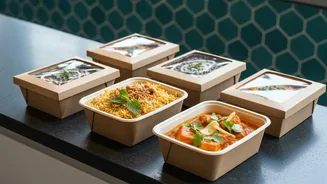
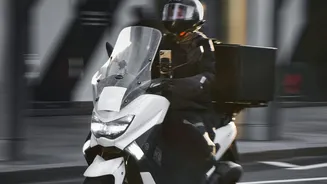
Success in these new markets depends on mastering local operations. Instead of a one-size-fits-all approach, companies are learning to adapt. This includes hiring local teams who possess an innate understanding of the area's geography and culture. One key strategy involves building partnerships with beloved local restaurants, not just national chains, to ensure the platform's offerings are relevant to local tastes. Some platforms use cloud kitchens—delivery-only cooking spaces—to help popular local brands expand their reach without needing to invest in a new dine-in location. Marketing is also tailored, relying more on local engagement than broad digital campaigns. Even the delivery fleet is managed differently; in some towns, companies have encouraged the use of bicycles to overcome challenges like a lack of driving licenses among potential partners. The entire model is being re-engineered to work with lower order values and different consumer behaviours.
More Than Just a Meal
The push into India's hinterlands is about more than just food. For these platforms, food delivery acts as a strategic entry point to establish a logistical network and build consumer trust. Once that foundation is laid, it can be leveraged to introduce other services. This is most evident in the rapid expansion of quick commerce—10-minute grocery and essentials delivery—through services like Swiggy Instamart and Zomato-owned Blinkit. These platforms are finding that while the ultra-fast 10-minute promise is key in metros, consistent same-day or two-hour delivery is already a massive improvement in many smaller towns. By solving for food, these companies are building the infrastructure to become the all-purpose convenience app for everything from groceries and electronics to personal care, fundamentally changing the retail landscape of non-metro India.