





What Exactly Is a Dolphin Push-Up?
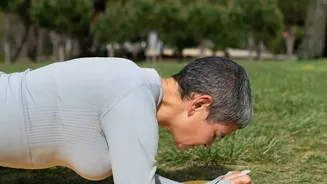
The dolphin push-up is a dynamic bodyweight exercise that blends elements of a forearm plank and the dolphin pose from yoga. It starts in a forearm plank, then you lift your hips high into an inverted 'V' shape, similar to a downward-facing dog but on
your forearms. From there, you lower your head toward the floor before pressing back up through your shoulders and forearms. This movement primarily targets the shoulders (deltoids), but also heavily engages the triceps, upper back, and core, which works overtime to keep you stable. Because it puts less direct pressure on the wrists than a traditional push-up, it can be a good alternative for some, but its main appeal is as a stepping stone to even more advanced skills like forearm stands.
The Risks of Rushing the Progression
Jumping into an advanced move like the dolphin push-up without the prerequisite strength and stability is a recipe for injury. The primary risk is to the shoulder joint. The movement requires significant strength and control from the rotator cuff and scapular muscles to keep the shoulder joint stable. Without it, you could strain muscles or, worse, cause an impingement. Furthermore, if your core isn't strong enough to prevent your hips from sagging during the movement, you place undue stress on your lower back. Proper form is everything. The goal isn't just to complete the motion, but to control it. Rushing leads to compensation, where larger, incorrect muscles take over, defeating the purpose of the exercise and increasing your risk of getting hurt.
Self-Assessment: Are You Ready?
Before attempting a dolphin push-up, you need to honestly assess your current fitness level. A strong foundation is non-negotiable. Here’s a simple checklist. Can you comfortably perform the following? First, a standard forearm plank with a flat back and engaged core for at least 60 seconds. This demonstrates baseline core and shoulder stability. Second, at least 15-20 classic pushups with good form (chest to elbow height, straight line from head to heels). This shows you have foundational pressing strength in your chest, shoulders, and triceps. Finally, can you hold a static dolphin pose (on your forearms, hips high) for 30-45 seconds without discomfort? If you can confidently check all three boxes, you are likely ready to start working on the specific progressions toward the full exercise.
Phase 1: Building a Solid Foundation
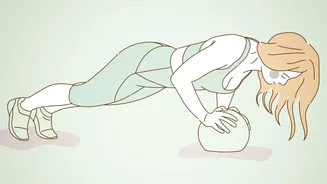
If you're not quite ready, don't worry. Building strength is a journey. Focus on mastering the basics first. Incorporate these exercises into your routine 2–3 times per week. Start with incline pushups, placing your hands on a bench or wall to reduce the load, gradually decreasing the incline as you get stronger. Work on standard pushups, even if you have to start on your knees, ensuring your form is perfect. Hold forearm planks, focusing on keeping your body rigid and preventing your hips from dropping. Another key exercise is the 'bird–dog', where you start on all fours and extend an opposite arm and leg. This teaches your core to resist rotation and remain stable while your limbs are in motion, a key skill for advanced movements.
Phase 2 : Bridging the Gap
Once you've built a solid base , you can move on to more dynamic and specific exercises . The first is the 'plank to dolphin' transition . Start in a forearm plank and , keeping your core tight , push through your shoulders to lift your hips up into the dolphin pose . Pause , then slowly lower back to the plank position . This builds the exact motor pattern and shoulder strength needed for the full pushup . Another great preparatory move is the pike pushup . In a downward–facing dog position (on your hands , not forearms) , bend your elbows to lower the top of your head toward the floor , then press back up . This variation shifts more load onto your shoulders , mimicking the pressing action of the dolphin pushup .
Executing the Perfect Dolphin Push–Up
Once you feel strong and stable with the progression exercises , it's time to try the real thing . Start on your hands and knees , then lower your forearms to the floor , parallel and shoulder–width apart . Tuck your toes and lift your hips high , forming that inverted 'V' . Your body should be in a straight line from your head to your heels , with a strong core engagement to prevent your back from sagging . Inhale as you lean forward and lower your head towards your hands . Your shoulders will travel slightly past your elbows . Just before your head touches the floor , exhale and forcefully press through your forearms and shoulders to push your hips back up to the starting position . Focus on a smooth , controlled motion , not speed . Aim for a few perfect reps rather than many sloppy ones .