






A Junkyard Orbiting Earth
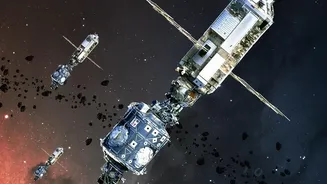
The final frontier is fast becoming a cosmic junkyard. Decades of space exploration have left a hazardous legacy of defunct satellites, spent rocket stages, and fragments from past collisions. Millions of these objects, some no bigger than a bolt but
travelling at over 27,000 kilometres per hour, now orbit our planet. This creates a perilous environment for the thousands of operational satellites we rely on daily. According to a recent government disclosure, 20 of India's 22 active satellites in Low Earth Orbit (LEO) are at a heightened risk of collision because this region is so densely populated with junk. The threat is not theoretical; the Indian Space Research Organisation (ISRO) had to perform nine collision avoidance manoeuvres in the first half of 2026 alone to steer its valuable assets clear of danger.
India’s New AI-Powered Shield
To counter this ever-present threat, India is turning to artificial intelligence. In collaboration with space-tech startups like Digantara, the nation is developing and deploying sophisticated AI-driven systems for Space Situational Awareness (SSA). These systems represent a major leap from older, more manual methods of tracking potential threats. Instead of relying solely on ground-based human analysis, the new AI platforms can autonomously process vast amounts of data from ground and space-based sensors. They are designed to predict the trajectories of debris and satellites, identify high-risk conjunctions, and in some cases, even enable satellites to automatically move out of harm's way. This proactive, intelligent shield is essential for protecting multi-billion-dollar space infrastructure.
How the System Works
At its core, the AI system acts as a highly advanced traffic controller for space. It ingests a constant stream of data, including the orbital paths of known debris and the real-time location of India's satellites. Using machine learning algorithms, the system can detect patterns and calculate collision probabilities far faster and more accurately than was previously possible. For instance, Digantara's MOSAIC system can autonomously scan the sky, distinguish between stars and man-made objects, and tag potential threats without human intervention. This allows ISRO to receive timely and precise warnings, enabling engineers to execute precise manoeuvres to avoid a catastrophic impact. This automation is crucial as the number of objects in orbit continues to grow, making purely manual tracking unsustainable.
Protecting India's Eyes in the Sky
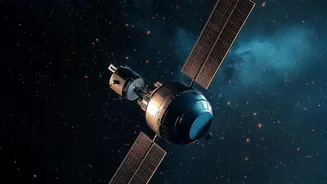
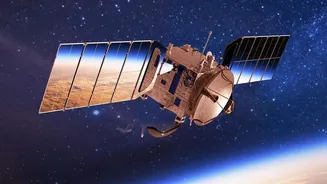
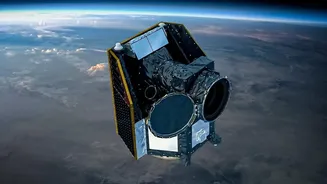
The satellites being protected are not just pieces of hardware; they are India's eyes in the sky, critical to national security and public welfare. The Earth-observation (EO) fleet provides indispensable services, including real-time weather forecasting, agricultural monitoring to ensure food security, and urban planning. These satellites are also vital for disaster management, offering crucial data during cyclones and floods, and play a key role in monitoring India's extensive borders and coastline. A newly deployed geostationary imager, for example, provides continuous, real-time monitoring of the Indian subcontinent to give early warnings for severe weather events. By safeguarding these assets, the AI collision avoidance system ensures the uninterrupted flow of data that millions of Indians depend on.
Leading the Way in Space Sustainability
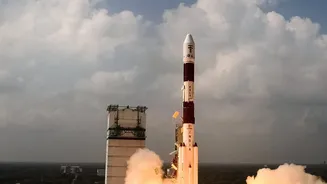
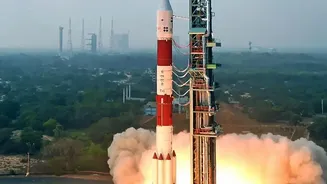
By investing in this technology, India is not only protecting its own assets but also cementing its role as a responsible global space power. The proliferation of space debris is a collective problem that threatens the future of space exploration for all nations. ISRO's commitment to a 'Debris-Free Space Mission' and its goal of achieving zero new debris from Indian missions by 2030 underscores this leadership. Initiatives like Project NETRA, an early warning system to detect debris, further enhance India’s indigenous capabilities in SSA. This forward-thinking approach to space traffic management is crucial for ensuring that outer space remains a safe and usable domain for generations to come, protecting the vital services that orbit provides for life on Earth.