





More Than Just Dust
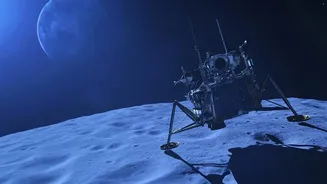
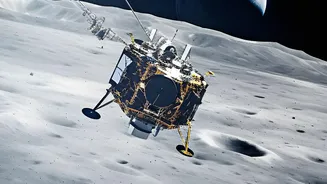
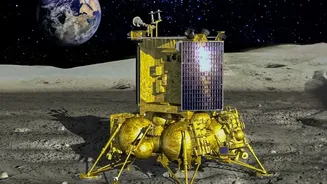
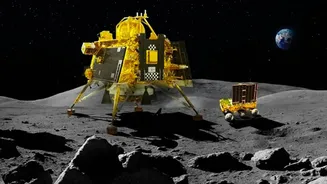
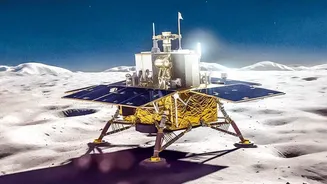
When the Vikram lander touched down at Shiv Shakti Point, one of its key instruments, the Chandra’s Surface Thermophysical Experiment (ChaSTE), poked a probe into the ground to measure its properties. While we often call it 'lunar soil', scientists prefer
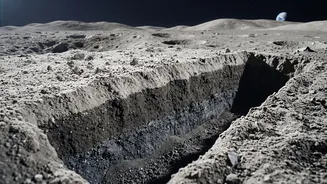
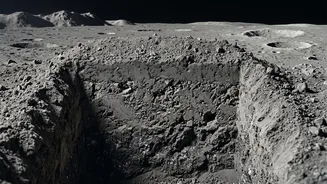
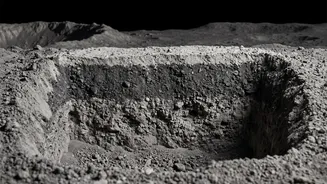
the term 'regolith'—a mix of shattered rock, fine dust, and jagged, glassy particles formed by billions of years of meteorite impacts. For decades, this layer was thought to be relatively uniform. However, new findings published in November 2026 reveal that, at least in this south polar region, the regolith is a complex, layered structure, more like a cake than a simple pile of dust.
Layer One: A Fluffy, Porous Blanket
The first layer, extending just 3 centimetres from the surface, is an extremely porous material. With an estimated porosity of 80%, it is incredibly light and fluffy, with a bulk density less than half that of the layers below. This hyper-porous blanket acts as a powerful insulator. It helps explain the startling temperature difference the ChaSTE probe first detected: a balmy temperature on the sunlit surface that plummets dramatically just a few centimetres down. This top layer effectively traps heat, preventing it from penetrating deeper into the Moon.
Layer Two: A Zone of Transition
Between 3 and 6 centimetres deep, the properties of the regolith change significantly. In this middle layer, the material becomes less porous and its ability to conduct heat increases. This zone acts as a bridge between the highly insulating surface and the denser material below. The analysis suggests that the composition and structure here are distinct from the layers above and below it, marking a clear transition in the lunar ground. This fine-scale layering was not something scientists had expected to find and challenges previous models of the lunar surface.
Layer Three: Denser and Stickier Ground
From 6 to 10 centimetres down, the lunar regolith becomes much denser and more cohesive. The bulk density more than doubles compared to the surface, reaching around 1,500 kg per cubic metre. For a future astronaut, this would feel like walking on dry flour that suddenly turns into damp, stiff clay just a few inches underfoot. This stickier, more compact material has its own intermediate level of thermal conductivity, different from the two layers above it. The discovery of this three-part structure comes from a new analysis of data taken before Vikram performed its historic 'hop' manoeuvre, which provided a complete profile of the undisturbed ground.
Why These Layers Matter
This discovery is more than just a geological curiosity. Understanding this layered structure is critical for future lunar missions, especially those involving construction and resource utilisation. The highly porous top layer could be key to how resources like water ice are stored and protected in the shallow subsurface. For engineers designing habitats or rovers, knowing that the ground's stability and thermal properties change so dramatically over just a few centimetres is vital for building safe and durable structures. Scientists believe these layers were likely formed by material ejected from different meteorite impacts over time, offering a new window into the Moon's violent geological history.