





The Monsoon Watering Paradox
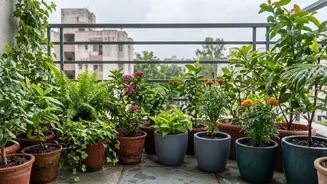
During the Indian monsoon, the air is thick with humidity and the skies frequently open up, providing a natural drink for your plants. This is a blessing after a long, hot summer, but it creates a paradox for potted plants on a balcony. While they enjoy
the moisture, they are also at high risk of being overwatered. Unlike plants in the ground, balcony plants are confined to pots, where excess water can quickly become a death sentence. When soil stays waterlogged, it cuts off the oxygen supply to the roots, leading to the dreaded root rot, fungal diseases, and a host of other problems that can kill an otherwise healthy plant.
Ditch the Schedule, Trust the Soil
The single most important rule for watering during the monsoon is to abandon your fixed schedule. Watering every day, or every other day, is a habit from the hot, dry summer months and does not apply now. Instead, you must learn to read the needs of your plant by checking the soil. The most reliable method is the 'finger test'. Insert your index finger about one to two inches into the soil. If your finger comes out clean and dry, it’s time to water. If it comes out with moist soil sticking to it, you must wait. The soil might look dry on the surface, but the root zone can still be saturated. Always check before you water.
When Natural Rainfall is Enough
If your balcony is open and receives direct rainfall, you may not need to water your plants at all for days or even weeks. A good spell of rain is often more than enough to saturate the soil in your pots. After a downpour, it is crucial to check your pots to ensure they are not sitting in water-filled saucers, as this is a primary cause of root rot. For plants that are under a covered section of the balcony, they will still need manual watering, but less frequently. The high humidity means the soil will dry out much more slowly than usual.
Know the Signs of Overwatering
Your plants will give you clear signals when they are getting too much water. Confusingly, some of these signs, like wilting, can also be a sign of underwatering. However, the key difference is the feel of the leaves and soil. An overwatered plant's wilting leaves will feel soft and limp, not dry and crispy. Other common signs include yellowing leaves (especially lower ones), a musty or foul smell from the soil, and the appearance of mold or fungus on the soil surface. If you spot these signs, stop watering immediately and take steps to improve drainage.
Proactive Steps for Healthy Roots
Prevention is always better than cure. Before the monsoon sets in, or even during, you can take steps to protect your plants. First, ensure every pot has clear, unobstructed drainage holes at the bottom. Adding a layer of broken terracotta pieces or small stones at the bottom before adding soil can also help. Using a well-draining potting mix is essential. A good mix combines soil with materials like cocopeat, compost, and perlite or sand, which prevents the soil from becoming too dense and waterlogged. Finally, consider elevating your pots on stands or bricks. This small gap allows air to circulate and excess water to drain away freely, keeping the roots healthy.