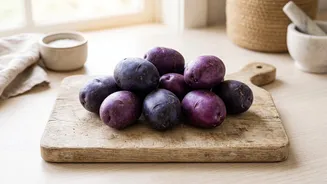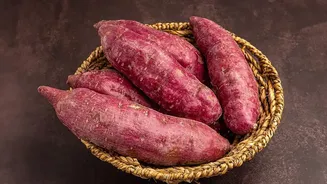







The humble potato is a staple on plates across India, but what if it could do more than just fill you up? Scientists are reimagining the tuber, and their latest creation, Kufri Jamunia, is turning heads with its vibrant purple flesh.
What is Kufri Jamunia?
Kufri Jamunia is a new,
indigenously developed potato variety with deep purple skin and flesh. The name is inspired by the jamun fruit, reflecting its unique colour. It was officially released in 2024 by the Indian Council of Agricultural Research–Central Potato Research Institute (ICAR-CPRI) in Shimla. This innovation is part of a broader scientific push towards 'biofortification'—breeding crops to be naturally richer in essential nutrients. Unlike its predecessors, Kufri Neelkanth (purple skin, cream flesh) and Kufri Manik (red skin, yellow flesh), Kufri Jamunia is purple through and through, which signals its unique nutritional properties.
The Science Behind the Colour
The striking purple hue of Kufri Jamunia comes from high concentrations of natural pigments called anthocyanins. These are the same powerful antioxidants found in blueberries, blackberries, and of course, jamuns. Antioxidants are compounds that help protect the body's cells from damage. The development of Kufri Jamunia marks a significant step up from earlier coloured varieties, as it contains higher levels of these anthocyanins, along with more Vitamin C and carotenoids. In fact, 100 grams of Kufri Jamunia contains significantly more Vitamin C, iron, and zinc than conventional potato varieties, making it a powerful tool in the fight against 'hidden hunger'—a condition where people get enough calories but lack essential micronutrients.
Benefits for the Farmer
While the nutritional benefits for consumers are clear, Kufri Jamunia was also designed with the farmer in mind. It is a high-yielding variety, capable of producing 32 to 35 tonnes per hectare under normal conditions, with trial yields reaching as high as 49 tonnes. It is a medium-maturing crop, ready for harvest in about 90-100 days. The variety has shown stable performance in multi-location trials and is recommended for cultivation across the North Indian plains, including states like Punjab, Haryana, Uttar Pradesh, and Bihar. Furthermore, it has good storability, with a dormancy period of 6-8 weeks, meaning the tubers don't sprout quickly and can be stored longer with less spoilage. However, it has shown susceptibility to late blight disease in field conditions, meaning farmers may need to use fungicides.
On the Plate: Taste and Cooking
A new vegetable is only truly useful if people enjoy eating it. Kufri Jamunia has a mealy texture, which makes it versatile for a wide range of Indian and international dishes. Its properties make it suitable for traditional preparations like curries, parathas, and puris, where its colour can add a novel twist. It can also be baked, boiled, or roasted, and even processed into nutrient-rich flour for use in other products. In an early assessment by CPRI, a small group rated its overall acceptability as good to excellent, with many finding its taste very good. The vibrant purple can make classic dishes like mashed potatoes visually stunning and more nutritious.
The Future of Food
Kufri Jamunia is more than just a new type of potato; it represents a shift in agricultural thinking from focusing solely on quantity to enhancing nutritional quality. By breeding essential vitamins and minerals directly into a staple crop, scientists are creating a sustainable way to improve public health and address micronutrient deficiencies across the population. While consumer acceptance will depend on factors like taste, appearance, and price, the development of biofortified crops like Kufri Jamunia offers a promising pathway to a more food-secure and nutrition-secure future for India, creating value for both farmers and consumers.