
Cosmic Time Capsules
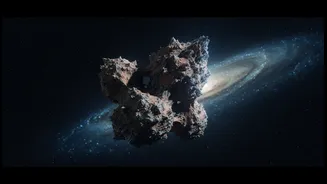
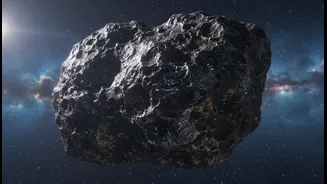
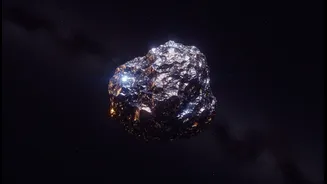
To understand why scientists are so excited about visiting multiple asteroids, it helps to know what they are. Asteroids are not just boring space rocks; they are the leftover building blocks of our solar system. Formed around 4.6 billion years ago, they never
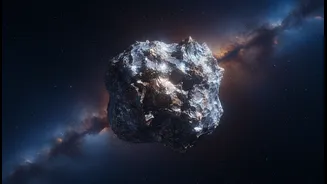
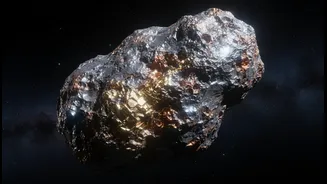
quite managed to coalesce into planets. Because of this, they remain in a remarkably pristine state, preserving the chemical and physical conditions of the early solar system. Different types of asteroids — from carbon-rich 'C-types' to stony 'S-types' and metallic 'M-types' — tell different parts of this origin story. By studying their composition, density, and structure, we can piece together how planets like Earth formed and how life-starting ingredients like water and organic compounds might have been delivered here.
The Grand Tour Approach
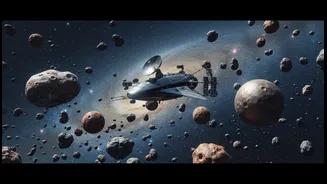
For decades, space missions were single-shot affairs: one spacecraft, one destination. While incredibly valuable, this approach is both costly and time-consuming. Now, space agencies are embracing a 'grand tour' philosophy, designing missions that can visit multiple, diverse targets in one go. The logic is simple but powerful: for a fraction of the cost of launching several separate missions, a single, cleverly-routed spacecraft can gather comparative data from a whole family of different objects. This provides a much richer, more contextualised understanding of the solar system's diversity. It’s the difference between reading a single page and getting access to an entire library.
Lucy in the Sky with Asteroids
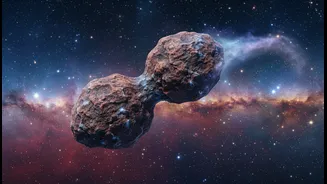
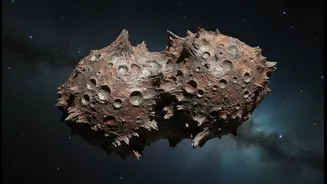
The prime example of this new strategy is NASA's Lucy mission. Launched in 2021, Lucy is on an ambitious 12-year journey to visit a record-breaking number of asteroids. Its main targets are the Jupiter Trojans, two swarms of ancient asteroids that lead and follow the giant planet in its orbit. These Trojans are thought to be remnants of the primordial material that formed the outer planets. Lucy will fly by eight different Trojan asteroids, including objects of different taxonomic types and even a binary pair where two asteroids orbit each other. This unprecedented survey will provide a unique snapshot of the solar system's early history, all from a single, resilient explorer. Before it even reaches the Trojans, Lucy is also visiting asteroids in the main belt, using them as practice runs to test its instruments and flyby manoeuvres.
Second Acts and Extended Missions
The multi-target strategy isn't just for new missions; proven spacecraft are also getting a second life. After successfully returning a sample from the carbon-rich asteroid Bennu, NASA's OSIRIS-REx spacecraft was reborn as OSIRIS-APEX (APophis EXplorer). With plenty of fuel left, it's now en route to study a completely different kind of object: Apophis, a stony 'S-type' asteroid that will have a close brush with Earth in 2029. This extended mission allows scientists to compare a carbonaceous asteroid with a stony one using the exact same set of instruments. Similarly, Japan's Hayabusa2, which brought back samples from asteroid Ryugu, is now on an extended mission to visit a tiny, fast-spinning asteroid known as 1998 KY26, with a flyby of another asteroid, Torifune, along the way.
Engineering for Endurance
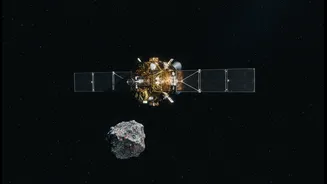
Designing a spacecraft for a multi-decade, multi-target journey is no small feat. It requires incredible navigational precision to perform multiple gravitational 'slingshot' manoeuvres around planets to save fuel and reach distant targets. The spacecraft must be robust, with long-lasting power systems — like Lucy's enormous solar panels — and instruments capable of operating reliably for years in the harsh environment of deep space. These missions are a testament to engineering ingenuity, pushing the boundaries of what's possible in robotic exploration. The scientific payoff, however, is immense. Each new encounter adds another crucial piece to the puzzle of our cosmic origins, turning a single mission into a sweeping saga of discovery.