







Why Your Foundation Matters
Every jump, squat, and stride begins from the ground up. Your feet are the foundation of your body's kinetic chain. When your footing is unstable, it doesn't just affect your feet and ankles; the instability travels up to your knees, hips, and even your back.
This forces your body to compensate, recruiting muscles improperly and placing stress on joints, which can lead to pain and injury. Your body's ability to sense its position in space is called proprioception. Training on an unstable surface without preparation can disrupt this sense, increasing the risk of a fall or a rolled ankle.
The Risks of a Shaky Surface
Exercising on an unsuitable surface significantly increases your risk of common injuries. High-impact movements on hard, unforgiving floors like concrete or tile can lead to stress fractures, shin splints, and joint pain. Conversely, a surface that is too soft or uneven, like a thick carpet or a bumpy lawn, can increase the risk of ankle sprains, strains, and falls by challenging your stability beyond your capacity. These injuries often result from your foot rolling or twisting unexpectedly when the ground gives way or presents an obstacle.
Choose Your Workout Surface Wisely
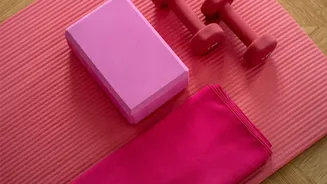
The ideal workout surface provides a balance of cushioning and stability. For home workouts, consider using a dedicated gym mat. Rubber flooring, available in tiles or rolls, is an excellent option as it absorbs impact, provides good grip, and is durable. It protects both your joints and your floor. If you're doing lower-impact exercises like yoga or stretching, a thicker foam mat might suffice. Avoid exercising on slippery tiles, shaggy carpets that can catch your feet, or uneven outdoor ground unless you are specifically training for it and have built up the necessary strength and stability.
The Right Shoes for the Right Job
Your shoes are a critical piece of equipment. Wearing the right footwear for your specific activity is one of the most important steps you can take to prevent injury. Running shoes are designed with cushioning to absorb the repetitive impact of a straight-line motion. Cross-training shoes, however, offer more stability for lateral (side-to-side) movements common in HIIT classes. Weightlifting shoes have flat, rigid soles to provide a stable base for lifting heavy loads. Wearing running shoes for weightlifting, for example, can create an unstable base and increase your risk of injury. Always choose shoes that fit well and are designed for your chosen workout.
Adapt Your Intensity to the Environment
If you find yourself on a less-than-ideal surface, the smart choice is to adjust your workout, not power through. Instead of high-impact jumps, opt for low-impact alternatives like marches or step-ups. Slow down your movements to give your body more time to react and maintain balance. Reduce your range of motion if needed; for example, perform shallower squats or lunges. If you feel unstable, it is always better to stop and switch to an exercise that feels safer. Listening to your body and prioritising safety over intensity will lead to more consistent, injury-free training in the long run.
Building a Stronger Base
You can actively improve your stability with targeted exercises. Incorporating balance and proprioception drills into your routine can strengthen the muscles in your feet and ankles and improve your body's awareness. Simple exercises like standing on one leg, first on a solid surface and then progressing to a slightly softer one like a pillow or balance pad, can be very effective. Other beneficial exercises include heel and toe raises, and controlled side-stepping. Strengthening your core also plays a crucial role in overall stability. Performing these exercises regularly can make you more resilient and less prone to injury, no matter the surface.