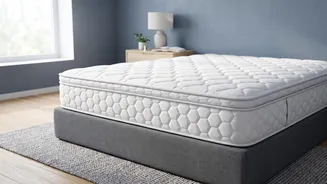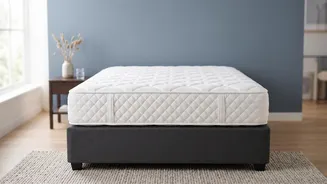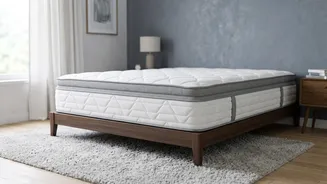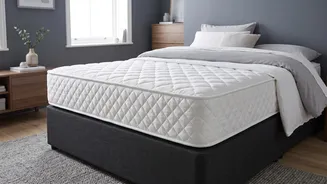







The classic innerspring mattress is known for its supportive, bouncy feel. But that lively response can be a double-edged sword, especially if you share a bed. The very feature that makes movement easy can also transfer it across the bed.
The Joy of Bounce
First, let's
define our terms. 'Bounce' refers to how quickly a mattress surface springs back after pressure is removed. Also known as responsiveness, this quality makes a mattress feel lively and makes it easier to change positions during the night. If you're a combination sleeper who shifts from your back to your side, or if you simply dislike the 'sinking' feeling of some foam mattresses, a bouncy bed can feel liberating. It keeps you feeling like you're sleeping 'on' the mattress rather than 'in' it, providing a traditional feel that many people find comfortable and familiar. This responsiveness comes from the steel coil support system at the core of the mattress, which is designed to compress and push back against your body weight.
The Problem with Motion Transfer
The flip side of all that bouncy energy is motion transfer. This is the term for how movement travels from one part of the mattress to another. On a mattress with high motion transfer, a partner getting out of bed, a child climbing in, or even a pet jumping up can send a wave of movement to your side, potentially disturbing your sleep. For light sleepers or couples with different sleep schedules, this can be a significant problem. The disturbance might not always fully wake you up, but it can pull you into a lighter stage of sleep, reducing the overall quality of your rest.
A Look Inside: Coils Are Key
The trade-off between bounce and motion transfer comes down to how the internal spring system is constructed. There are two main types of innerspring coils. The first is the traditional Bonnell coil system, where hourglass-shaped springs are all interconnected with wires. This creates a single, unified unit. While durable and bouncy, this interconnected design is the primary culprit for motion transfer; when one coil moves, it pulls its neighbors with it, creating a ripple effect across the bed. The second type is a pocketed coil system. Here, each spring is individually wrapped in its own fabric pocket. Because the coils can move independently, they do a much better job of isolating motion. This design allows the mattress to contour more closely to your body while significantly reducing the amount of movement your partner feels.
Finding Your Perfect Balance
So, which is right for you? There is no single correct answer; it's a matter of personal preference and circumstance. If you sleep alone and love a highly responsive, bouncy feel, a traditional innerspring mattress could be a great, often affordable, choice. If you're a very light sleeper who shares a bed with a restless partner, a mattress with pocketed coils will offer better motion isolation and help you sleep more soundly. Ask yourself a few key questions: How sensitive are you to movement? Do you or your partner toss and turn a lot? Do you have different bedtimes? Answering these will point you toward the right balance of bounce and stability for your needs.
The Hybrid Solution
For those who want the best of both worlds, a hybrid mattress is a popular option. These mattresses combine a support core of pocketed coils with comfort layers made of materials like memory foam or latex. This construction aims to deliver the supportive bounce and airflow of an innerspring bed while using the foam layers to provide pressure relief and absorb motion. The result is often a bed that feels responsive and easy to move on but still does an excellent job of preventing your partner's movements from disturbing you. It’s a compromise that successfully blends the desirable features of different mattress types.