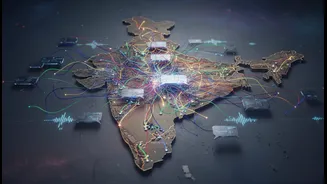






The Challenge: Beyond Urban Centres
For every urban influencer with a professional setup, there are thousands of aspiring creators in smaller towns and villages. While passion and ideas are abundant, the practical hurdles can be immense. One of the biggest barriers is the user interface
itself. Navigating complex video editing software, writing scripts, and managing social media accounts often requires strong digital literacy and comfort with English-based menus. Furthermore, typing in many regional Indian languages can be slow and difficult on a standard smartphone keyboard, creating a frustrating bottleneck between a great idea and a finished piece of content. These creators often represent the authentic voice of Bharat, but the tools at their disposal were not always built with them in mind.
Enter Gemini Live: A Natural Conversation
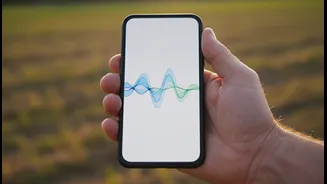
Google's latest advancements with Gemini Live, powered by Project Astra, are designed to solve this exact problem. Instead of a text-based chatbot, Gemini Live is built for natural, real-time spoken conversation. Users can speak to it, interrupt it with follow-up questions, and receive instant responses without the awkward lag of older voice assistants. This conversational flow is a more intuitive way for many people to interact with technology, especially for those more comfortable with oral traditions than written ones. It's less like operating a machine and more like brainstorming with a helpful assistant who understands your native language.
How Voice Breaks Down Barriers
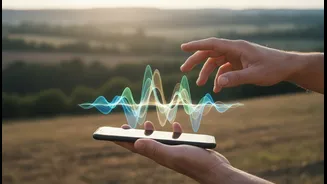
The impact of a true voice-first interface is transformative. For a rural creator, it means they can bypass the keyboard entirely. They can brainstorm video ideas, ask Gemini to write a script in their local dialect, and even get suggestions for titles and descriptions just by talking. The latest models also feature multimodal capabilities, meaning they can 'see' through the phone's camera. A creator could point their camera at a product they're reviewing and ask, "How can I describe this better?" or show their background and ask, "Is this setup visually appealing?" This provides a level of immediate, interactive feedback that was previously inaccessible without a team.
From Script to Screen, with Speech
The accessibility extends into the technical aspects of content creation. Newer AI models can integrate with media tools, allowing for conversational editing. A creator could potentially ask the AI to perform tasks like, “Trim the first five seconds of this clip,” “Add upbeat folk music,” or “Generate subtitles for this video in Hindi.” This removes the need to learn complex editing software, which often has a steep learning curve. By turning technical commands into simple spoken requests, the technology empowers creators to focus on their storytelling and creativity, rather than getting bogged down by the mechanics of production. The system essentially becomes a creative partner that handles the technical heavy lifting.
The Bigger Picture: Digital Inclusion
The rise of voice accessibility is more than just a convenience; it's a powerful force for digital inclusion. As AI models become more adept at understanding India's diverse languages and dialects, they level the playing field. A farmer from rural Maharashtra can create tutorials on sustainable agriculture, or an artisan from a small village in Rajasthan can showcase their craft to a global audience, all in their native tongue. This shift ensures that the digital creator economy doesn't just benefit a select few in metropolitan hubs. It unlocks the potential for millions of new voices to share their stories, preserve their culture, and participate more fully in the digital world.