




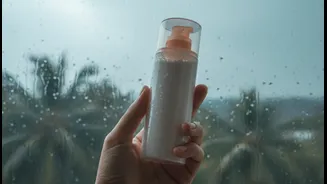



The Great Monsoon Sky Myth
It’s easy to associate sun damage with bright, hot days. But the clouds that bring welcome relief from the summer heat are not a magical shield for your skin. While they block a lot of visible light and heat, they are far less effective at blocking ultraviolet
(UV) radiation. According to dermatologists and skin cancer foundations, up to 80% of the sun's UV rays can penetrate through cloud cover. This means that even on the most overcast, rainy day, your skin is still being exposed to radiation that causes long-term damage. In fact, wet surfaces like roads and puddles can reflect UV rays, potentially increasing your exposure. Skipping sunscreen during the monsoon gives this invisible damage a free pass for months.
UVA vs. UVB: The Invisible Damage
To understand why cloudy-day protection is vital, it helps to know what you’re up against. The sun emits two main types of UV rays that harm skin: UVA and UVB. Think of UVB as the 'burning' rays; they are shorter, more intense, and the primary cause of sunburn. Clouds do block a good portion of these. However, UVA rays are the silent troublemakers. They have a longer wavelength that penetrates deeper into the skin, and they are present with consistent intensity all day, year-round. UVA rays pass through clouds and even window glass, breaking down collagen, accelerating skin ageing (wrinkles, fine lines), and contributing significantly to tanning and pigmentation. Since UVA makes up about 95% of the UV radiation reaching us, protecting against it is a daily necessity, not just a beach-day task.
Choosing Your Monsoon Sunscreen
The biggest complaint about sunscreen in India, especially during the monsoon, is the texture. The high humidity can make traditional creamy formulas feel heavy, greasy, and pore-clogging, leading many to abandon them. The key is to choose a formula suited for the climate. Look for sunscreens described as 'gel-based,' 'aqua gel,' 'fluid,' or 'matte finish.' These formulations are lightweight, absorb quickly, and don't leave a sticky residue. For Indian skin, which is often prone to pigmentation, a 'broad-spectrum' sunscreen with an SPF of 30 or higher and a high PA rating (like PA+++ or PA++++) is crucial. The PA rating specifically measures UVA protection, which is your best defence against tanning and dark spots.
Application and Reapplication Rules
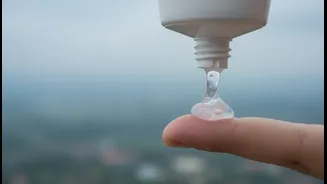
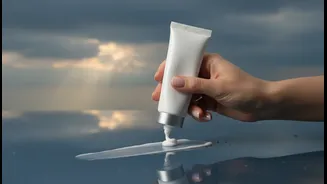
Finding the right product is only half the battle; how you use it matters just as much. Apply your sunscreen about 20 minutes before you step outside to allow it to form a protective film on your skin. A common mistake is not using enough. The general guideline is the 'two-finger rule'—squeeze out enough sunscreen to cover your index and middle fingers, and apply that amount to your face and neck. During the monsoon, reapplication becomes even more critical. Rain, sweat, and humidity can break down your sunscreen faster. If you're outdoors, aim to reapply every two to three hours. Opting for a 'water-resistant' formula can provide more durable protection, but remember that no sunscreen is fully waterproof. If you get caught in a downpour or sweat heavily, it's always best to reapply as soon as you can.