





Why Proper Storage Is Crucial
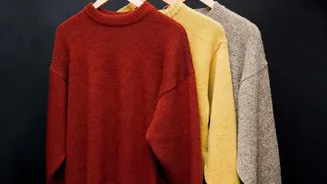
Understanding why wool needs special care is the first step. Wool fibres are naturally resilient but also delicate. When hung, the sheer weight of a sweater, especially a heavy knit, pulls on the fibres. This leads to stretched-out shoulders, distorted
necklines, and a permanently misshapen garment. Gravity is the enemy of knitwear. Folding, on the other hand, distributes the weight evenly and protects the sweater's structure, ensuring it retains the shape you fell in love with.
Always Clean Before You Store
Before you think about folding, you must ensure your sweaters are clean. This is the single most important step for long-term storage. Moths and other pests are not attracted to the wool itself, but to the invisible residues of skin cells, body oils, and food particles left on the fabric. These particles become a food source for larvae, leading to those dreaded tiny holes. Always wash or dry-clean your woollens according to the care label before putting them away for the season. Ensure they are completely dry, as even slight dampness can cause mildew and musty odours.
The Art of the Fold
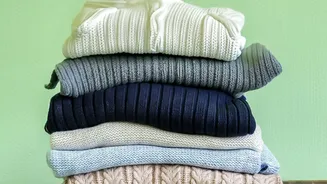
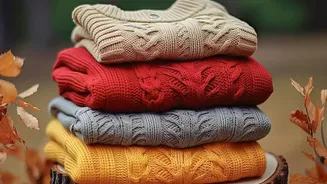
The debate is over: folding is superior to hanging for almost all sweaters. But how you fold matters. The goal is to minimise hard creases and create a compact shape. A popular and effective method is the file fold. Lay the sweater face down on a flat surface. Fold one arm and about a third of the sweater's body towards the centre, then repeat on the other side to create a neat rectangle. From there, fold the bottom of the rectangle up to meet the collar. This creates a tidy 'package' that can be stored vertically in a drawer, allowing you to see all your sweaters at a glance without unstacking them.
Choose the Right Storage Environment
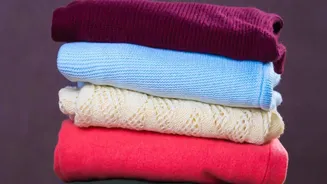
Where you store your sweaters is just as important as how you fold them. The ideal location is cool, dark, dry, and well-ventilated. Avoid airtight plastic bags or containers for long-term storage. While they protect from dust, they also trap moisture, which can lead to mildew and fabric degradation. Breathable storage is key. Opt for canvas storage boxes, linen bags, or simply place them on a clean shelf or in a drawer. Stacking sweaters is fine, but keep the piles short—no more than three to five sweaters high—to prevent the ones at the bottom from being crushed under the weight.
Natural Pest Prevention
Instead of using chemical-laden mothballs, which can leave a persistent and toxic odour, turn to natural repellents. Cedar wood is a classic choice; its aromatic oils repel moths. You can use cedar blocks, rings, or balls placed among your folded sweaters. Lavender is another excellent option. Its scent is pleasant to humans but detested by moths. Place dried lavender in small sachets within your drawers or storage boxes. Other effective natural repellents include dried rosemary, cloves, and mint. These not only protect your investment but also leave your woollens with a subtle, fresh scent.