



The End of an Era, The Start of a Market
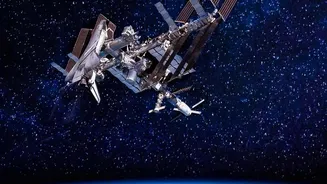
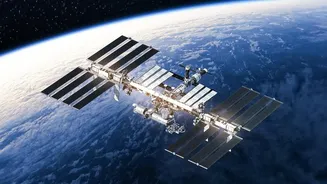
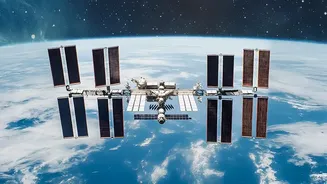
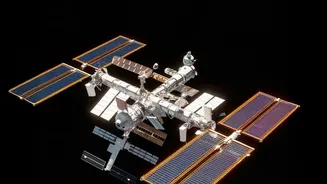
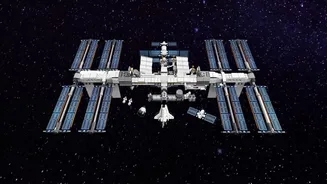
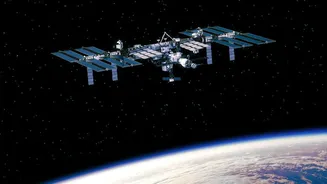
For decades, the International Space Station (ISS) has been the sole human outpost in orbit, a symbol of global cooperation and a premier laboratory for microgravity research. But with its planned decommissioning around 2030, a critical capability gap
looms. Rather than build a costly sequel, NASA is turning to the private sector, catalysing a new commercial marketplace in low-Earth orbit (LEO). Through its Commercial LEO Destinations (CLD) program, NASA is providing funding and technical support to several companies, acting as a future anchor tenant rather than the sole owner. This strategic shift is designed to foster a robust orbital economy where NASA is just one of many customers. The goal is to ensure a continuous human presence in space for research and development, but on a more commercially viable and competitive basis. The race is on to build the orbital labs that will define the next chapter of humanity's presence in space, driven by business plans as much as by scientific ambition.
Axiom Space: Building on the ISS Legacy
Perhaps the most visible player is Axiom Space, which has already flown several private astronaut missions to the ISS. Their strategy is unique: to first build onto the existing ISS before flying free. The company is constructing modules that will initially attach to the ISS, allowing them to test their systems and begin operations while the international lab is still active. The first module, providing power and thermal control, is scheduled to launch around 2027. Once a few Axiom modules are connected and operational, the entire segment will detach and become the free-flying Axiom Station before the ISS is retired. Construction of the first module's primary structures is already underway. This incremental approach provides a crucial bridge, allowing Axiom to build experience and revenue before going fully independent.
The New Contenders: Orbital Reef and Starlab
Axiom is not alone. Several other ventures are designing fully independent stations. Blue Origin, in partnership with Sierra Space, is developing Orbital Reef, which they envision as a 'mixed-use business park' in space. With a planned capacity for ten people, the station is designed to serve a diverse clientele, from researchers and manufacturers to space tourists. The design leverages Sierra Space's inflatable LIFE habitat modules to provide large volumes of space. Another major player is Starlab Space, a joint venture between US-based Voyager Space and European aerospace giant Airbus. Starlab is designed as a continuously crewed science and research-focused outpost. The current plan involves launching the entire station on a single flight, a departure from the multi-module assembly required by others. These different concepts highlight a key feature of the coming commercial era: a variety of platforms tailored to different market needs.
The Science of a Microgravity Factory
What exactly will happen inside these orbiting labs? The potential is immense. The microgravity environment offers unique advantages for research and manufacturing that are impossible to replicate on Earth. Scientists plan to conduct advanced biomedical research, including 3D bioprinting of human tissues and even organs, which is far more feasible without the distorting effects of gravity. In materials science, researchers can grow purer semiconductor crystals for next-generation electronics or forge new super-alloys with novel properties. Pharmaceutical companies are interested in studying protein crystallization to design more effective drugs. These stations are not just labs; they are poised to become the first micro-factories, producing high-value products that are either difficult or impossible to make on the ground. This opens up entirely new industrial possibilities, transforming LEO from a place of exploration into a place of production.
Creating a Low-Orbit Economy
The long-term vision extends beyond pure science. These commercial stations are the foundational infrastructure for a true low-orbit economy. They will host sovereign astronauts from nations without their own space programs, offer once-in-a-lifetime trips for space tourists, and even serve as movie sets or media broadcasting studios. Companies like Vast are also entering the field, with plans for a single-module station called Haven-1 launching as early as 2027. The development of this ecosystem also requires robust logistics, including cargo resupply and crew transportation, creating further business opportunities for companies providing those services. As these platforms come online in the late 2020s and early 2030s, they will represent more than just a replacement for the ISS; they will be the first nodes of a permanent, self-sustaining human and economic presence off-planet.