




The Science of the Sizzle
High-heat cooking methods like sautéing, stir-frying, and tadka are central to Indian cuisine. But when a fat gets too hot, it hits its 'smoke point'—the temperature at which it stops shimmering and starts smoking. This isn't just a culinary mishap; it's
a chemical breakdown. When oils are heated past their smoke point, they begin to degrade, forming free radicals and other potentially harmful compounds like acrolein, which gives burnt food its unpleasant taste and can be toxic. Keeping your cooking 'chemical-free' really means choosing a fat that can handle the heat without breaking down. This stability is the key to both a delicious and a healthy meal.
The Case for Ghee
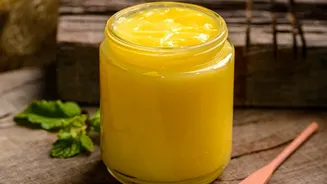
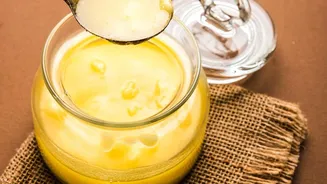
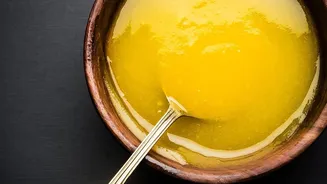
Ghee, a form of clarified butter, has been a staple in Indian kitchens for millennia for good reason. During the clarification process, milk solids and water are removed, leaving behind pure butterfat. This process gives ghee an impressively high smoke point, typically around 250°C (482°F). This makes it exceptionally stable and ideal for the high temperatures required for most Indian cooking. Because it resists breaking down, it produces fewer harmful compounds compared to fats with lower smoke points. Additionally, ghee is rich in fat-soluble vitamins like A, E, and D, and contains butyric acid, a short-chain fatty acid that is beneficial for gut health.
Does Infusion Change Anything?
Infusing ghee with herbs and spices like garlic, rosemary, or chillies is a great way to add a layer of flavour to your cooking. The process involves gently heating the aromatics in the ghee after the milk solids have been removed. While adding these ingredients might slightly lower the overall smoke point, the change is generally minimal. The fundamental stability of the ghee remains its core advantage. The primary purpose of infusion is to enhance taste, and it doesn't detract from ghee's suitability for high-heat cooking. The fat itself remains a robust and reliable choice.
Decoding Cold-Pressed Oils
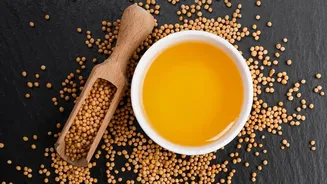
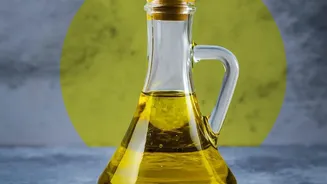
Cold-pressed oils are extracted from seeds or nuts without using high heat or chemical solvents. This gentle extraction method helps preserve the oil's natural flavour, antioxidants, and nutrients like vitamin E and polyphenols. Common cold-pressed oils in India include coconut, groundnut, mustard, and sesame oil. While they are celebrated for being less processed, their performance under heat varies dramatically. The term 'cold-pressed' refers to the extraction method, not its heat stability. These oils are prized for their nutritional benefits when used in dressings, drizzling, or for low-heat cooking where their delicate compounds won't be destroyed.
The High-Heat Challenge for Oils
The main issue with many cold-pressed oils is their lower smoke point compared to ghee. For instance, unrefined flaxseed oil and extra virgin olive oil have relatively low smoke points, making them unsuitable for high-heat sautéing. They are much better used for finishing dishes. Some cold-pressed oils, like coconut and groundnut oil, have higher smoke points and can be used for general cooking. However, oils high in polyunsaturated fats, like sunflower oil, can be less stable and more prone to oxidation at high temperatures, even if their smoke point seems high. This means they can still produce unwanted chemicals when you turn up the heat.
The Verdict: Stability Is Key
When the goal is chemical-free, high-heat sautéing, ghee is the more reliable choice. Its high smoke point and stable saturated fat structure mean it can withstand high temperatures without degrading. While infused ghee offers added flavour, its fundamental stability remains intact. Cold-pressed oils are nutritionally excellent, but many are too delicate for high heat. Their benefits are best preserved in low-temperature applications. For those committed to using oils, cold-pressed coconut, groundnut, or mustard oil are better bets for moderate-heat Indian cooking than more delicate options. However, for searing, deep-frying, or a fiery tadka, ghee consistently provides a safer, more stable medium, ensuring your food is as clean as it is delicious.