



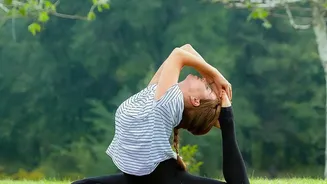
In the world of yoga, some of the most profound poses are the simplest. Apanasana, often called the Knees-to-Chest pose, is a perfect example. But the true magic of this restorative posture lies not in how hard you pull, but in how you hold.
Understanding Apanasana
Apanasana
(pronounced 'ah-pah-NAH-suh-nuh') translates from Sanskrit to the 'Wind-Relieving Pose'. Its name hints at its primary physical benefit: aiding digestion and relieving bloating or gas by gently massaging the abdominal organs. But its purpose extends far beyond the physical. The name also refers to 'Apana Vayu', one of the five vital energies, or 'pranas', in yogic philosophy. Apana is the downward-flowing energy responsible for elimination and grounding. By practising this pose, you are thought to be encouraging this natural downward release, which helps to calm the nervous system and shed physical and mental tension.
The Philosophy of the Gentle Hold
Many people approach Apanasana with a 'more is more' mindset, forcefully pulling their knees as close to their chest as possible. However, the true essence of the pose is found in a 'gentle hold'. This isn't about passivity, but about intention. Instead of a forceful yank, imagine you are giving yourself a nurturing hug. The hands should gently clasp the shins or the backs of the thighs, guiding the knees toward the abdomen without straining. This approach prevents you from tensing your neck, shoulders, and jaw, which would counteract the pose's relaxing effects. A gentle hold encourages the lower back to soften and release onto the mat, decompressing the spine and creating a sense of safety and surrender.
Step-by-Step Guide
To practise Apanasana safely and effectively, follow these steps:
1. Begin by lying comfortably on your back, with your legs extended or knees bent and feet flat on the floor.
2. On an exhale, slowly draw both knees in towards your chest.
3. Place your hands on your shins, just below the knees, or wrap your arms around the backs of your thighs if that feels more accessible. Avoid pulling directly on your kneecaps.
4. Allow your entire back, from your tailbone to your shoulders and head, to rest heavily on the floor. Tuck your chin slightly to lengthen the back of your neck.
5. Breathe deeply. With each inhalation, you might slightly release the grip, and with each exhalation, gently guide your thighs closer to your abdomen without force. Stay here for 5 to 10 deep breaths, or for as long as a minute.
6. For a gentle massage, you can slowly rock side-to-side or make small circles with your knees.
Benefits Beyond Digestion
While its name highlights digestive relief, Apanasana is a multi-purpose powerhouse. Its benefits include:
- Lower Back Relief: The pose gently stretches and releases tension in the lumbar spine, making it highly effective for alleviating mild lower back pain caused by prolonged sitting.
- Hip and Thigh Stretch: It provides a gentle stretch for the hips, glutes, and thighs, improving mobility.
- Stress and Anxiety Reduction: The posture's cocoon-like shape can feel incredibly comforting, helping to activate the parasympathetic nervous system, which is responsible for the body's 'rest and digest' response.
- Improved Circulation: The gentle compression of the abdomen and release helps bring fresh blood flow to the area.
Modifications and Who Should Be Cautious
Apanasana is accessible to most people, but modifications can enhance comfort and safety. If you have tight hips or a larger belly, you can hold the back of your thighs instead of your shins, or take the knees slightly wider apart. Placing a folded blanket under your head can provide support if your neck feels strained. There is also a one-legged variation, Ardha Apanasana, where one leg is extended on the floor while the other is drawn in, which can be a great starting point. Individuals who are pregnant (especially in later stages), have a hernia, or are recovering from recent abdominal or spinal surgery should avoid this pose or consult with a doctor first. If you have a serious back injury like a herniated disc, it's crucial to seek medical advice before practising.