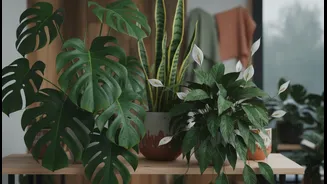






Why Go Green This Monsoon?
The rainy season is a period of rejuvenation for nature, and your indoor space can benefit, too. With higher humidity and less intense sunlight, many houseplants enter a vigorous growth phase. This natural humidity means you'll likely need to water them
less often, while the conditions mimic the native tropical environments of many popular houseplants. Moreover, with windows often closed during downpours, air-purifying plants work overtime to filter common household toxins, improving your indoor air quality and creating a healthier, more calming environment. Choosing the right plants ensures they won't just survive but actively flourish, rewarding you with lush foliage with minimal effort.
Peace Lily (Spathiphyllum)
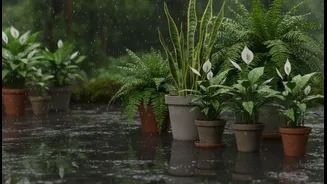
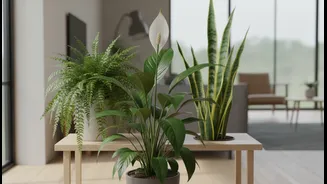
The Peace Lily is an exceptional choice for the monsoon season. Not only does it produce elegant white blooms, but it also thrives in high humidity and is known for its ability to absorb excess moisture from the air, which can help reduce mould. These plants prefer indirect light, making them perfect for spots in your home that don't get direct sun, a common scenario during overcast rainy days. Keep the soil consistently moist but not waterlogged, a key tip for all monsoon plant care. Its ability to clean the air of toxins like formaldehyde and benzene makes it a beautiful and functional addition to any room.
Snake Plant (Dracaena trifasciata)
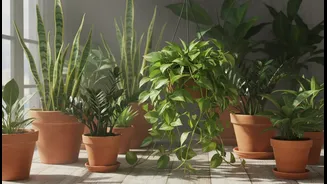
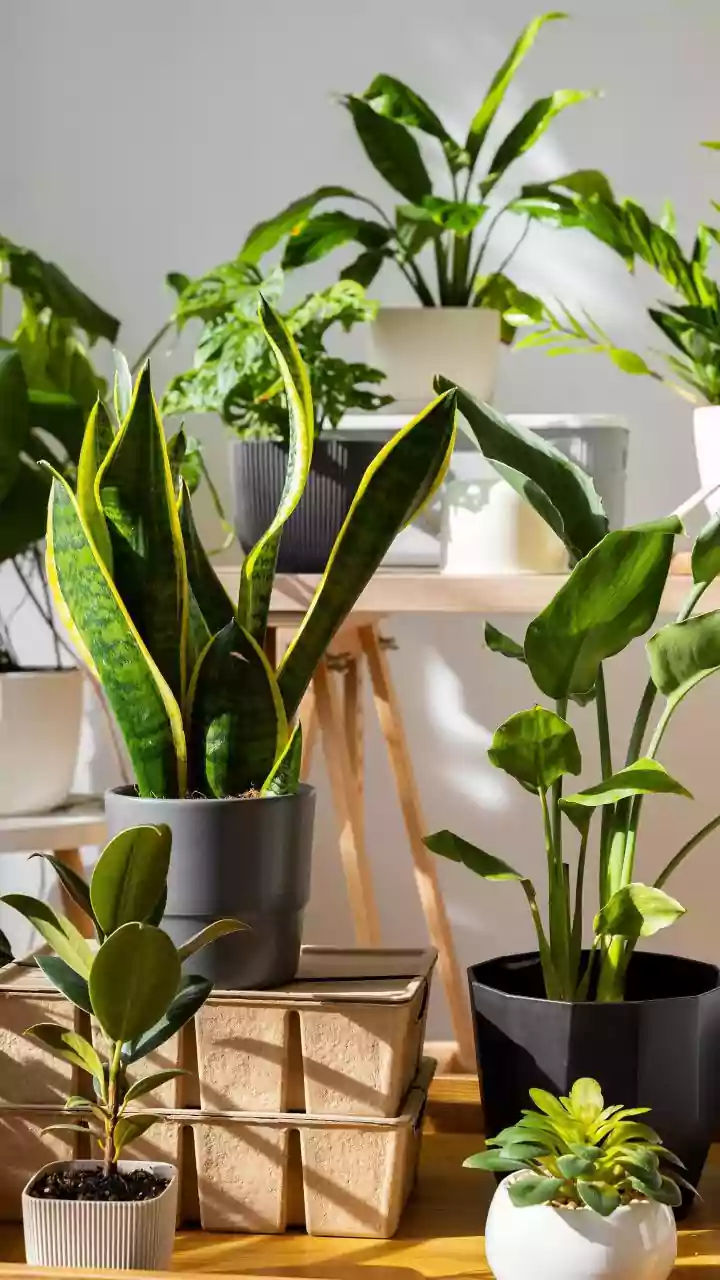
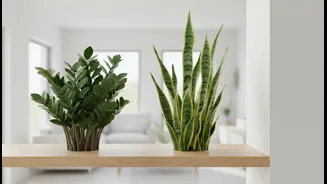
Often called the most resilient houseplant, the Snake Plant is virtually indestructible, making it ideal for beginners. It is exceptionally tolerant of low light and high humidity, two defining characteristics of the monsoon. Its striking, upright leaves store water, meaning it has very low watering needs; you should allow the soil to dry out completely between waterings to prevent root rot, which is a common risk during the damp monsoon months. Snake Plants are also powerhouse air purifiers, working day and night to filter toxins from your home, making your indoor space healthier while you enjoy the rains outside.
ZZ Plant (Zamioculcas zamiifolia)
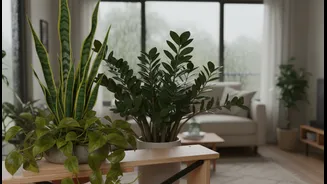
If you're looking for a low-maintenance plant that adds a touch of modern elegance, the ZZ Plant is your answer. Its wide, dark green, glossy leaves look perpetually polished. The ZZ Plant is famously drought-tolerant and handles low-light conditions with ease, making it a star performer in the monsoon home. Like the Snake Plant, it is susceptible to overwatering, so it's crucial to let the soil dry out. Its ability to thrive on neglect while still looking lush makes it a favourite for busy households or those new to plant parenting. It adapts well to the ambient humidity of the rainy season, requiring even less attention than usual.
Money Plant (Epipremnum aureum)
A staple in many Indian homes, the Money Plant, or Pothos, truly comes alive during the monsoon. Its heart-shaped leaves grow vigorously in the humid weather, and its trailing vines can be styled to hang from shelves or climb up supports. This plant is incredibly adaptable, thriving in a range of light conditions from low to bright indirect light. It's also an excellent air purifier. One of its best features is how forgiving it is; if you forget to water it, it will bounce back quickly. During the monsoon, be mindful not to overwater and ensure its pot has good drainage.
Boston Fern (Nephrolepis exaltata)
Ferns are the quintessential monsoon plants, and the Boston Fern is a classic for a reason. Its feathery, arching fronds create a lush, jungle-like feel. These plants adore high humidity and indirect light, making them perfectly suited for bathrooms or balconies that are shielded from direct rain but benefit from the moist air. They do require consistently moist soil, so while you need to be careful about overwatering other plants, ferns will appreciate the dampness. Keeping them in a humid spot will ensure their fronds stay green and vibrant throughout the season.
General Monsoon Care Tips
Regardless of the plant you choose, a few general rules apply during the monsoon. Always check for proper drainage in your pots to prevent waterlogging and root rot. With high humidity, the soil will dry out much slower, so reduce your watering frequency and always check the top inch of soil before adding more water. Fungal infections can be more common in damp conditions, so ensure good air circulation around your plants and prune any yellowing or dead leaves promptly to maintain plant health. On a day with gentle rain, you can even place your plants outside for a short while to wash dust off their leaves and give them a drink of nutrient-rich rainwater.