
The Red Planet’s Persistent Threat
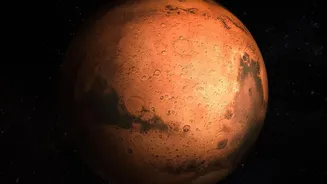
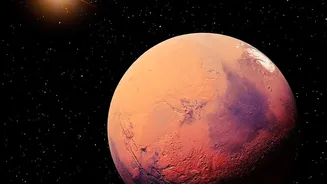
Mars may seem like a quiet, frozen desert, but its thin atmosphere can produce weather events of incredible scale. Martian dust storms range from small, localised dust devils to planet-encircling events that can last for months. These global storms, which
occur roughly every three Mars years, can block out up to 99% of sunlight from reaching the surface, plunging vast regions into a dim, perpetual twilight. Unlike the dramatic, high-force winds depicted in science fiction, the danger isn't the wind itself—Mars' atmosphere is too thin for wind to cause significant physical damage. The real threat is the dust. This fine, electrostatically charged powder coats everything it touches, posing a critical danger to the solar panels that power robotic explorers and, one day, human habitats.
Lessons From Fallen Explorers
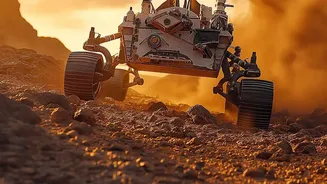
The history of Mars exploration is littered with cautionary tales about dust. NASA's Spirit and Opportunity rovers, which far outlasted their initial 90-day missions, frequently benefited from winds cleaning their panels. However, Opportunity's remarkable 15-year journey finally came to an end in 2018 when a massive, planet-wide dust storm blotted out the sun. The rover, unable to recharge its batteries, went into hibernation and never communicated again. More recently, the InSight lander, which provided invaluable data on 'marsquakes', saw its power levels steadily decline as dust accumulated on its panels. Despite innovative attempts to shake the dust off, the lander's power generation fell to a fraction of its initial capacity, ultimately leading to the end of its mission. These losses provide a stark lesson: on Mars, power is life, and dust is the enemy of solar power.
The Martian Weather Forecast
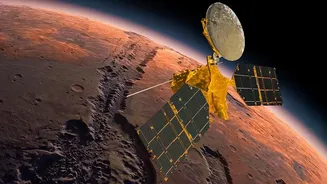
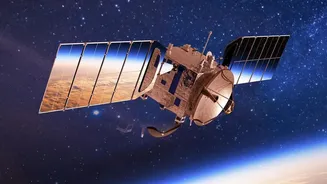
Predicting these potentially fatal storms is a complex but crucial science. A fleet of orbiters, including NASA's Mars Reconnaissance Orbiter (MRO), acts as a weather satellite network. Instruments on these orbiters monitor atmospheric temperature and dust levels, creating daily global weather maps that help scientists identify developing storms. By tracking changes in atmospheric temperature and the amount of suspended dust, researchers can model how a storm might grow and spread. While scientists can predict general seasonal weather patterns with some accuracy, forecasting the exact time and location of a major dust storm remains a significant challenge. This ongoing analysis is vital not just for protecting current assets but also for building a reliable forecasting system for the safety of future human astronauts.
Engineering for Survival
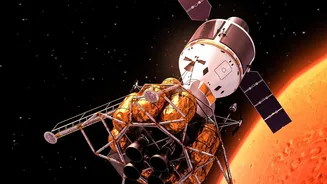
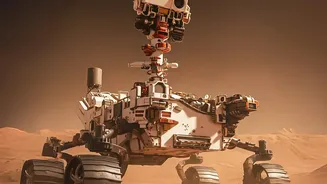
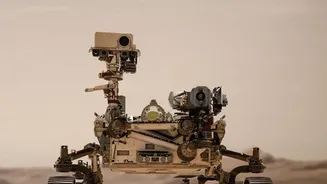
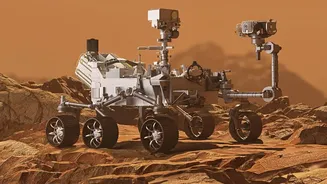
Understanding the threat of dust storms directly informs the design of next-generation Martian hardware. One clear solution is to not rely on the sun at all. Nuclear-powered rovers like Curiosity and Perseverance are virtually immune to the power-draining effects of dust storms. For future human missions, NASA has already determined that nuclear fission power systems are the most robust choice for providing the consistent, high-level energy required. However, solar will likely remain a key part of the energy mix, especially for smaller or supplementary systems. Therefore, engineers are developing innovative dust mitigation technologies. These include advanced coatings that repel dust, as well as 'electrodynamic dust shields' that use an electric field to actively clear particles from surfaces like solar panels and camera lenses. Other strategies involve designing panels that can be tilted vertically to reduce dust accumulation or developing robotic cleaning systems.