





The Urban Stargazer's Dilemma
Living in a city comes with countless benefits, but a clear view of the night sky is rarely one of them. The biggest obstacle for any aspiring urban astronomer is light pollution. This pervasive glow from streetlights, buildings, and advertising creates
a luminous blanket that washes out all but the brightest celestial objects. While the Moon and a few hardy stars might peek through, fainter constellations and distant planets are often rendered completely invisible to the naked eye. This can make the rewarding hobby of stargazing feel frustrating and inaccessible, leaving you to wonder what you're missing above the orange-tinted clouds.
Your Pocket Planetarium
This is where your smartphone transforms from a source of distraction into a powerful tool for cosmic exploration. Modern stargazing apps like Star Walk 2, SkyView, and Stellarium Mobile use your phone's built-in GPS, compass, and gyroscope to create a real-time map of the sky. When you point your phone at a patch of sky, the app shows you exactly what is there, labeling stars, constellations, satellites, and, most importantly, planets. Many of these apps feature an augmented reality (AR) mode, which overlays this information directly onto your view, effectively showing you what's hidden behind the city's glare. It’s like having a personal astronomer guiding you, turning a confusing sky into a navigable map.
Cutting Through the Glow
These apps do more than just identify objects; they are designed with the urban user in mind. One of the most critical features is the ability to know precisely where to look. Even if a planet is too dim to spot easily against the light-polluted backdrop, your app’s AR view can point you to its exact location. You might not see it in full glory, but you will know it’s there. Some advanced apps, like Stellarium, even have settings to simulate and adjust for the level of local light pollution, giving you a realistic preview of what should be visible. Furthermore, many apps offer a red-light mode, which preserves your night vision—a crucial element for spotting faint objects once you’ve located them.
Autumn 2026: A Celestial Showcase
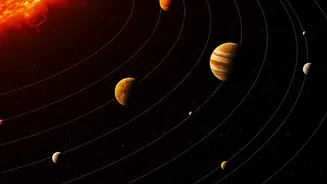
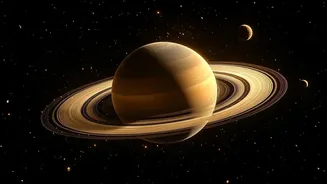
This autumn provides a fantastic opportunity to test your new digital tools. The season's night skies are packed with planetary action. Saturn is a prime target, reaching its opposition on October 4, 2026. This is when it is opposite the Sun in our sky, making it visible all night and appearing at its brightest. Though its famous rings require a telescope, its steady, bright glow is an easy find with an app. Mars and Jupiter are also prominent in the morning sky throughout the season. Look for them meeting up with the Moon on several occasions in early October and November. A particularly noteworthy event occurs around November 14, when Mercury, Venus, Mars, and Jupiter will all gather in the pre-dawn sky, offering a beautiful planetary alignment.
Tips for Your First City Session
To make the most of your urban stargazing, a little preparation goes a long way. First, find the best possible location. A local park, a rooftop, or even a balcony facing away from major streetlights can make a significant difference. Give your eyes at least 15-20 minutes to adapt to the darkness, and avoid looking at your bright phone screen without the red-light mode enabled. While apps work wonders on their own, pairing them with a simple pair of binoculars can elevate the experience, bringing the moons of Jupiter or the reddish hue of Mars into clearer focus. Finally, be patient. The universe has been there for billions of years; it can wait a few more minutes for you to find your bearings.