
The Power of Pulses
In India, dals are more than just a side dish; they are the heart of countless meals, providing essential nourishment, flavour, and comfort. Pulses—the dried seeds of legume plants—are nutritional powerhouses, rich in protein, dietary fibre, and vital
minerals. While often grouped together, each dal has a unique texture, cooking time, and culinary purpose, creating a diverse palette for home cooks. The practice of pairing dal with rice or roti is not just for taste; it creates a 'complete protein' by combining different amino acids, a concept that traditional food wisdom perfected over generations.
Moong Dal: The Versatile and Gentle Protein
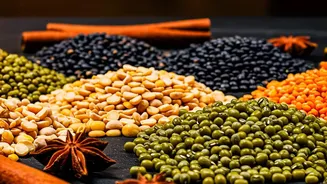
Often recommended for its easy digestibility, moong dal (green gram) is one of the most versatile pulses. Available whole, split with the skin on, or split and husked (the familiar yellow dal), it boasts around 24 grams of protein per 100g (dry). Its light texture makes it perfect for simple dishes like dal tadka, wholesome khichdi, and even savoury pancakes known as 'chilla'. Because it's gentle on the stomach, it's a go-to food for comfort and recovery.
Chana Dal: The Nutty and Hearty Staple
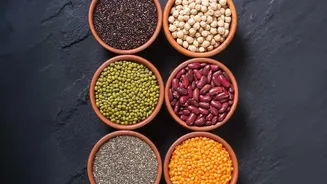
Made from split chickpeas (Bengal gram), chana dal has a nutty flavour and a firm texture that holds up well in cooking. With about 19 grams of protein per 100g raw serving, it's a substantial addition to any meal. It’s the star in dishes like the simple chana dal fry and is also ground into besan (gram flour), a key ingredient for snacks like pakoras and dhokla. Its whole form, kala chana (black chickpeas), is famous in the classic North Indian dish, chana masala. The pulse is also rich in fibre, folate, and iron.
Urad Dal: The Secret to South Indian Classics
Urad dal (black gram) is indispensable in South Indian cuisine. When split and husked, it's the white dal that, when ground into a batter, gives idlis their fluffiness and dosas their crisp texture. Its natural fermentation properties are key to these beloved dishes. But its culinary use doesn't stop there; the whole black gram is the main ingredient in the rich and creamy Dal Makhani. Nutritionally, it's a giant, offering around 25 grams of protein per 100g (dry) along with significant dietary fibre and iron.
Masoor Dal: The Quick-Cooking Comfort Food
Recognisable by its reddish-orange hue, masoor dal (red lentil) is prized for its quick cooking time and earthy flavour. It breaks down easily, creating a smooth, creamy consistency perfect for everyday dals and soups. Masoor dal provides an impressive 24 grams of protein per 100g (dry) and is also a great source of iron and fibre. Its quick preparation makes it a weeknight favourite in many Indian households for a simple yet satisfying meal.
Toor Dal: The Everyday Essential
Toor dal, also known as arhar dal or pigeon pea, is arguably the most common dal in Indian homes, forming the base for staples like South Indian sambar and Gujarati dal. It has a mild flavour that pairs well with a variety of spices. While its cooked protein content is slightly lower than others, around 7-8g per 100g, its role as a daily staple ensures a consistent supply of protein, fibre, and folate in the diet.