





What Is the 'No PUC, No Fuel' Rule?
Effective October 1, 2026, fuel stations across Delhi-NCR are mandated to deny petrol, diesel, and CNG to any vehicle that does not have a valid Pollution Under Control (PUC) certificate. This rule, which was previously in place in Delhi, has now been
expanded and is being strictly enforced across the entire NCR, including districts in Haryana and Uttar Pradesh. The measure is a key component of the region's winter action plan to combat severe air pollution and is being implemented under the direction of the Commission for Air Quality Management (CAQM). The goal is to ensure that vehicles on the road comply with emission standards, thereby reducing their contribution to the city's smog.
How Is the Rule Being Enforced?
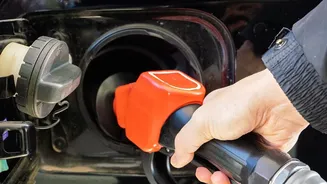
The enforcement relies heavily on technology. Around 500 fuel stations in Delhi are equipped with Automatic Number Plate Recognition (ANPR) cameras. These cameras scan a vehicle's number plate as it enters the station and automatically check its PUC status against the central VAHAN database. If the certificate is invalid or has expired, the fuel dispenser will be restricted from operating. In areas where ANPR systems are not yet fully operational, fuel pump staff have been instructed to manually verify the PUC certificate before refueling. Fuel stations that fail to comply with the directive may face penalties.
Who Needs a PUC Certificate?
This rule applies to all private and commercial vehicles, including those running on petrol, diesel, CNG, and LPG. A new vehicle is exempt for the first year from its registration date, after which a PUC certificate becomes mandatory. Electric vehicles are exempt from this requirement as they have zero tailpipe emissions. It's important to note that PUC certificates have a limited validity. For BS-IV and newer vehicles, the certificate is typically valid for one year, while for older models, it may be shorter. Owners of petrol vehicles older than 15 years and diesel vehicles older than 10 years cannot get a new PUC certificate in Delhi, as these vehicles are already barred from the roads.
How to Get or Renew Your Certificate
Obtaining or renewing a PUC certificate is a straightforward process. Vehicle owners must take their car or two-wheeler to an authorized emission testing centre. These centres are widely available, often located at petrol pumps and authorized service stations throughout Delhi-NCR. A technician will use a device to analyze the vehicle's exhaust emissions. If the levels are within the prescribed limits, a certificate is issued instantly. The costs are nominal, set at ₹60 for two-wheelers, ₹80 for four-wheeled petrol vehicles, and ₹100 for diesel vehicles. While the test itself is offline, you can download a digital copy of your certificate from the official Parivahan portal using your vehicle's registration and chassis numbers.
What Are the Penalties for Non-Compliance?
Beyond being denied fuel, driving without a valid PUC certificate can lead to significant penalties. Under the Motor Vehicles Act, vehicle owners can face a fine of up to ₹10,000, imprisonment for up to six months, or both. Authorities also have the power to suspend the driver's license for up to three months for a first-time offense. These penalties are enforced through routine traffic checks in addition to the new rule at fuel stations. The government's clear intent is to make non-compliance difficult and costly, pushing vehicle owners to maintain their vehicles and adhere to pollution norms.