



The Land of Clouds Awakens
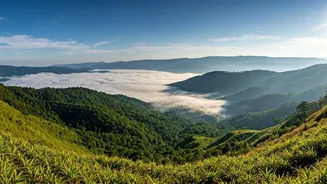
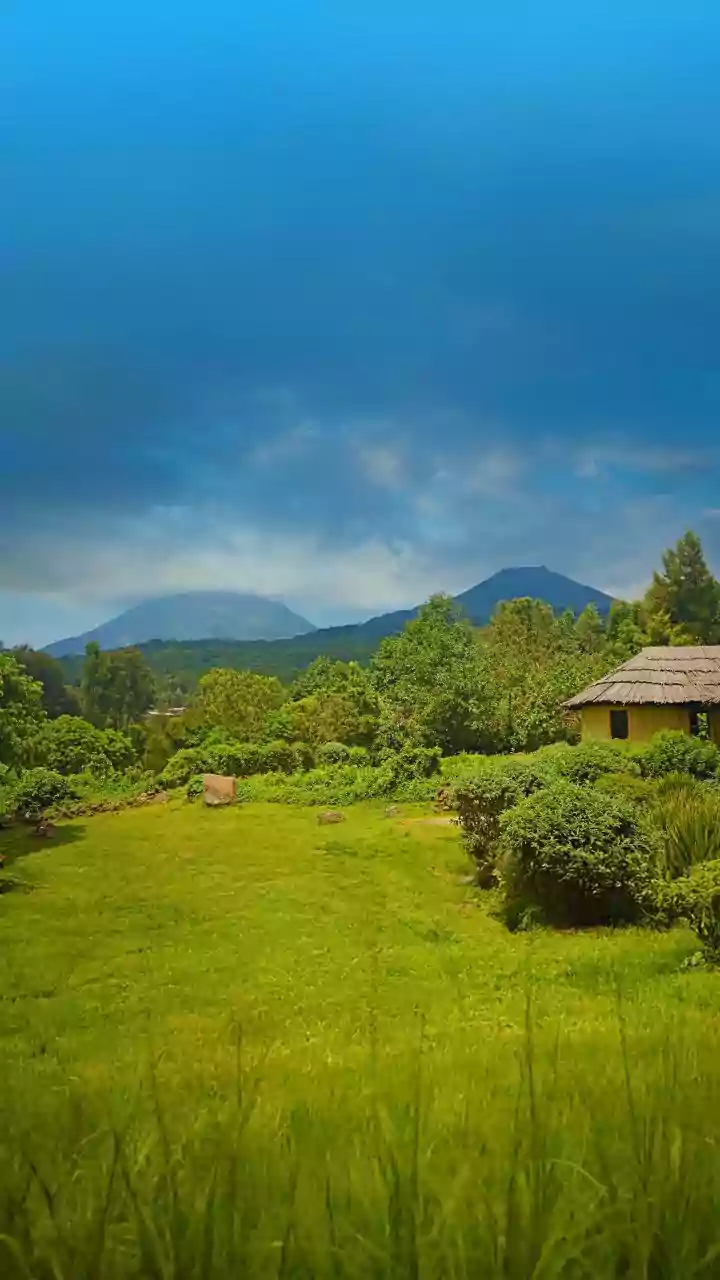
For much of the year, Meghalaya is a serene canvas of rolling green hills and deep valleys. But when the monsoon arrives, it undergoes a powerful metamorphosis. This isn't just rain; it's a personality. The clouds descend, wrapping the landscape in a mystical
grey blanket, and the steady drum of water on leaves becomes the state’s soundtrack. Cherrapunji, officially known as Sohra and famed for being one of the wettest places on Earth, doesn't just get wet—it comes alive. The dry riverbeds of winter swell into powerful torrents, and the waterfalls, mere trickles in the dry season, thunder down cliffs with unrestrained force. To visit during this time is to see the region in its most authentic, untamed, and dramatic state.
The Descent to a Living Wonder
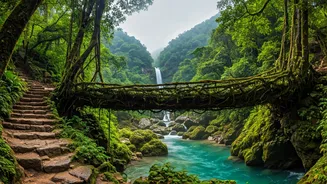
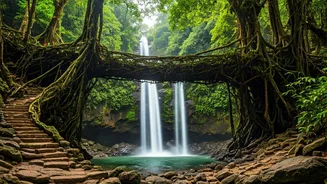
The true heart of monsoon-drenched Cherrapunji lies hidden deep within its valleys, accessible only by foot. The journey to the famous Double Decker Living Root Bridge in Nongriat village is not a casual stroll. It begins with a descent of over 3,500 concrete steps, a staircase that winds steeply down a lush gorge. With every step, the air grows thicker with humidity and the scent of damp earth and decaying leaves. The sounds of the forest floor—the chirping of unseen insects and the drip of water from giant ferns—are soon overpowered by a new sound: the rush of water. This is the soundtrack to your pilgrimage, a constant reminder of the raw power that shapes this land and its unique creations.
Where Nature and Humanity Weave
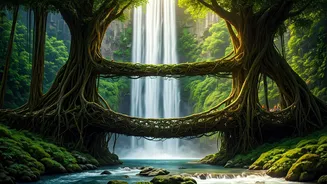
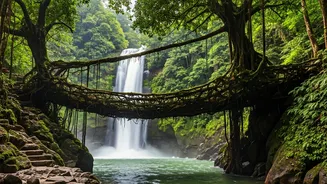
And then you see it. The living root bridges, or 'jingkieng jri', are a marvel of bio-engineering, patiently guided into existence over decades by the Khasi and Jaintia peoples. The tangled, muscular roots of the Ficus elastica tree are woven across rivers and streams, forming a structure that grows stronger with time and rainfall. The Double Decker bridge is the undisputed icon, a two-tiered masterpiece suspended over the Umshiang River. During the monsoon, the river below is a churning, powerful force, and standing on the bridge feels like being at the centre of a storm. The spray mists your face, the roar of the water fills your ears, and you can feel the slight, living vibration of the roots beneath your feet. It's a humbling testament to a symbiotic relationship between humans and nature, a partnership that thrives in this wet world.
A Symphony of Roaring Waterfalls
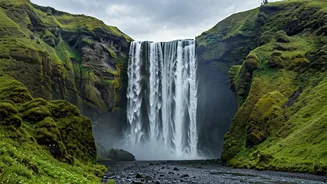
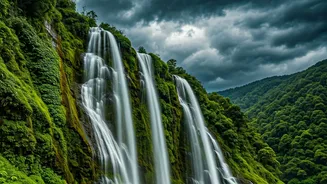
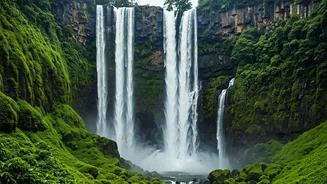
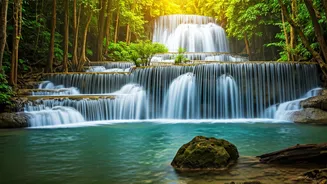
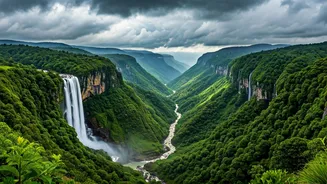
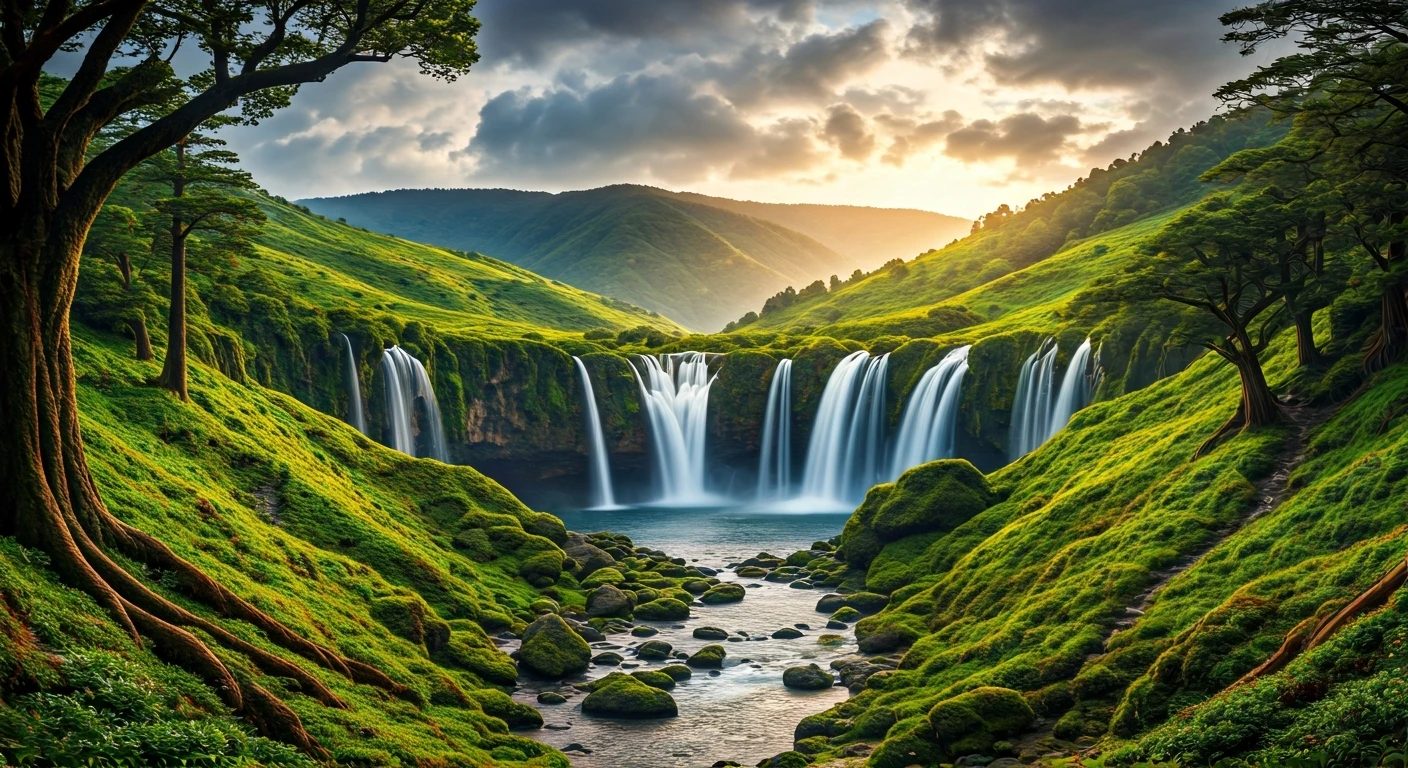
While the bridges are the main attraction, the monsoon enhances everything around them. This is the season when Meghalaya's waterfalls are in their full, furious glory. Nearby, the Nohkalikai Falls, India’s tallest plunge waterfall, transforms from a single, elegant stream into a colossal, roaring cataract that crashes into a turquoise pool below, its sound echoing through the valley. The Seven Sisters Falls (Nohsngithiang Falls) live up to their name as multiple segments of water cascade side-by-side down the limestone cliffs, creating a breathtaking panorama of liquid motion. Visiting these sites during the monsoon isn’t just about seeing them; it’s about feeling their immense power and scale, a spectacle made possible only by the relentless rain.
Embracing the Monsoon Challenge
A trip to Cherrapunji in the monsoon is not for the faint of heart. The paths are slippery, the humidity is intense, and leeches are a common companion. But these challenges are part of the authentic experience. With a good pair of trekking shoes, a reliable raincoat, and a spirit of adventure, the rewards are immeasurable. The climb back up those 3,500 steps is arduous, but it’s a journey filled with awe-inspiring views of the cloud-kissed valleys. The exhaustion is eclipsed by the profound sense of accomplishment and the memory of having witnessed one of nature’s most spectacular seasonal displays in a place where rain is not just weather, but the very soul of the land.