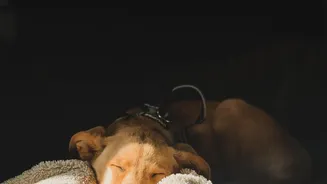




Why Thunderstorms Terrify Your Dog
A dog's fear of thunderstorms, or astraphobia, isn't just about the loud noise. Their senses are far more acute than ours. They can feel the drop in barometric pressure and the build-up of static electricity in the air long before we hear the first rumble
of thunder. This sensory overload—the low-frequency sounds we can't hear, the sudden flashes of lightning, the change in air pressure, and even the smell of ozone—can trigger a 'fight or flight' response. Signs of this panic can range from subtle panting and drooling to more extreme behaviours like shaking, destructive chewing, incessant barking, or trying to escape. It’s a genuine state of distress, not just nervousness.
Create a Calming Den
Instinct drives a panicked dog to find a safe, enclosed space. Help them by creating a 'den' before the storm hits. This doesn't need to be elaborate. A quiet interior room, a closet, or even a bathroom can work. If your dog is crate-trained, their crate is an excellent option; drape a blanket over it to make it darker and more insulated from sound, but always leave the door open so they don't feel trapped. Add their favourite blankets and a piece of your unwashed clothing. Your familiar scent can be incredibly grounding and comforting for them during a stressful event. The goal is to provide a secure sanctuary where they feel protected from the overwhelming stimuli outside.
Mask the Noise, Distract the Mind
Sound is a major trigger, so masking it can significantly reduce anxiety. Close the windows and draw the curtains to muffle the thunder and block out the lightning flashes. Turn on a fan, air conditioner, or a white noise machine to create a consistent, neutral soundscape. Playing calming classical music or even just leaving the television on can also help drown out the storm's unpredictable noises. Distraction is another powerful tool. Engage your dog with a high-value chew toy, like a frozen Kong filled with peanut butter, or a puzzle feeder. A short, positive indoor training session can also help redirect their nervous energy and focus their mind on a rewarding task.
The Power of Calm Pressure
Applying gentle, constant pressure can have a wonderfully calming effect on a dog's nervous system, much like swaddling an infant. Specialised anxiety vests, often called thunder shirts, are designed for this purpose. If you don't have one, you can create a DIY version using a dupatta or a long scarf. Wrap it around your dog’s chest and back in a figure-eight pattern, ensuring it's snug but not restrictive. There are many online tutorials for this technique. Additionally, products like calming pheromone diffusers (such as Adaptil) can help create a more serene environment. These emit a synthetic version of the pheromone a mother dog releases to comfort her puppies.
Your Calm Is Their Anchor
Dogs are highly attuned to our emotions and will look to us for cues on how to react. If you are stressed and anxious about their behaviour, you will likely amplify their fear. It’s crucial to remain calm and project a quiet confidence. Speak in a normal, soothing voice. It is okay to comfort your pet with gentle strokes if they seek you out, but avoid excessive coddling or making a big fuss, as this can inadvertently reinforce the idea that there is something to be scared of. Act as if the storm is a non-event. Your calm demeanour is one of the most powerful tools you have to reassure your dog that they are safe.
When to Consult Your Veterinarian
While these strategies can manage mild to moderate anxiety, some dogs have a severe phobia that doesn't respond to behavioural techniques alone. If your dog's panic is extreme—leading to self-injury, uncontrollable destruction, or severe distress that doesn't subside—it's time to seek professional help. A veterinarian can assess the severity of the phobia and may recommend anti-anxiety medications or prescription calming treatments. These medications are not sedatives; they work to reduce panic and must often be given before the storm begins to be effective. Never give your dog human medication. Always follow a vet's guidance for dosage and administration.