







The Heart of India's Rocket Power
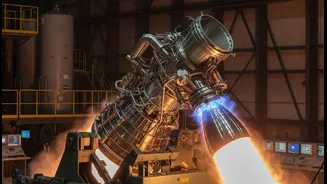
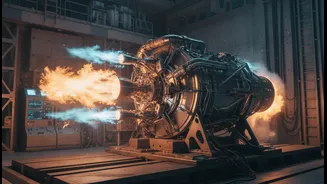
Tucked away in the hills of Tamil Nadu, the ISRO Propulsion Complex (IPRC) at Mahendragiri is the nerve centre for India's rocket engine development. For decades, this facility has been responsible for assembling, testing, and qualifying the powerful
liquid and cryogenic engines that propel India's ambitions into orbit. It's where the workhorse Vikas engine, a staple of the PSLV and GSLV rockets, is tested. It is also where the advanced CE-20 cryogenic engine, which powered landmark missions like Chandrayaan-3, was put through its paces. Essentially, no major Indian launch vehicle gets off the ground without its propulsion systems first being rigorously validated at Mahendragiri. This makes it one of the most critical pieces of infrastructure in the nation's space program.
Powering the Gaganyaan Dream
The most immediate and high-profile mission relying on Mahendragiri is Gaganyaan, India's first human spaceflight program. The facility is the primary testing ground for the spacecraft's Service Module Propulsion System (SMPS). This system is vital for crew safety, responsible for everything from orbital manoeuvres to critical abort scenarios during launch. The SMPS consists of multiple engines, including five main Liquid Apogee Motor (LAM) engines and sixteen smaller Reaction Control System (RCS) thrusters, which provide fine control. Recent tests at IPRC have successfully fired these engines simultaneously, simulating complex flight conditions and validating their integrated performance. Every successful hot test brings India another step closer to sending its astronauts into orbit, and enthusiasts should watch for announcements of full-duration hot tests, a final, crucial step before the engines are certified for human flight.
A New Era: The Semi-Cryogenic Engine
Looking beyond Gaganyaan, Mahendragiri is preparing for the next generation of Indian rocketry with the development of a powerful semi-cryogenic engine, the SCE-200. Unlike cryogenic engines that use super-cooled liquid hydrogen and oxygen, a semi-cryogenic engine uses refined kerosene (ISROSENE) and liquid oxygen. This technology is key to developing heavy-lift launch vehicles capable of carrying much larger payloads, which is essential for future deep space missions and building a space station. To support this, ISRO has established a new, state-of-the-art Semi-cryogenic Integrated Engine and Stage Test facility (SIET) at Mahendragiri. This massive structure allows for full-duration testing of the 2,000 kN thrust engine, a significant leap in power for ISRO. Early tests have already begun, and progress here is a direct indicator of the timeline for India's future heavy-lift rocket, the Next-Generation Launch Vehicle (NGLV).
Greener Fuels and Reusable Rockets
The NGLV also points to another major shift being prepared at Mahendragiri: reusability and cleaner propellants. ISRO is planning to build a liquid methane production facility on-site. The future NGLV is being designed to use engines powered by a combination of liquid methane and liquid oxygen, often called 'methalox'. This propellant is not only more efficient and cleaner but is also considered a key technology for reusable rockets, as it leaves less residue and makes engine refurbishment easier. The NGLV's first stage is being designed for recovery and reuse, a major strategic shift from ISRO's current expendable rockets. For engineering students and enthusiasts, this is a space to watch closely, as it represents a fundamental change in India's launch capabilities and economic competitiveness in the global launch market.
What to Watch for Next
For those keen to follow India's space journey, Mahendragiri is the place to monitor for tangible progress. Keep an eye out for ISRO announcements regarding several key milestones. First, the completion of the full-duration qualification tests for the Gaganyaan service module will be a major green light for the crewed mission. Second, watch for successful long-duration hot-fire tests of the SCE-200 semi-cryogenic engine, which will signal maturity in the development of the NGLV's core technology. Finally, look for progress on the liquid methane plant and methalox engine testing, which will herald the dawn of India's reusable rocket era. Each of these developments, born from the test stands at IPRC, will be a significant step forward, transforming ambitious blueprints into fiery reality.