



From Safe to Precise
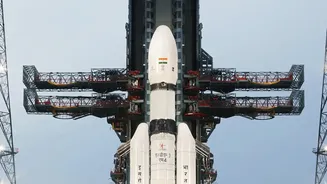
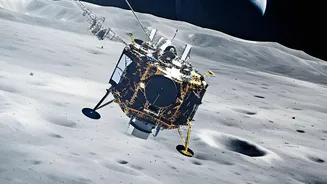
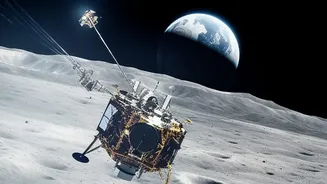
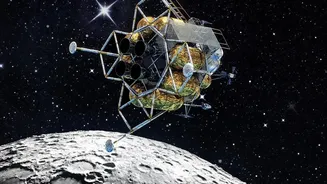
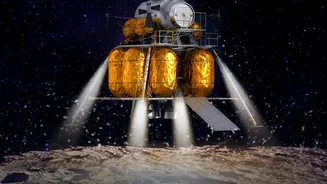
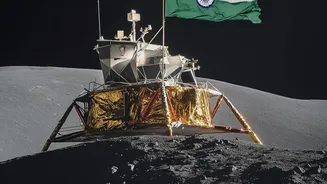
Chandrayaan-3’s triumph was its ability to perform a ‘safe landing’. The lander chose a relatively flat, hazard-free zone within a larger designated area. For Chandrayaan-4, the goal is far more ambitious: a ‘precision landing’. This means targeting a very
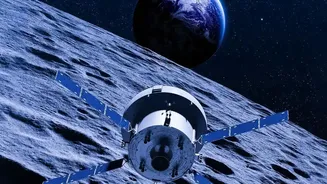
specific, scientifically valuable spot, likely on the rugged rim or inside a permanently shadowed crater where sunlight never reaches. These areas are believed to hold vast quantities of water ice, but they are also treacherous, with extreme temperatures and rough terrain. Hitting such a target requires a significant leap in technology, moving from finding a safe spot to navigating directly to a pre-determined, high-risk, high-reward location. ISRO has already selected a landing zone near the lunar south pole, at a site named Mons Mouton, using high-resolution orbital imagery to find an ideal spot with minimal hazards.
The Technology Behind the Bullseye
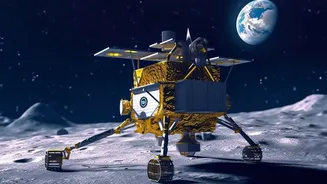
Achieving this pinpoint accuracy involves a suite of upgraded technologies. Chandrayaan-4’s lander will be equipped with more advanced sensors, superior algorithms, and AI-powered hazard detection and avoidance systems. These systems will process data in real-time during the final descent, cross-referencing high-resolution maps from orbiters like Chandrayaan-2 with what the lander 'sees' below it. Unlike Chandrayaan-3, which primarily focused on avoiding danger, the Chandrayaan-4 lander will be actively navigating towards a specific target, making autonomous decisions to adjust its trajectory and ensure it lands within metres of its goal. This capability is crucial for accessing the shadowed craters where ice is most likely to be found.
Why the Ice is Worth the Risk
The scientific and strategic payoff for targeting these ice-rich craters is enormous. Water ice on the Moon is more valuable than gold. It can be harvested and converted into drinking water and breathable oxygen for future astronaut habitats. Crucially, it can also be split into hydrogen and oxygen, the primary components of rocket fuel. This concept, known as In-Situ Resource Utilisation (ISRU), could transform the economics of space exploration. A lunar outpost with access to water could become a refuelling station for deep-space missions to Mars and beyond, reducing the immense cost and complexity of launching everything from Earth.
A Complex, Multi-Stage Mission
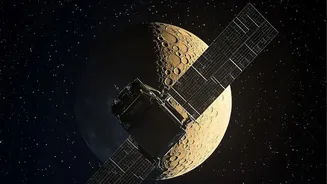
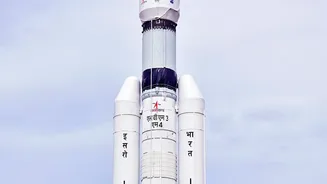
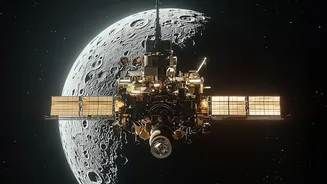
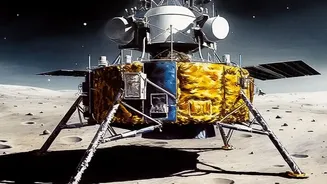
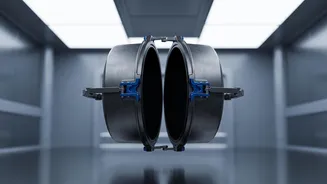
Chandrayaan-4 is not a single spacecraft but a complex, five-module mission requiring two separate launches. The first launch will carry a lander and an ascender module, which will perform the precision landing and collect lunar soil and rock samples. After collection, the ascender will launch from the Moon's surface—a first for India—and dock with a transfer module waiting in lunar orbit. This orbital docking is another critical technology ISRO is mastering. The transfer module will then ferry a re-entry capsule containing the precious samples back to Earth. This entire sequence, from precision landing to sample return, would make India only the fourth country to accomplish such a feat.
Paving the Way for a Lunar Future
Successfully executing the Chandrayaan-4 mission, planned for around 2028, will do more than just bring back lunar soil. It will validate a host of new technologies essential for India's long-term space ambitions, including the goal of landing an Indian astronaut on the Moon by 2040. The precision landing technology is the key that unlocks the Moon's most valuable resources, while the sample return and docking capabilities are foundational for future crewed missions. By targeting the ice-rich craters of the south pole, ISRO is not just exploring the Moon; it is laying the technical groundwork for a sustainable human presence there.