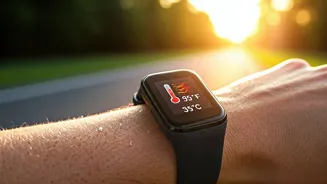









The Deception of a Simple Temperature
We often glance at the thermometer and think, "32 degrees, not so bad." But this single number is dangerously misleading. The real threat to anyone exercising outdoors isn't just the air temperature; it's the heat index. The heat index, or apparent temperature,
is what the temperature feels like to the human body when relative humidity is combined with the air temperature. Your body’s primary cooling mechanism is sweating. As sweat evaporates, it cools the skin. However, when the air is already saturated with moisture (high humidity), that evaporation process slows down dramatically. Your body can no longer cool itself effectively, causing your internal temperature to rise. For example, a day that is 32°C with 70% humidity can feel like a scorching 41°C. This is a massive difference, and it’s the difference between a challenging workout and a medical emergency.
More Than Just Discomfort: The Real Dangers
Ignoring the heat index isn’t just about feeling uncomfortable; it’s about exposing yourself to a spectrum of heat-related illnesses. These begin with heat cramps and can quickly escalate to heat exhaustion. Symptoms of heat exhaustion include heavy sweating, cool or clammy skin, dizziness, nausea, and a fast, weak pulse. It’s your body’s final, desperate warning sign. If ignored, it can progress to heatstroke, a life-threatening condition. Heatstroke occurs when your body's cooling system completely fails, causing your core temperature to rise rapidly to 40°C or higher. Key signs include confusion, slurred speech, loss of consciousness, and hot, dry skin, as the ability to sweat may stop. A heat index between 39°C and 51°C puts you in the "Danger" category, where heat exhaustion is likely and heat stroke is possible with prolonged activity. It’s also important to remember that these values are calculated for shady areas; in direct sunlight, the heat index can be up to 8°C higher.
A Simple Fix for Our Smartest Gadgets
This is where technology is failing us. The very apps that we trust to guide our fitness journeys are silent on this critical environmental factor. They have our location data. They have access to real-time weather information. Integrating a heat index warning would be a relatively simple software update. Imagine your running app not just telling you the weather, but actively advising you: "The heat index is 42°C. This is a high-risk zone. Consider moving your workout indoors or to a cooler time of day." Some niche apps exist that attempt to calculate a 'feels like' temperature for activity, but this feature should be standard, not a specialty. Fitness platforms have a responsibility to not only track performance but also to proactively protect their users. By ignoring the heat index, they are ignoring a predictable and preventable danger.
How to Be Your Own Heat-Index Filter
Until our favourite apps catch up, we have to become our own safety advocates. Before you head out, don't just check the temperature. Check a reliable weather source for both the temperature and the relative humidity to understand the true heat index. Many national weather services provide online charts and calculators. Be prepared to alter your plans. This might mean exercising in the very early morning or late evening when the sun and humidity are less intense. On days where the heat index is in the 'Danger' or 'Extreme Danger' zones (above 39°C), the safest choice is to move your workout indoors. Listen to your body above all else. If you start to feel dizzy, nauseous, or unusually fatigued, stop immediately, find a cool place, and rehydrate. Your long-term health is more important than any single workout.