








Meet Chandrayaan-4: A Mission of Firsts
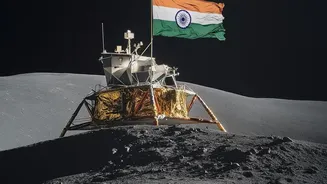
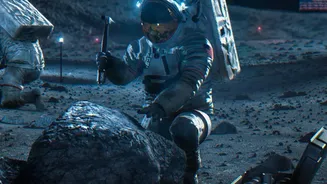
The next chapter in India's lunar saga is Chandrayaan-4, a mission far more complex than its predecessor. While Chandrayaan-3 was a one-way trip to deliver a lander and rover, Chandrayaan-4 is designed for a round trip. The core objective is to land on the
Moon, collect several kilograms of lunar soil and rock, and return them safely to Earth for scientific study. If successful, India will join an exclusive club of nations — including the United States, the former Soviet Union, and China — that have accomplished a lunar sample return. Approved by the Indian government in September 2024, the mission is currently slated for a 2028 launch and represents a major step towards India's long-term goals of landing an astronaut on the Moon by 2040 and establishing a space station.
Why the South Pole's Icy Regolith?
The mission's destination is once again the Moon's south pole, a region of intense global interest. The reason is frozen water. The area contains Permanently Shadowed Regions (PSRs), craters where sunlight never reaches, creating extreme cold traps that could have preserved water ice for billions of years. This ice is more than just a scientific curiosity; it's a potential game-changing resource. It could be mined and broken down into oxygen for life support and hydrogen for rocket fuel, making future long-term human settlements on the Moon feasible. Recent studies using data from ISRO's own Chandrayaan-2 orbiter suggest that the amount of subsurface ice could be five to eight times greater than what's on the surface, making drilling and sample collection a primary goal. By bringing these pristine samples back, scientists can analyze them in Earth-based labs with advanced equipment that could never be sent to the Moon, unlocking secrets about the Moon's history and resource potential.
A Complex Five-Part Robotic Ballet
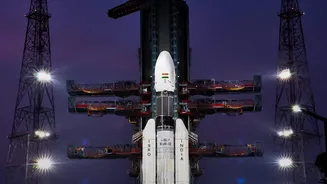
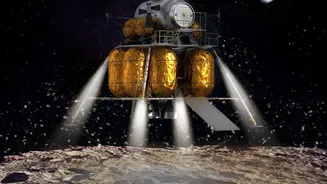
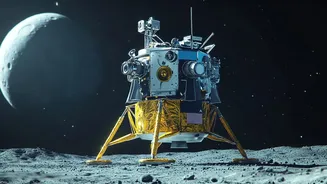
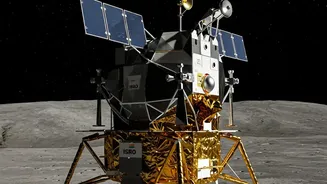
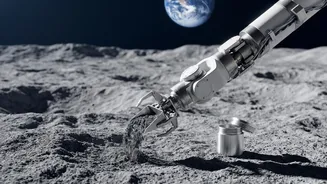
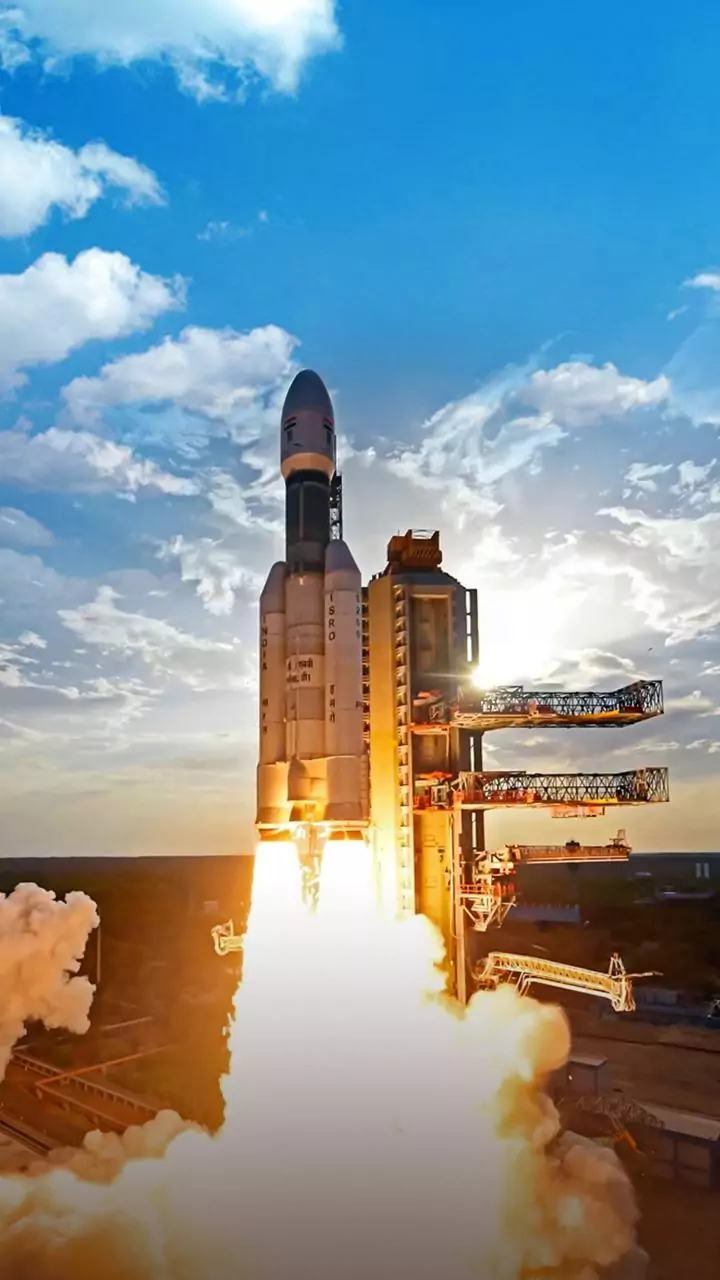
Pulling this off requires a feat of engineering far beyond any previous Indian mission. Chandrayaan-4 isn't a single spacecraft but a suite of five modules that will be launched on two of India's most powerful LVM3 rockets. The mission architecture involves an Ascender, a Descender, a Propulsion Module, a Transfer Module, and a Re-entry Module. The process will be a carefully choreographed sequence. One launch will send the lander (Descender) and the sample-collecting Ascender to the Moon. The other launch will place the Transfer and Re-entry modules into lunar orbit to wait. After a soft landing, a robotic arm will drill and scoop up to three kilograms of soil and ice, placing it in a hermetically sealed container. Then, the Ascender module will fire its engine, launching off the Moon's surface — a first for India. It will then have to autonomously rendezvous and dock with the orbiting Transfer Module. A robotic arm will transfer the precious cargo to the Re-entry Module, which will then make the journey back to Earth for a safe landing.
Paving the Way for Future Ambitions
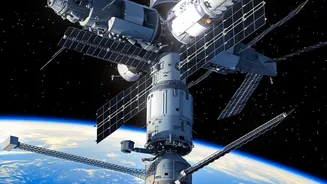
Chandrayaan-4 is not just about bringing back Moon rocks; it's a crucial technology demonstrator for India's future in space. Key technologies like launching from another celestial body and autonomous docking in lunar orbit are essential for future human missions. ISRO has already been testing the docking capability with its SPADEX (Space Docking Experiment) mission to reduce the risks for this high-stakes lunar return. Beyond Chandrayaan-4, ISRO is also collaborating with Japan's space agency, JAXA, on another lunar mission called LUPEX (Lunar Polar Exploration Mission), which will deploy a more advanced lander and rover to further explore the south pole's resources. Together, these missions are laying the technical and scientific groundwork for India's ambitious space vision, which includes building the Bharatiya Antariksh Station by 2035 and achieving a crewed lunar landing by 2040.