




The Challenge of Darkness
Astrophotography is fundamentally difficult. The subjects—stars, nebulae, and galaxies—are incredibly faint. For any camera, this requires gathering as much light as possible, which traditionally meant large lenses and sensors, long exposure times, and specialised
tripods. Smartphones, with their tiny sensors and compact lenses, are at a massive physical disadvantage. Capturing a clear night sky photo requires overcoming two main hurdles: extreme low light, which leads to noisy or grainy images, and the Earth's rotation, which can cause stars to appear as streaks in long exposures. To solve this, phone makers moved beyond mere hardware and into the realm of intense software processing.
The Sensor's First Step: More Light, Less Noise
It all starts at the image sensor, the silicon chip that converts light into an electrical signal. To combat low light, modern smartphone sensors use several tricks. Many now feature physically larger pixels than older models, which can capture more photons. However, the most crucial technique is pixel binning. This process combines the data from a cluster of adjacent pixels (say, a 2x2 or 3x3 grid) into one larger, virtual 'super-pixel'. While this reduces the final image resolution, it dramatically increases light sensitivity and reduces random digital noise, which is essential for a clean night shot.
The Brains: Image Signal Processor (ISP)
The raw data from the sensor is just an unintelligible mess of electrical signals. This is where the Image Signal Processor (ISP) comes in. The ISP is a dedicated chip within your phone's main processor (SoC) that acts as the camera's brain. It takes the raw sensor output and performs a cascade of operations in milliseconds. It reconstructs colours, corrects for lens distortions, and performs initial noise reduction. In modern phones, the ISP is no longer a simple converter; it's an intelligent engine that can identify different parts of a scene and apply specific enhancements, a critical step before the heavy computational work begins.
Computational Magic: Stacking and Aligning
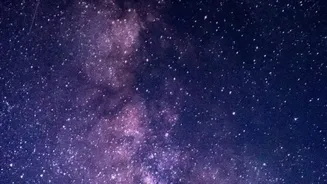
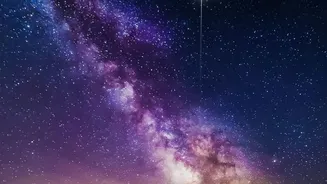
The true secret to smartphone astrophotography is a technique called 'image stacking' or 'multi-frame synthesis'. Instead of taking one single, long exposure (which would be ruined by hand shake and Earth's rotation), the phone captures a rapid burst of many shorter-exposure shots. For example, Google's Astrophotography mode can take up to fifteen 16-second exposures over a four-minute period. The ISP and a dedicated AI or Neural Processing Unit (NPU) then get to work. The software aligns these individual frames, correcting for the tiny movements of the stars caused by the Earth's rotation. By averaging the data from all these frames, random noise is effectively cancelled out, while the constant light from the stars is reinforced, resulting in a much cleaner and more detailed final image.
The Finishing Touches: AI-Powered Enhancements
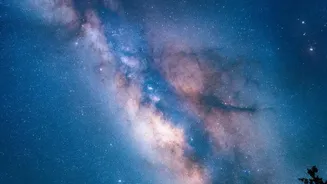
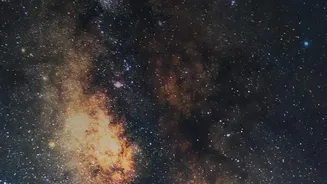
After stacking, the process isn't over. Artificial intelligence plays a final, crucial role in refining the image. Having been trained on thousands of professional astrophotography images, these AI algorithms perform 'semantic segmentation'—identifying what is a star, what is the sky, and what might be a tree or a mountain in the foreground. This allows the software to apply adjustments intelligently. It can selectively enhance the brightness and colour of stars, reduce the remaining background noise in the sky without softening the details, and correct for the orange glow of city light pollution. This AI-driven post-processing is what gives the final image its polished, often dramatic look, turning a noisy, faint capture into a vibrant celestial portrait.