


The Ringed Planet Holds Court
Saturn is the undisputed star of the late August evening sky. While its peak viewing moment, known as opposition, is still a few weeks away, the planet is already big, bright, and beautiful. As Earth continues its journey between the sun and Saturn, the ringed
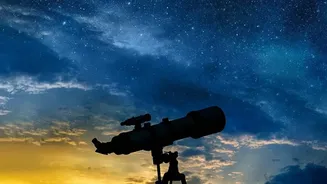
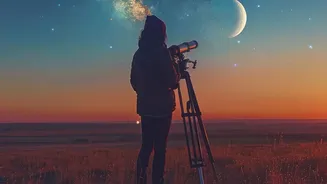
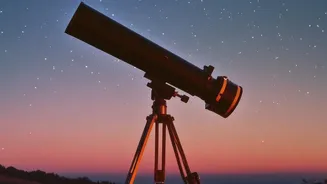
giant is visible for most of the night. Look for a steady, bright, yellowish point of light rising in the east around sunset and tracing a path across the sky. Even a basic pair of binoculars might hint at its elongated shape, but a small telescope will reveal its magnificent rings, a sight that never fails to inspire awe. This month offers a fantastic opportunity to get acquainted with the solar system's most iconic planet.
A Grand Parade Before Dawn
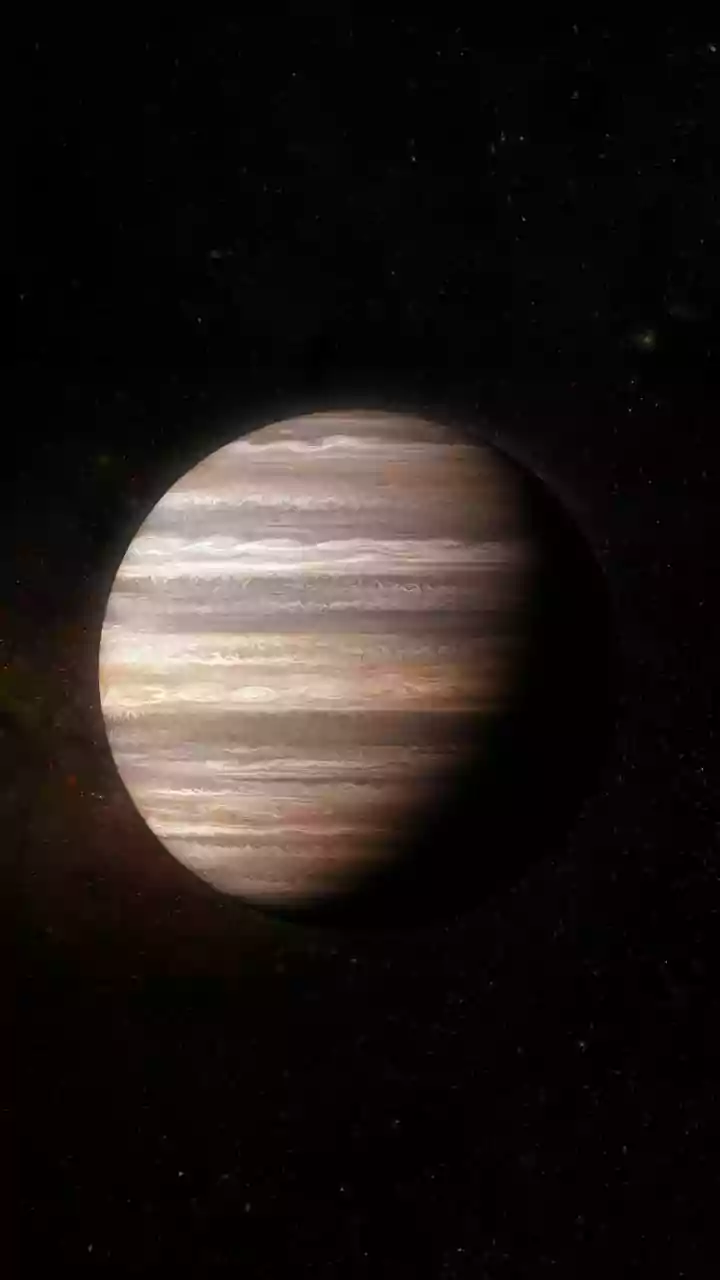
Set your alarm for the hour before sunrise for a truly special event: a planetary parade. Several planets are currently spread out across the sky in a loose alignment. The most reliable sightings for the naked eye will be the reddish hue of Mars and the steady glow of Saturn, both high in the pre-dawn sky. More challenging, but rewarding, are Mercury and Jupiter, which appear very low near the eastern horizon as the sky begins to brighten. Finding them requires a clear, unobstructed view. While seeing all of them is tricky, spotting two or three bright planets scattered across the morning twilight is a memorable experience.
The River of Stars
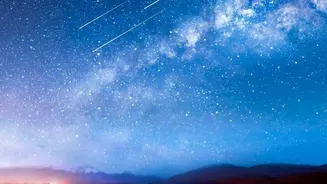
August is prime time for viewing the heart of our own galaxy, the Milky Way. On a clear, moonless night away from city lights, it appears as a luminous, hazy band stretching across the sky. This month, the galactic core—the brightest and densest part of the Milky Way—is perfectly positioned for viewing from India. Look towards the south for the teapot-shaped constellation of Sagittarius; this is where the galactic center is located, appearing like a cloud of steam rising from the teapot's spout. The sight of this dense river of stars, visible with just your eyes, is one of the most breathtaking spectacles nature has to offer.
Navigating with the Summer Triangle
For those new to stargazing, finding your way around can be daunting. The Summer Triangle is your friendly guide. This large, easy-to-spot pattern is not a constellation itself, but an asterism formed by three of the brightest stars in the sky: Vega (in the constellation Lyra), Deneb (in Cygnus, the Swan), and Altair (in Aquila, the Eagle). Throughout August, you can find it high overhead during the evening hours. Once you locate this giant triangle, you can use it as a reference point to hop to other nearby constellations and objects, making it the perfect starting point for your celestial journey.
The Monsoon Challenge and the Silver Lining
Let's address the elephant in the room: the monsoon. For most of India, August means clouds, which are the ultimate enemy of the stargazer. However, don't lose hope. The periods after a heavy rain shower can offer some of the clearest skies of the year, as the downpour washes away dust and pollutants from the atmosphere. If a clear night presents itself between cloud banks, seize the opportunity. For those truly dedicated, regions that lie in a rain shadow, such as Ladakh, Spiti Valley, and parts of the Thar Desert, offer the country’s best and darkest skies during this season.