



Understanding Your Dog's Fear
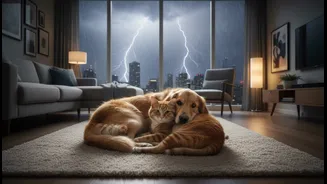
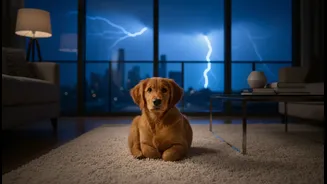
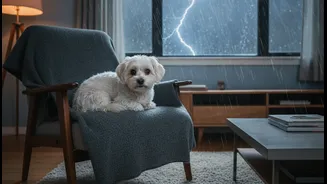
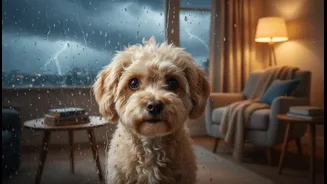
A dog's fear of storms, or astraphobia, is more than just a reaction to loud noise. Dogs have heightened senses that can detect environmental changes long before we can. They may be reacting to a combination of triggers, including the low-frequency rumble
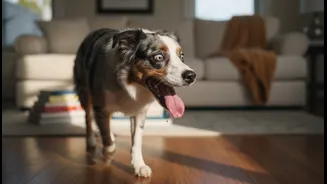
of distant thunder, shifts in barometric pressure, the smell of rain, and even the buildup of static electricity in the air. Symptoms can range from mild panting and whining to severe signs like pacing, hiding, destructive behaviour, and attempts to escape. Some dogs develop this fear as they age, while others may learn it from another anxious dog in the household.
Create a Calming Safe Haven
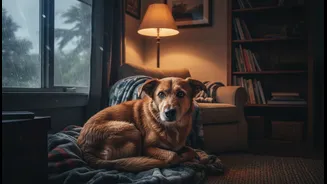
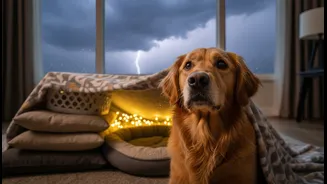
One of the most effective strategies is to provide a secure den where your dog feels protected. Let your dog choose the spot, which might be a closet, a bathroom, or a crate. This space should ideally be away from windows to minimise exposure to lightning flashes and noise. Make it comfortable with their favourite blankets, toys, and an item of your clothing for a familiar, soothing scent. To further muffle the storm, close curtains and play background noise like a fan, TV, classical music, or a white noise machine. If your dog is comfortable in a crate, you can drape a blanket over it for extra sound-dampening, but always ensure there is good air circulation and leave the door open so they don't feel trapped.
In-the-Moment Management
Your own behaviour during a storm is crucial, as dogs often look to their owners for cues. Act calm and normal. It is a myth that comforting your dog will reinforce their fear; gentle petting and your calm presence can be reassuring if your dog seeks it out. However, avoid overly emotional, high-pitched reassurances, as this can confuse your dog and signal that there is something to worry about. Instead, try to distract them with a fun indoor game, a puzzle toy filled with tasty treats, or a chew. This can help create a more positive association with the storm.
Consider Calming Aids
Several products are designed to ease canine anxiety. Anxiety wraps or shirts, such as a Thundershirt, apply gentle, constant pressure that can have a calming effect for many dogs. Dog-appeasing pheromone products, which come in diffusers, collars, or sprays, can also help create a sense of security. There are also natural calming supplements and treats available that contain ingredients like L-theanine or chamomile. It's important to introduce these items, especially an anxiety wrap, during calm times with positive reinforcement so your dog has a good association with them before a storm hits.
Long-Term Behavioural Training
For a more permanent solution, veterinarians and behaviourists recommend desensitization and counter-conditioning. This should be done during a time of year when storms are unlikely. The process involves playing a recording of storm sounds at a very low volume that doesn't trigger anxiety. While the sounds play, engage your dog in an enjoyable activity, like playing or getting special treats. This helps change their association with the noise from something scary to something positive. Over many sessions, you can gradually increase the volume as long as your dog remains calm and relaxed.
When to Consult a Veterinarian
If your dog's anxiety is severe, leading to self-harm, destruction, or extreme panic, it's essential to seek professional help. A veterinarian can assess your dog's health and rule out other medical issues. They can discuss a comprehensive treatment plan that may include a referral to a veterinary behaviourist. For severe phobias, prescription anti-anxiety medications may be necessary. These medications are most effective when given at least an hour before a storm is expected, so it's helpful to monitor the weather forecast. Your vet will determine the safest and most appropriate medication for your pet's specific needs.