




The Challenge of All-Weather Energy
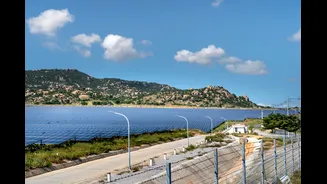
India's commitment to solar energy is one of the most ambitious in the world, with vast solar farms and rooftop panels becoming increasingly common. However, the nation's reliance on solar power hits a significant roadblock for several months each year:
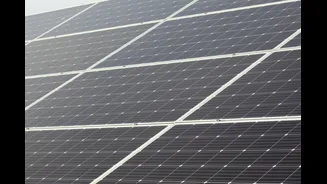
the monsoon. Conventional photovoltaic (PV) panels, which convert sunlight into electricity, see their output plummet on overcast days and become nearly useless during heavy rain. This weather-dependent intermittency is a major obstacle to creating a truly reliable green energy grid. It forces a reliance on other energy sources to fill the gap, undermining the goal of round-the-clock renewable power. For solar to be the true cornerstone of our energy future, it needs to be able to withstand, and even benefit from, all types of weather.
A Breakthrough in Hybrid Solar Design
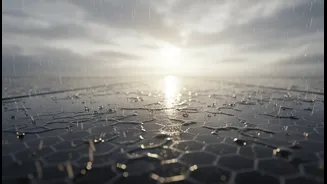
Imagine a solar panel that doesn't just tolerate rain but actually harvests energy from it. This is the promise of recent advancements in hybrid solar cell technology. Researchers, notably at institutions like China's Soochow University, have been pioneering devices that merge traditional solar cells with an innovative new component: a triboelectric nanogenerator, or TENG. This hybrid design aims to solve the core problem of weather dependency. The result is a single, integrated panel capable of generating electricity from photons on a sunny day and from the mechanical impact of raindrops when it’s pouring, offering a potential solution for consistent energy generation come rain or shine.
How to Make Power from Raindrops
The science behind harvesting energy from rain sounds complex but is based on a simple principle: friction. The TENG works by using the triboelectric effect, which is the same phenomenon that creates static electricity when you rub a balloon on your hair. In these hybrid panels, a transparent polymer layer is placed on top of the solar cell. When raindrops strike and roll across this specially textured surface, the friction creates a tiny electrical charge. The TENG captures this charge, converting the kinetic energy of the falling rain into usable electricity. While the power generated from a single raindrop is minuscule, the collective effect during a downpour can become a significant source of supplementary power, ensuring the panel remains productive even when the sun isn't shining.
More Than Just a Rainy-Day Solution
While generating power from rain is the headline-grabbing feature, these hybrid panels are also being engineered for better performance in generally overcast conditions. The top layers, including the TENG, are designed to be transparent, allowing sunlight to pass through to the underlying photovoltaic cell. Some designs even use textured surfaces that can help trap more ambient light, slightly boosting the efficiency of the solar cell on cloudy days. Researchers are experimenting with different materials and structures, such as using graphene layers or specific polymers, to optimize both solar and rain energy harvesting in one device. The goal isn't to replace the solar function but to augment it, creating a system that makes the most of whatever the weather throws at it.
The Road from Lab to Rooftop
Despite the exciting potential, all-weather solar panels are not yet available at your local electronics store. The technology is still primarily in the research and development phase. Several key challenges must be overcome before they can be commercialised. The primary hurdles are efficiency, durability, and cost. The amount of electricity generated from rain is still relatively low compared to what a solar cell produces in bright sunlight. Furthermore, the additional TENG layers must be robust enough to withstand years of exposure to sun, rain, and pollutants without degrading or reducing the underlying solar panel's efficiency. Researchers are actively working on scaling up production and finding cost-effective materials and manufacturing processes to make these hybrid systems a viable commercial product in the coming years.